
Nov. 10, 2026
How to Check Can Sealing Quality? Vacuum Leak Testing and Double Seam Teardown Inspection for Metal, Aluminum, and Plastic Cans
Can sealing quality is one of the most important factors affecting product safety, shelf life, packaging integrity, and customer satisfaction. Whether you are packaging food, beverages, milk powder, coffee, nuts, seafood, or other products, a reliable can seaming process is essential to prevent leakage and maintain product quality.
But how can you determine whether a can seaming machine produces a reliable seal?
There are two practical methods for inspecting can sealing performance:
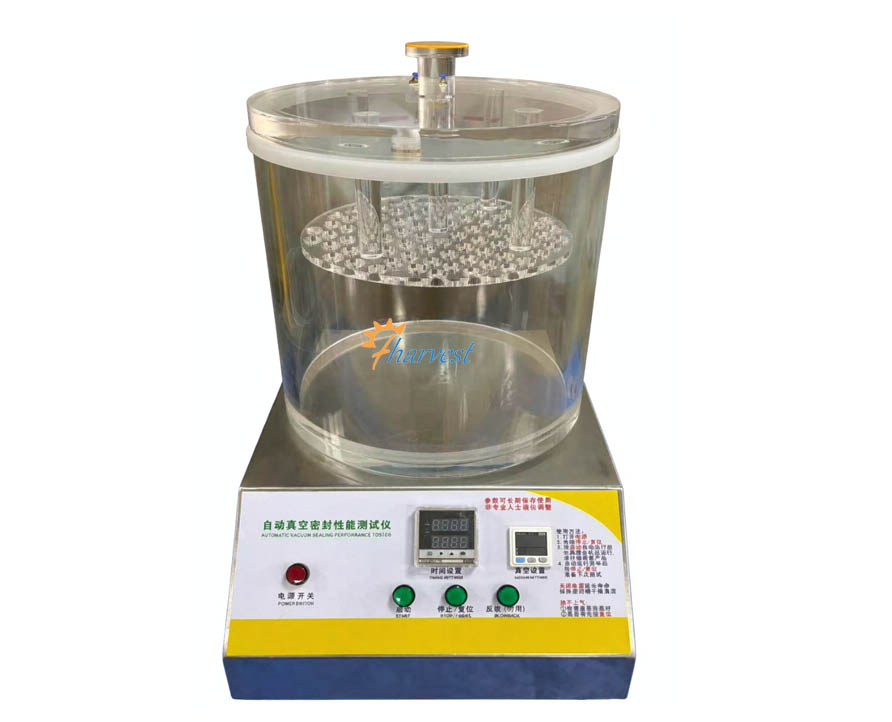
Vacuum Leak Testing:
A non-destructive testing method used to check the sealing performance of plastic cans, tinplate cans, and aluminum cans.
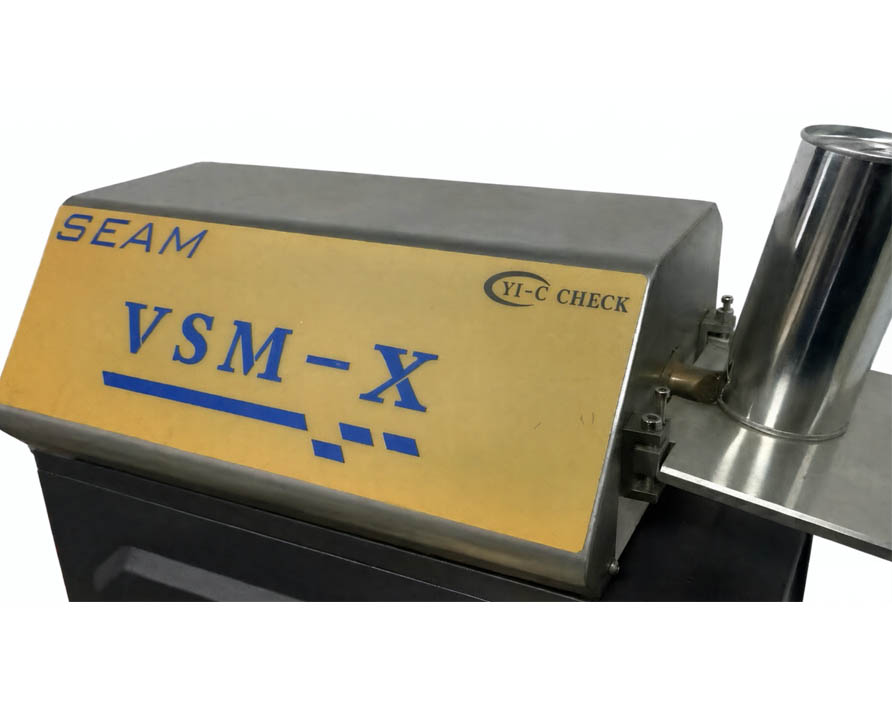
Double Seam Teardown Inspection:
A destructive inspection method mainly used for metal cans to examine the internal double seam structure, hook formation, and overlap percentage.
At GZFHARVEST, we pay close attention to sealing quality during can seaming machine testing. This article explains how these two inspection methods work, what parameters should be checked, and how manufacturers can evaluate the quality of their can sealing process.
Vacuum Leak Testing: A Practical Method for Different Types of Cans
Vacuum leak testing is a practical method for checking whether a sealed container has leakage around its lid, sealing area, or other potential leakage points.
Unlike destructive seam inspection, vacuum testing does not require cutting or damaging the container. It can be used to evaluate the sealing performance of:
- Tinplate metal cans
- Aluminum cans
- Plastic cans and PET containers
- Other compatible sealed containers
How Does a Vacuum Leak Tester Work?
A vacuum leak tester creates a controlled vacuum environment around a sealed container.
Step 1: Prepare the sealed can
Take a sample container after the can seaming or sealing process. Make sure the lid has been properly installed and sealed
Step 2: Place the cans into the water tank
Put the sealed can into the transparent testing chamber and ensure the sealing area is positioned for observation.
Step 3: Close the testing chamber
Secure the transparent chamber cover to create an enclosed testing environment.
Step 4: Set the vacuum level
Start the vacuum pump and gradually reduce the pressure inside the testing chamber to the specified test level.
Step 5: Observe the cans
Watch the container and its sealing area carefully during the vacuum test.
If continuous bubbles emerge from the seam, lid, or another location, this may indicate a leakage point.
Step 6: Evaluate the test results
If no continuous bubbles are observed under the specified test conditions, the can passes this particular leak test.
The vacuum level, testing duration, and acceptance criteria should be determined according to the can material, packaging structure, product requirements, and applicable testing standards.
1.2 How to Identify Leakage During a Vacuum Test?
The most important indicator during a water-bath vacuum test is the appearance of bubbles.
Continuous bubbles: Usually indicate air escaping from a leakage point.
No continuous bubbles:Indicates that no detectable leakage was observed under the test conditions.
Initial bubbles that quickly disappear:May be caused by trapped air on the container surface rather than an actual leak.
Operators should distinguish between continuous leakage and temporary surface bubbles to avoid incorrect test results.
1.3 Why Can Vacuum Testing Be Used for Plastic, Tinplate, and Aluminum Cans?
Vacuum testing evaluates the sealing performance of the complete container rather than measuring only the internal structure of a metal double seam.
This makes it suitable for different container materials.
Tinplate Cans
Vacuum testing helps identify leakage around the double seam, including possible defects caused by improper roller adjustment, insufficient seam compression, or damaged sealing components.
Aluminum Cans
For aluminum containers with compatible sealing structures, vacuum testing can help identify leakage around the lid and sealing area.
Plastic Cans
For plastic containers, vacuum testing can evaluate the sealing performance between the plastic body and its lid or sealing film.
However, plastic containers may deform under excessive vacuum pressure. The test pressure must therefore be controlled according to the container's mechanical strength and design.
Important:Vacuum leak testing checks whether the complete package maintains its sealing performance under specified conditions. It does not directly measure the internal double seam overlap or replace detailed seam structure inspection.
2. Double Seam Teardown Inspection: How to Check Metal Can Seaming Quality
For tinplate cans and other compatible metal double-seamed containers, vacuum testing alone cannot provide complete information about the internal seam structure.
To understand how the can seamer forms the double seam, manufacturers can perform a destructive inspection called **Double Seam Teardown Inspection**.
This method involves cutting the seam area, separating the metal layers, and measuring the internal seam dimensions.
It is particularly useful when commissioning a new can seaming machine, adjusting seaming rollers, troubleshooting sealing defects, or performing routine quality control.
2.1 What Is a Double Seam?
A double seam is a mechanical connection formed by folding and interlocking the can body flange with the curl of the can end.
The double seaming process generally consists of two operations:
First Operation: Hook Formation
The first seaming roller folds the can end curl around the can body flange to create the initial interlocking structure.
The body hook and cover hook are formed during this operation.
Second Operation: Seam Compression
The second seaming roller compresses the formed seam to achieve the required seam thickness, tightness, and final structure.
A properly formed double seam provides a mechanical connection that helps prevent leakage and protects the packaged product.
2.2 How to Perform a Double Seam Teardown Inspection
The inspection process generally includes the following steps:
Step 1: Select a Sealed Metal Can
Take a sample tinplate can after the seaming process. Select representative samples from the production run.
Step 2: Cut the Seam Area
Use a suitable can seam cutting tool or seam saw to cut through the double seam section.
The cut should expose the internal metal layers without unnecessarily distorting the seam structure.
Step 3: Remove and Separate the Seam
Carefully separate the metal layers to expose the body hook and cover hook.
Step 4: Examine the Internal Seam Structure
Inspect the folded metal layers to check whether the body hook and cover hook are properly interlocked.
Look for possible defects such as:
- Insufficient overlap
- Loose or incomplete seam formation
- Excessive seam tightness
- Wrinkles in the cover hook
- Broken or damaged hooks
- Incorrect hook formation
Step 5: Measure the Seam Parameters
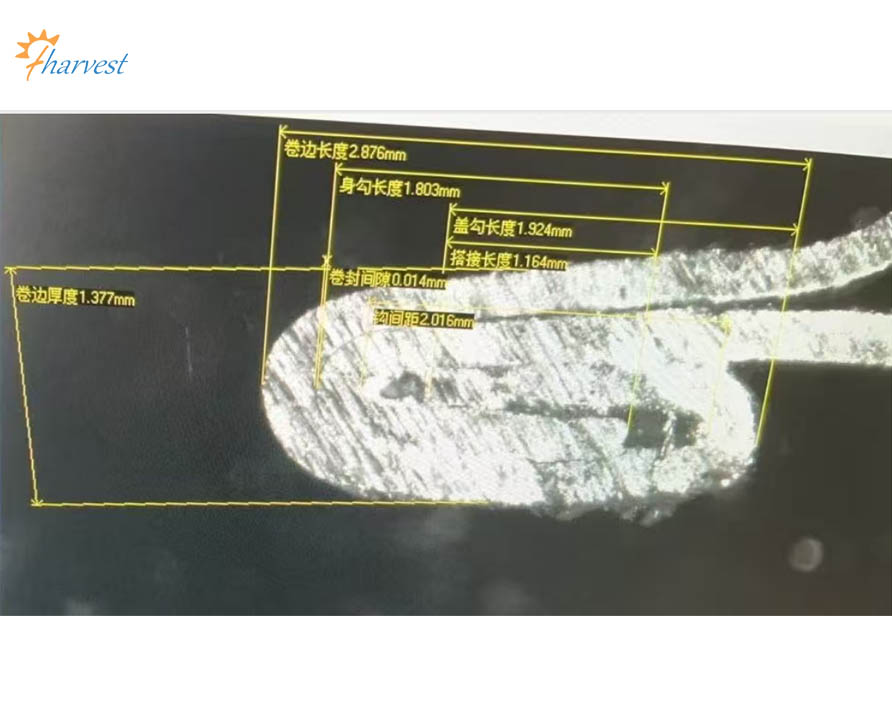
Use appropriate seam inspection instruments, such as a seam micrometer, optical seam inspection system, or seam measurement equipment.
Record the relevant dimensions and compare them with the specifications for the particular can and end combination.
2.3 What Parameters Should Be Checked During Double Seam Inspection?
Several important parameters help evaluate metal can seaming quality.
(1). Seam Width (Seam Length)
The seam width is the external width of the completed double seam.
It helps determine whether the seaming rollers have formed the seam to the required dimensions.
(2). Seam Thickness
Seam thickness is the overall thickness of the compressed double seam.
If the seam is too thick or too thin, it may indicate incorrect roller adjustment or improper seam formation.
(3). Body Hook
The body hook is the folded portion of the can body flange inside the double seam.
Its length and formation are important for achieving sufficient mechanical interlocking.
(4). Cover Hook
The cover hook is the folded portion of the can end curl inside the double seam.
Its formation and dimensions directly affect the quality of the double seam structure.
(5). Overlap Length
Overlap refers to the amount of overlap between the body hook and cover hook.
Adequate overlap is essential for forming a reliable double seam.
(6). Overlap Percentage
Overlap percentage indicates the degree of interlocking between the body hook and cover hook relative to the available seam space.
A sufficient overlap helps ensure mechanical strength and sealing integrity.
The acceptable overlap percentage depends on the can diameter, can end specifications, material thickness, and manufacturer's double seam standards.
(7). Wrinkle Condition
Wrinkles can occur in the cover hook during the seaming process.
Excessive wrinkles may reduce the effective contact between the metal layers and potentially create leakage channels.
A seam teardown inspection allows operators to identify these defects inside the seam.
Vacuum Leak Test vs. Double Seam Teardown Inspection
Inspection Item | Vacuum Leak Test | Double Seam Teardown |
Main purpose | Detect package leakage | Inspect internal seam structure |
Testing method | Vacuum pressure and bubble observation | Cut and separate the seam |
Tinplate cans | Yes | Yes |
Plastic can | Yes | Generally not applicable |
Aluminum cans | Yes | Less to use |
Destructive testing | No | Yes |
Detects actual leakage | Yes, within test sensitivity | Not directly |
Measures overlap percentage | No | Yes |
Checks hook formation | No | Yes |
Suitable for routine inspection | Yes | Yes, with sample testing |
Which method should you choose?
For plastic cans, aluminum cans, and tinplate cans, vacuum leak testing is a useful method for evaluating package sealing performance.
For tinplate metal cans, we recommend combining vacuum leak testing with double seam teardown inspection.
The vacuum test checks whether the package leaks, while teardown inspection helps explain the internal structural reasons behind potential sealing problems.
Using both methods provides a more comprehensive evaluation of can sealing quality.
4. Common Can Seaming Defects and Their Possible Causes
During production, different sealing defects may occur due to improper machine adjustment, unsuitable tooling, container dimensional variations, or incorrect operating conditions.
Here are some common problems manufacturers should pay attention to.
4.1 Can Leakage
Possible causes:
- Incorrect seaming roller adjustment
- Damaged or worn seaming rollers
- Improper can end or can body dimensions
- Insufficient seam compression
- Contamination in the sealing area
Recommended inspection:
Perform a vacuum leak test to identify whether the sealed container has leakage. For metal cans, follow up with seam teardown inspection if necessary.
4.2 Insufficient Overlap
Possible causes:
- Incorrect first-operation roller adjustment
- Improper can flange dimensions
- Incorrect end curl dimensions
- Worn or unsuitable seaming tooling
Recommended inspection:
Cut open the metal can seam and measure the body hook, cover hook, and overlap.
4.3 Excessive Seam Tightness
Possible causes:
- Excessive second-operation roller pressure
- Incorrect roller positioning
- Improper seaming adjustment
Recommended inspection:
Check seam thickness, hook dimensions, and other relevant seam characteristics against the manufacturer's specifications.
4.4 Wrinkles in the Double Seam
Possible causes:
- Incorrect first-operation seaming adjustment
- Improper end curl formation
- Inconsistent material dimensions
- Unsuitable seaming roller profiles
Recommended inspection:
Perform a teardown inspection to examine the cover hook and wrinkle condition.
5. How Often Should Can Sealing Quality Be Tested?
Regular inspection is important for maintaining consistent packaging quality.
A practical quality control plan may include:
Before Production
- Check the can body and lid specifications.
- Inspect the condition of the seaming rollers and chuck.
- Run initial sample cans.
- Perform vacuum leak testing.
- For metal cans, perform seam teardown inspection and confirm the required dimensions.
During Production
- Take samples at defined production intervals.
- Perform vacuum leak testing according to the quality control plan.
- Monitor machine operation and inspect for abnormal noise, vibration, or material feeding problems.
- Repeat seam teardown measurements when necessary, especially after machine adjustments or tooling changes.
After Machine Adjustment
Whenever the seaming rollers, chuck, container format, or operating parameters are changed, produce new samples and verify the sealing performance again.
Important: Inspection frequency and acceptance limits should be established according to the packaging specifications, product risk, applicable regulations, and the customer's quality control requirements.
6. Why Is Can Seaming Machine Adjustment Important?
Even a high-quality can seaming machine cannot guarantee reliable sealing if the machine is incorrectly adjusted or the can body and end dimensions are inconsistent.
The following components play important roles in double seam formation:
Seaming Chuck: Supports and positions the can end during the seaming process.
First-Operation Roller: Forms the initial interlocking structure between the body hook and cover hook.
Second-Operation Roller: Compresses the double seam to achieve the specified final dimensions.
Can Lifting Mechanism:Provides the required support and lifting force during seaming.
Machine Control System:Maintains stable operating conditions and repeatable production performance.
Correct adjustment of these components helps produce consistent double seams.
For this reason, manufacturers should not rely only on the appearance of the finished can. Regular vacuum leak testing and appropriate seam inspection are important parts of quality control.
7. GZFHARVEST Can Seaming Machines and Sealing Quality Control
GZFHARVEST specializes in the development and manufacturing of can seaming machines and automatic packaging equipment.
Our can seaming solutions are designed for different container materials, sizes, and packaging applications.
Our equipment can be configured for:
- Tinplate can seaming machines
- Aluminum can sealing machines
- Plastic can sealing and closing machines
- Automatic double-head can seamers
- Vacuum can seaming machines
- Vacuum nitrogen flushing can seaming machines
- High-speed automatic can seaming production lines
Applications include food cans, seafood, nuts, roasted peanuts, coffee, milk powder, protein powder, snacks, sauces, and other packaged products.
We understand that a successful packaging project requires more than machine operation. Reliable sealing performance, suitable machine configuration, correct tooling, and quality inspection are equally important.
By combining appropriate sealing equipment with vacuum leak testing and metal seam teardown inspection, manufacturers can better evaluate their packaging quality and maintain stable production performance.
Looking for a reliable can seaming machine manufacturer in China?
Contact GZFHARVEST to discuss your can material, diameter, height, production capacity, and sealing requirements.
Website: https://www.gzfharvest.com/
8. Frequently Asked Questions About Can Seaming Quality Inspection
Q1: How do you test whether a sealed can is leaking?
A vacuum leak tester can be used to check sealed containers. Place the can in a suitable water-bath vacuum chamber, apply the specified vacuum level, and observe whether continuous bubbles emerge from the sealing area.
Q2: Can vacuum leak testing be used for plastic cans?
Yes. Vacuum leak testing can be used for compatible plastic cans, PET containers, tinplate cans, and aluminum cans. However, the vacuum level must be controlled to prevent deformation of plastic containers.
Q3: How do you check the double seam quality of a tinplate can?
The double seam can be cut open using a suitable seam cutting tool. The internal body hook and cover hook are then examined and measured to evaluate overlap, seam thickness, seam width, and other important parameters.
Q4: What is overlap percentage in can seaming?
Overlap percentage describes how much the body hook and cover hook overlap inside a double seam. It is an important indicator of seam formation and mechanical interlocking. The required value depends on the specific can and end specifications.
Q5: Can a vacuum leak test replace double seam teardown inspection?
No. A vacuum leak test identifies leakage under specified conditions, while teardown inspection examines the internal seam structure. For tinplate cans, combining both methods provides more comprehensive quality control.
Q6: Can aluminum cans be inspected by cutting open the double seam?
Compatible double-seamed aluminum cans can also undergo seam teardown inspection using suitable equipment and procedures. However, the inspection method and acceptance criteria must match the specific aluminum container design.
Q7: Does a can passing a vacuum leak test mean its double seam is perfect?
Not necessarily. A can may show no detectable leakage during a particular test while still having dimensional or structural defects. For metal cans, dimensional seam inspection is also important.
Q8: What equipment is needed for can sealing quality inspection?
Common inspection equipment includes:
- Vacuum leak tester
- Vacuum pump
- Water-bath testing chamber
- Can seam cutting tool or seam saw
- Seam micrometer
- Optical seam inspection equipment
Using the appropriate testing equipment helps manufacturers evaluate sealing performance and maintain consistent packaging quality.
Previous: None
Next: Why Cans and Bottles Tip or Jam Between Packaging Machines
No.3 Gongye South Road,Mingzhu Industrial Park,Conghua District ,Guangzhou City 510900,China
+86 20 3751 0321
FOLLOW US


Tel/ Fax: +86 20 3751 0321
E-mail: sales@gzfharvest.com
Add: No.3 Gongye South Road,Mingzhu Industrial Park,Conghua District ,Guangzhou City 510900,China