
Oct. 30, 2026
1.Introduction to Automatic Can Seaming Machines
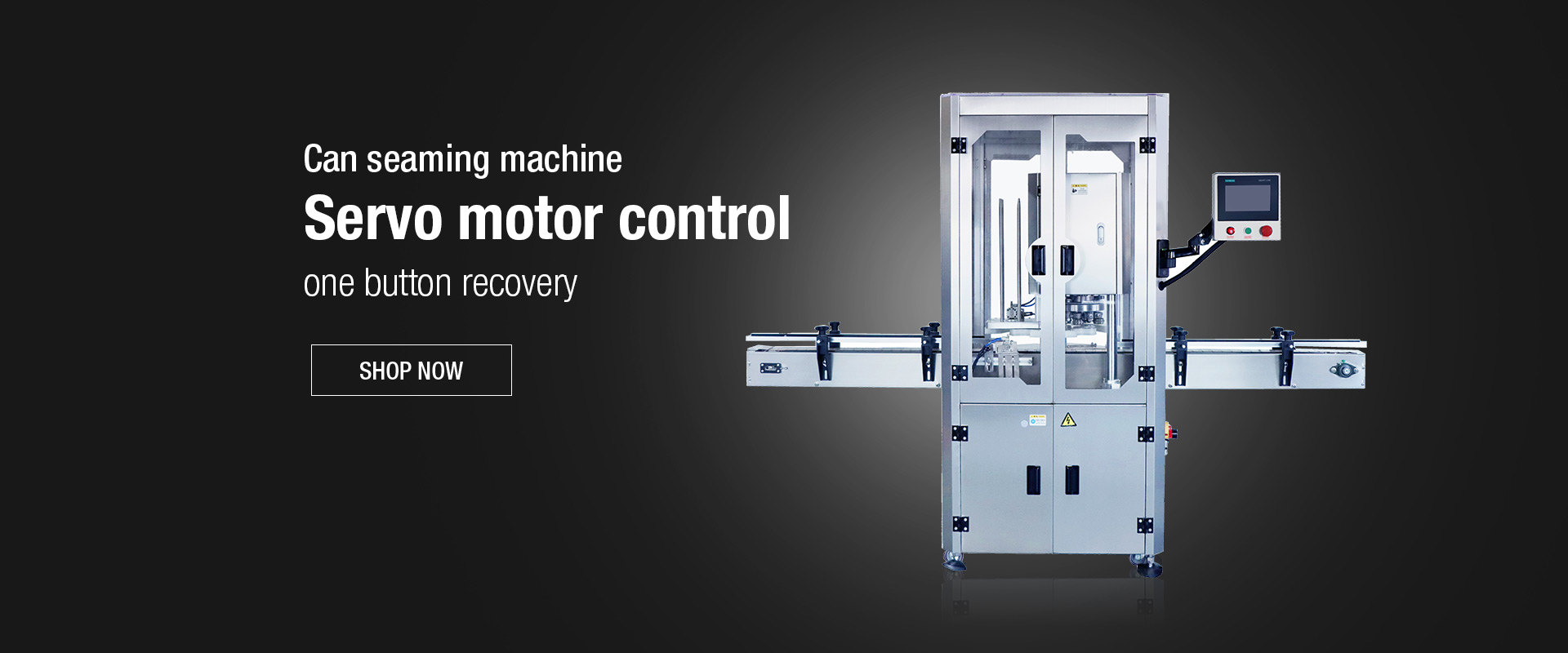
In food, beverage, and pharmaceutical packaging, hermetic sealing is crucial for product stability and shelf-life extension. Modern automatic can seamers utilize a static-can design combined with a two-stage double seam mechanism to deliver splash-free, airtight packaging. This technical overview examines the structural highlights, power transmission architecture, and double-seaming physics of contemporary non-rotational can sealing machinery.
GZFHARVEST specializes in the design and manufacturing of industrial can seaming machines for different packaging applications. Our equipment uses a four-roller double seaming system, an advanced mchanical transmission structure, and a non-rotating can body design.
Key Structural Features and Engineering Highlights
(1)Symmetrical Four-Roller Layout
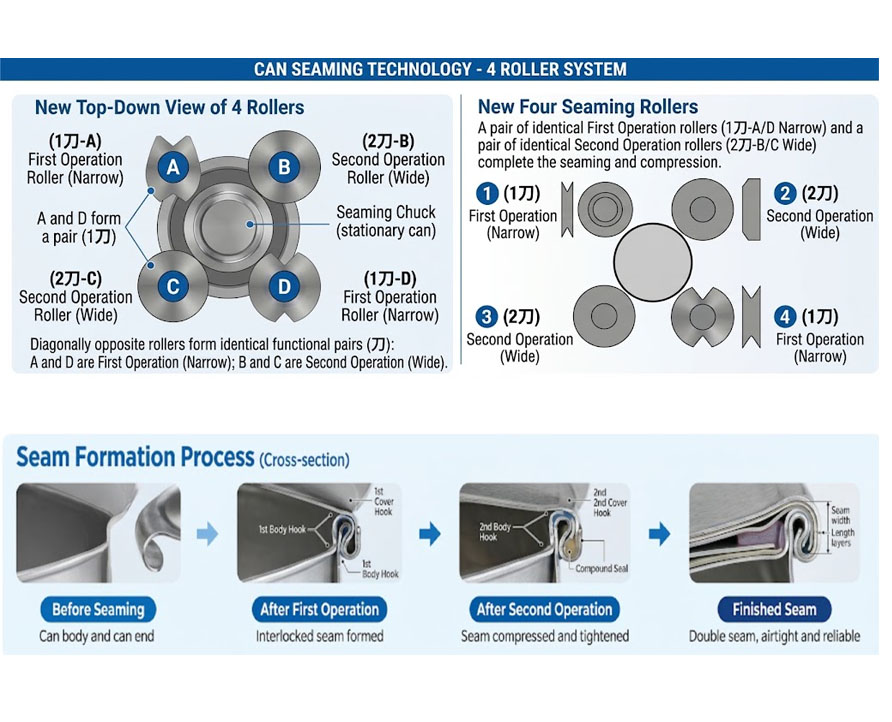
Features four seaming rollers installed in pairs—two dedicated to primary rolling (hemming) and two to secondary pressing (crimping). This setup ensures balanced radial forces, straightforward operational adjustments, and consistent seam formation.
(2)Non-Rotating Can Body Design
The machine adopts an advanced mechanical design in which the can body remains stationary during the sealing process.
The can is positioned on the lifting tray and pressed against the seaming chuck. The seaming rollers then rotate around the can end to complete the double seaming operation.
This design reduces unnecessary rotation and movement of the can body, making it especially suitable for liquid-filled cans, fragile products, and packaging applications that require stable container handling
(3)High-Durability Tooling Construction
Critical contact components—specifically the sealing chuck and seaming rollers—are precision-machined from Cr12 die steel, offering high wear resistance and extended dimensional stability under heavy load conditions.
(4)HMI Control
The machine is equipped with a touchscreen control system featuring a clear and intuitive operating interface.
Operators can conveniently manage machine operation and adjust relevant production settings, making daily operation and equipment management easier.
(5)Reliable Electrical Control System
The electrical control system uses components from internationally recognized brands.
A well-designed electrical circuit and control structure help ensure reliable machine operation, stable performance, and operational safety.
2. Operating Principle of the Automatic Can Seaming Machine
The working principle of an automatic can seamer involves two main systems:
Mechanical power transmission and can lifting system.
Double seaming system, including the first and second seaming operations.
Both systems work together to complete the can sealing process.
2.1 Mechanical Power Transmission and Drive Design
The machine uses two independent motor systems to drive the main mechanical operations.
Turntable and Can Lifting Drive:
Motor type: Servo motor
Transmission: Planetary reducer and rotary transmission mechanism
The servo motor drives the rotary mechanism through the planetary reducer, providing controlled movement for the can lifting and positioning system.
During operation, the can is placed on the lower lifting tray. The tray moves upward and presses the can against the seaming chuck, ensuring that the can end is held in the correct position before the seaming operation begins.
Seaming Roller Drive:
Motor type: Asynchronous motor
Motor speed: 1,400 rpm
Transmission: Worm gear reducer, linkage mechanism, and timing belt
The asynchronous motor provides the power required for the seaming operation.
Through the transmission mechanism, including the reducer, linkage components, and timing belt, the motor drives the seaming rollers to rotate around the can end.
The first-operation and second-operation seaming rollers work sequentially with the seaming chuck to complete the double seaming process.
After sealing is completed, the lifting tray moves downward, allowing the finished can to be removed from the seaming head.
2.2 Complete Working Sequence
The can body and can end are positioned on the lower lifting tray.
The servo-driven lifting mechanism raises the can toward the seaming chuck.
The can is held securely between the lifting tray and the seaming chuck.
The first-operation seaming rollers rotate to form the initial seam.
The second-operation seaming rollers compress and tighten the initial seam.
The lifting tray descends, and the sealed can is released.
This coordinated mechanical process completes one can sealing cycle
2.3 Double Seaming Design Principle
The automatic can seaming machine adopts the double seaming principle.
Double seaming is a mechanical process that joins the can body and can end through two consecutive operations: the first operation forms the interlocked seam, and the second operation compresses and tightens the seam to achieve the required sealing structure.
The double seaming process consists of four important stages.
Stage 1: Can Positioning and Seaming Chuck Pressing
The can body and can end enter the area beneath the seaming head.
The lower lifting tray moves upward and raises the can until the can end contacts the seaming chuck.
The seaming chuck applies vertical pressure to hold the can end securely in position.
This ensures that the can body and can end remain properly aligned during the seaming process.
Stage 2: First Operation – Forming the Initial Seam
The first-operation seaming roller moves toward the can end and begins rotating around the can.
During this operation, the roller guides and folds the flange of the can body downward while simultaneously bending the curl of the can end inward.
The two components are mechanically interlocked to form the initial double seam.
The main forming actions include:
The can body flange bends downward to form the can body hook.
The can end curl bends and folds around the can body flange to form the cover hook.
The two hooks interlock to create the initial seam structure.
At the end of the first operation, the can body and can end are joined together, but the seam still requires further compression.
Stage 3: Second Operation – Compressing and Tightening the Seam
After the first operation is completed, the second-operation seaming roller moves forward.
It compresses and flattens the initial seam formed during the first operation.
This process reduces excessive gaps and wrinkles within the folded seam structure, helping create a compact and uniform double seam.
For cans using sealing compound, the compound is compressed within the seam layers to fill the appropriate gaps and help achieve the required hermetic sealing performance.
The second operation is essential for obtaining a properly formed double seam with the required tightness and sealing integrity.
The final seam quality depends on several factors, including roller profiles, seaming pressure, machine adjustment, can dimensions, end specifications, and sealing compound characteristics.
Stage 4: Can Release and Discharge
After the second seaming operation is completed, the seaming rollers return to their original positions.
The lower lifting tray moves downward, separating the finished can from the seaming chuck.
The sealed can is then discharged or transferred to the next production process.
A complete double seaming cycle is now finished.
3. Why Are First and Second Seaming Operations Both Important?
First-operation and second-operation seaming rollers perform different but equally important functions.
Seaming Operation | Main Function | Purpose |
First Operation | Folding and interlocking | Forms the initial double seam |
Second Operation | Compressing and tightening | Creates the required seam tightness and structure |
The first operation determines how the can body hook and cover hook are formed and interlocked.
The second operation determines how tightly the seam layers are compressed.
Both operations must be properly adjusted to achieve a reliable double seam.
Incorrect roller adjustment, excessive or insufficient compression, unsuitable tooling, or mismatched can specifications may cause seam defects such as loose seams, false seams, wrinkles, or incomplete sealing.
Therefore, correct machine setup and regular seam inspection are essential for maintaining packaging quality.
4. Applications of Automatic Can Seaming Machines
Automatic can sealing machines are widely used in different industries where metal cans need to be securely closed.
Typical applications include:
Food Packaging
Canned vegetables and fruits
Canned seafood and tuna
Meat products and pet food
Nuts, seeds, and snack foods
Tomato paste and other processed foods
Beverage Packaging
Juice and beverage cans
Coconut milk and coconut water
Liquid food products
Other metal-can beverage packaging
Powder and Granule Packaging
Milk powder
Coffee powder
Protein powder
Seasoning powder
Nuts and other granular products
The appropriate can seaming machine should be selected according to the can material, diameter, height, can end type, product characteristics, and required production capacity.
5. How to Choose the Right Can Seaming Machine
When selecting an automatic can seaming machine, buyers should consider the following factors:
1). Can Material and Dimensions
Confirm whether the container is made of tinplate, aluminum, or another compatible material. Provide the can diameter, height, and can end specifications.
2). Product Characteristics
Consider whether the can contains liquid, powder, granules, or solid food. For liquid products or fragile contents, a non-rotating can body design can be particularly advantageous.
3). Seaming Structure
Confirm whether the machine uses a two-operation double seaming system and whether its chuck and roller profiles match the can end specifications.
4). Production Capacity
Select the machine according to the required cans-per-minute output and the overall production line speed.
5). Sealing Quality Requirements
The machine should be adjusted and tested to meet the required double seam specifications. For hermetically sealed food cans, seam inspection and quality verification are particularly important.
6. GZFHARVEST – Professional Can Seaming Machine Manufacturer in China
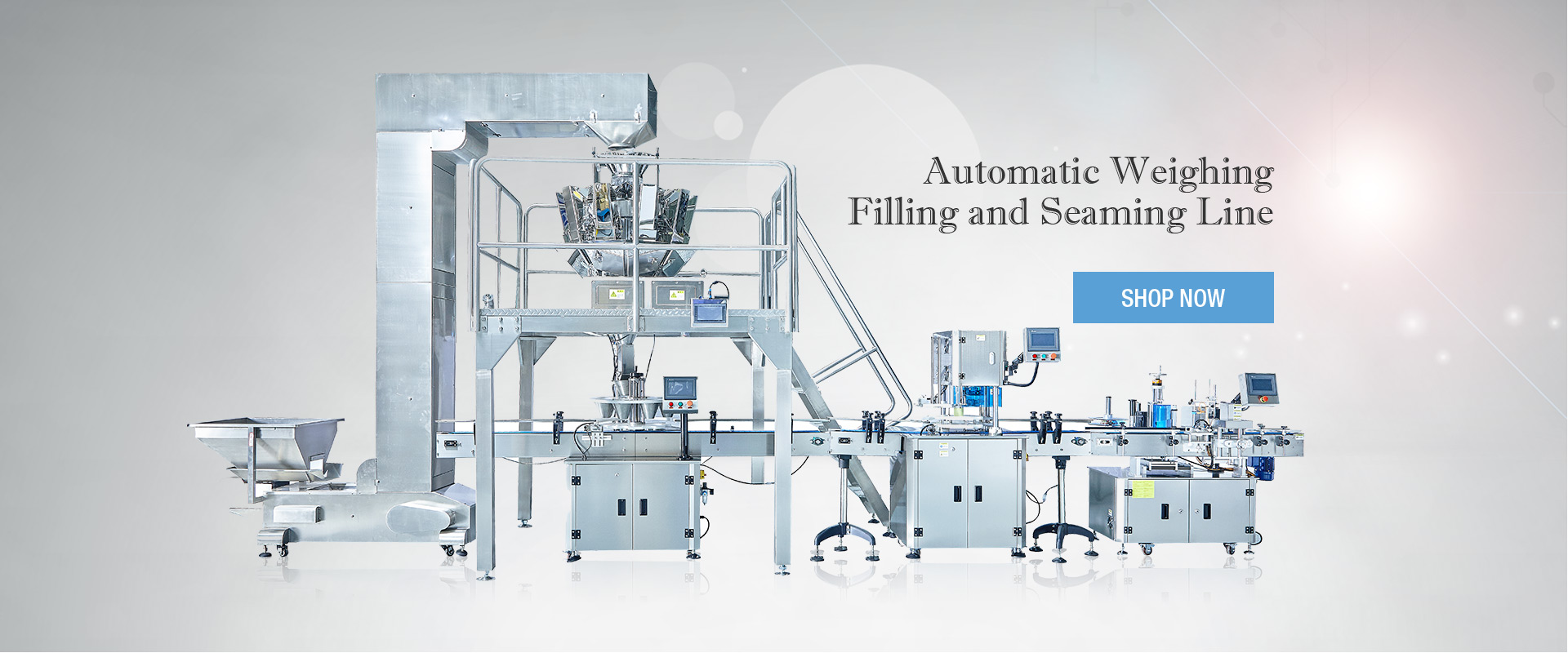
GZFHARVEST is a packaging machinery manufacturer based in Guangzhou, China, specializing in can seaming machines and complete packaging solutions.
Our product range includes:
Automatic Can Seaming Machines
Semi-Automatic Can Sealing Machines
Vacuum Can Seamer Machines
Nitrogen Flushing Can Sealer
Vacuum Nitrogen Flushing Can Seaming Machines
Double-Head Can Sealing Machines
Custom Can Seaming and Packaging Lines
We provide packaging equipment for food, beverage, powder, granule, and other industrial applications.
With a focus on machine quality, engineering experience, and professional technical support, GZFHARVEST helps customers select suitable can sealing solutions according to their container specifications, products, and production requirements.
Looking for an automatic can seaming machine manufacturer in China?
Contact GZFHARVEST to discuss your can dimensions, can end specifications, product characteristics, and production capacity requirements. Our team can help you find a suitable can sealing solution for your packaging line.
Website: https://www.gzfharvest.com/
Frequently Asked Questions (FAQ)
What is the main advantage of a stationary-can seaming machine?
A non-rotational seaming design prevents centrifugal force from ejecting liquid contents or crushing delicate food items (e.g., craft beverages, milk powders, or freeze-dried foods) during high-speed sealing.
Why is Cr12 die steel specified for chucks and seaming rollers?
Cr12 die steel possesses high toughness, hardness, and wear resistance, maintaining exact tooling geometry across hundreds of thousands of duty cycles to ensure consistent double seam parameters.
No.3 Gongye South Road,Mingzhu Industrial Park,Conghua District ,Guangzhou City 510900,China
+86 20 3751 0321
FOLLOW US


Tel/ Fax: +86 20 3751 0321
E-mail: sales@gzfharvest.com
Add: No.3 Gongye South Road,Mingzhu Industrial Park,Conghua District ,Guangzhou City 510900,China