



Jul. 17, 2026
Even a well-designed closure system can drift out of balance over time. In daily production, small changes in cap quality, bottle shape, conveyor condition, or sensor position can create problems that were not visible during installation. Most capping issues do not begin as major failures; they start as small process variations that slowly affect output.
This article is written for operators, maintenance staff, and packaging engineers who want a practical way to diagnose common bottle closure problems and keep the line stable. It focuses on the symptoms that usually appear first, the mechanical reasons behind them, and the maintenance habits that help prevent repeated interruptions.
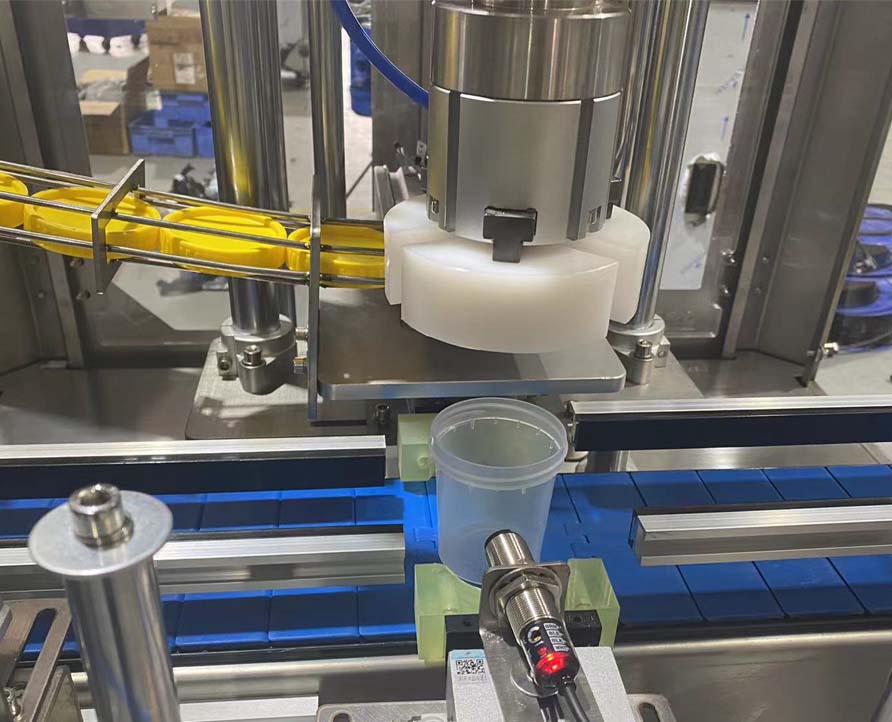
The capping section is exposed to more variability than many other parts of the line. Bottle finish, cap friction, product residue, conveyor vibration, and wear on contact parts can all influence how the system performs from one shift to the next.
Because of that, a closure issue is rarely caused by one single component. A cap may slip because torque is too low, but the same symptom may also appear when the gripping surface is worn, the cap feed is inconsistent, or the bottle is not centered properly.
Cap slippage usually shows up when the cap is not held firmly enough during the tightening phase. The result can be loose closure, shallow thread engagement, or uneven appearance on the top of the bottle.
One common cause is incorrect torque setting, but mechanical wear can produce the same result. If the gripping elements are dirty or polished by long use, they may not hold the cap with enough consistency.
Check whether the torque setting matches the current bottle and cap combination.
Inspect the gripping contact surfaces for wear, residue, or contamination.
Verify that the bottle neck is centered before tightening begins.
Confirm that cap dimensions have not changed from the original sample.
A tilted cap often points to a problem earlier in the sequence rather than at the final tightening moment. If the bottle arrives off-center, or if the cap enters the neck at a slight angle, the cap may still close but the result will look uneven and may fail quality checks.
This issue becomes more visible when the bottle is tall, narrow, or unstable on the conveyor. In those cases, even a small positional error can create a visible tilt at the top closure.
Cap jams usually indicate a problem with the supply path rather than the tightening head itself. The issue may come from irregular cap stacking, guide rail geometry, static buildup, or a mismatch between feeding speed and line speed.
When jams repeat in the same place, the easiest fix is to inspect the path step by step. If the cap flips at a certain bend or stops at a certain transition point, the feed geometry is usually the first place to look.
| Problem | Likely Cause | Maintenance Focus |
|---|---|---|
| Cap jam | Feed path restriction or poor orientation | Clean guide rails and verify flow path |
| Cap slip | Low torque or worn grip surface | Check tightening force and contact parts |
| Tilted cap | Bottle misalignment or unstable transfer | Adjust conveyor and clamp position |
| Torque variation | Sensor drift or inconsistent adjustment | Confirm servo settings and calibration |
Torque inconsistency is one of the most important signs that the closure process is losing stability. A line may begin the shift with acceptable tightening and gradually drift as parts warm up, surfaces wear, or settings change under production pressure.
When this happens, the issue is not just the torque value itself. The real question is whether the system holds the same behavior over time. Stable closure depends on repeatability, not only on the nominal setting written on the panel.
Sensors play a quiet but important role in bottle closure. They help detect bottle position, cap presence, and movement timing. If a sensor shifts out of alignment, the machine may react too early or too late, and the result can be incomplete closure or unnecessary stop events.
Sensor maintenance is often overlooked because it does not always create an obvious mechanical noise. However, even a small offset or dirty lens can interrupt the timing chain of the whole line.
Clean sensor faces regularly to avoid false readings.
Check the mounting position after vibration or format change.
Verify signal timing after mechanical adjustment.
Replace damaged sensor brackets before they cause repeat misreads.
The most effective maintenance plan is not complicated. It is consistent. A short inspection at the start of each shift is often enough to catch worn parts, residue buildup, and loose settings before they become production losses.
Clean cap-contact surfaces, check the guide rails, confirm bottle transfer stability, and review the torque behavior of the system. These tasks are simple, but they protect the core function of the capping section.
Inspect cap supply parts for wear or blockage.
Confirm bottle clamping pressure before each run.
Check that torque settings have not drifted from the approved value.
Clean dust, cap residue, and product buildup around the capping zone.
Different lines fail in different ways, but the maintenance logic is usually similar. The table below shows where attention should go first depending on the symptom.
| Symptom | First Check | Second Check |
|---|---|---|
| Loose caps | Torque setting | Grip condition |
| Cap jams | Feeding path | Cap orientation |
| Tilted closures | Bottle alignment | Clamp stability |
| Intermittent stoppage | Sensors | Signal timing |
A small packaging line for household liquid products started showing irregular cap quality after several months of continuous use.
Background: The line had stable performance at first, but repeated production led to more cap jams, weak tightening, and occasional false sensor triggers.
Solution: Guangzhou Full Harvest Industries Co., Ltd. reviewed the cap feed path, checked the clamping position, reset the torque behavior, and corrected sensor alignment so the line could return to stable operation.
Result: The packaging team reduced repeated stoppages, closure quality became more consistent, and daily maintenance became easier to manage.
“Once we understood where the problems were actually coming from, maintenance became much more predictable. The machine did not need constant intervention after the settings were corrected.”
This troubleshooting guide completes the practical view of bottle closure. The first article explains how to choose the right capping solution, and the second explains how automatic cap feeding and servo control improve stability. Together, they show how selection, operation, and maintenance fit into one packaging strategy. When the process needs to be matched to a real production setup, the bottle capping machine page is the main product reference for the equipment scope.
Related reading: automatic bottle capping equipment
Because wear, residue buildup, vibration, and small alignment shifts gradually change how the system behaves over time.
Check the feed path first, then inspect the cap orientation and any point where the cap repeatedly stops or flips.
It should be checked regularly during production, especially after format changes or when closure quality begins to drift.
Because they often show up as timing errors or intermittent stoppages rather than obvious mechanical failure.
Guangzhou Full Harvest Industries Co., Ltd. works with bottle and can packaging equipment where closure stability depends on coordinated feeding, clamping, and tightening behavior. For buyers and operators studying long-term line stability, that kind of process experience is useful because capping reliability is usually a system issue, not a single-part issue.
Packaging and Labeling Control
https://www.ecfr.gov/current/title-21/chapter-I/subchapter-C/part-211/subpart-g
Container Closure Systems for Packaging Human Drugs and Biologics
https://www.fda.gov/regulatory-information/search-fda-guidance-documents/container-closure-systems-packaging-human-drugs-and-biologics
Current Good Manufacturing Practice in Manufacturing, Packaging, Labeling, or Holding Operations for Dietary Supplements
https://www.ecfr.gov/current/title-21/chapter-I/subchapter-B/part-111/subpart-g
No.3 Gongye South Road,Mingzhu Industrial Park,Conghua District ,Guangzhou City 510900,China
+86 20 3751 0321
FOLLOW US


Tel/ Fax: +86 20 3751 0321
E-mail: sales@gzfharvest.com
Add: No.3 Gongye South Road,Mingzhu Industrial Park,Conghua District ,Guangzhou City 510900,China