


Sep. 05, 2026
Selecting tape sealing equipment for a container is not only a question of production speed. The container shape, material, lid structure, tape position, and handling method all affect whether tape can be applied smoothly and consistently. A tape sealing configuration that works well for a round tin may not perform in the same way on a square plastic box, an oval bottle, or a special-shaped cookie container.
This guide is intended for packaging engineers, food and snack manufacturers, cosmetic packaging companies, pharmaceutical packaging projects, and equipment buyers who need to evaluate tape around sealing requirements before selecting a machine. It explains how to compare container formats, what measurements to prepare, and how to identify the sealing configuration that fits the actual packaging process.
Tape follows the surface of the container. On a round container, tape can travel around a continuous curved surface with relatively stable contact. On square, rectangular, oval, heart-shaped, or other special-shaped containers, the tape must pass corners, flat edges, changing radii, or irregular surfaces. These changes affect tape tension, pressure roller contact, overlap position, and the appearance of the finished seal.
For this reason, buyers should not select a taping sealing machine based only on a product photograph or a general description. The machine needs to be evaluated against the actual package. A container with sharp corners may need different pressure conditions from a round tin. A lightweight plastic jar may require more stable conveying than a rigid metal container. A lid with a raised edge or recessed area may change where tape can be applied.
The best starting point is to treat the container, tape, and machine as one packaging system. The performance of the final tape application depends on how these three elements work together.
Before comparing semi-automatic or automatic equipment, collect the technical details of the package. Basic measurements and samples help determine whether the tape path, pressure system, conveyor, and container guide arrangement are suitable for the project.
Container material affects tape adhesion and handling stability. Tinplate and metal containers generally provide a rigid surface, while plastic containers may vary in stiffness, texture, surface energy, and wall thickness. Paper cans and composite containers may require additional attention to surface smoothness, edge structure, and the tape contact area.
The container surface should also be checked for oil, dust, moisture, product residue, label overlap, uneven printing, embossing, or protective film. These conditions can influence how adhesive tape contacts the package surface. The tape selection should therefore be confirmed with the final production container, not only with an empty sample of a similar shape.
Shape is one of the most important factors in tape around sealing. Round containers usually provide a continuous tape path, while square and rectangular packages introduce corners that can change tape tension and pressure contact. Oval shapes may require stable container guidance to maintain a consistent tape position. Heart-shaped or decorative containers should be evaluated carefully because the tape path can include sharper directional changes.
Buyers should define exactly where the tape must be applied. Some projects require tape around the lid edge, while others require tape around the opening area, the container body, or a specific packaging joint. The sealing position determines the required guide height, roller position, tape-path arrangement, and contact pressure.
A package drawing or clear photograph showing the intended tape position can speed up the equipment evaluation process. It also helps prevent a situation where the machine is selected for the container shape but cannot apply tape at the required height or overlap location.
Automatic tape application depends on stable container movement. Tall, narrow, lightweight, or irregularly shaped containers can shift when entering the sealing zone. If the container does not remain centered, tape may be applied unevenly, the overlap may move, or the pressure roller may not contact the intended area consistently.
Container guides, conveyor speed, pressure components, and infeed spacing should be considered together. The objective is not only to move containers quickly, but to move each container through the tape application zone in a repeatable position.
| Container Shape | Common Tape Application Challenge | Machine Handling Requirement | Buyer Checkpoint |
|---|---|---|---|
| Round tins and jars | Tape position may move if the container rotates unevenly | Stable rotational handling and consistent guide position | Confirm container diameter, lid position, and tape overlap location |
| Square containers | Tape must pass corners without wrinkling or lifting | Controlled pressure and guide arrangement around corner transitions | Confirm corner radius, wall rigidity, and tape adhesion on flat surfaces |
| Rectangular boxes | Long sides and sharp corners can affect tape tracking | Reliable conveyor alignment and pressure contact along the tape path | Confirm length, width, height, and tape application height |
| Oval containers | Changing curvature can shift tape position during movement | Stable guide rails and container positioning | Confirm major diameter, minor diameter, and container orientation |
| Heart-shaped or special-shaped containers | Irregular contours can create uneven pressure and tape tension | Project-specific assessment of the tape path and contact components | Provide samples, detailed dimensions, and the required tape location |
| Paper cans and composite containers | Surface variation or edge structure can affect tape adhesion | Suitable pressure setting and confirmed tape compatibility | Confirm surface finish, wall strength, and tape material |
Round containers are often simpler to guide through a tape around sealing process, but they still need a stable tape position and consistent overlap. Square and rectangular containers require more attention at corners. Special-shaped containers should always be evaluated using the actual packaging sample because visual similarity does not guarantee that the tape path will behave in the same way.
Machine selection and tape selection should be reviewed together. The same container can perform differently when the tape backing, adhesive type, tape width, unwind behavior, or storage condition changes. A tape that is suitable for one packaging surface may not provide the same result on another material or container geometry.
Before a final equipment decision, buyers should confirm the tape specification, including tape width, backing material, adhesive behavior, roll dimensions, and the required overlap. The tape application area should also be defined clearly. If tape is intended to bridge a lid and container body, the equipment evaluation should account for both surfaces and any height difference between them.
Confirm tape width and roll dimensions before selecting the tape head configuration.
Check whether the container surface is smooth, dry, clean, and suitable for the intended adhesive.
Review tape performance on corners, curves, raised edges, and lid transitions.
Confirm the required tape overlap and whether the overlap position must remain visible or controlled.
Use production samples where possible instead of relying only on material descriptions.
Tape around sealing is commonly used for rigid containers where a visible tape band, closure-area tape, or package-edge tape application is required. The actual application depends on the container design and the packaging objective. For example, a biscuit tin may require tape around the lid area, while a plastic jar may use tape around a designated opening or body position.
Tin containers for biscuits, cookies, snacks, tea, confectionery, and gift packaging.
Plastic jars and plastic containers for food, personal care, cosmetic, and household products.
Paper cans and composite containers for dry food, powdered products, and gift packaging.
Round, square, rectangular, oval, heart-shaped, and compatible special-shaped containers.
Glass containers where the container structure and tape application position are suitable for the process.
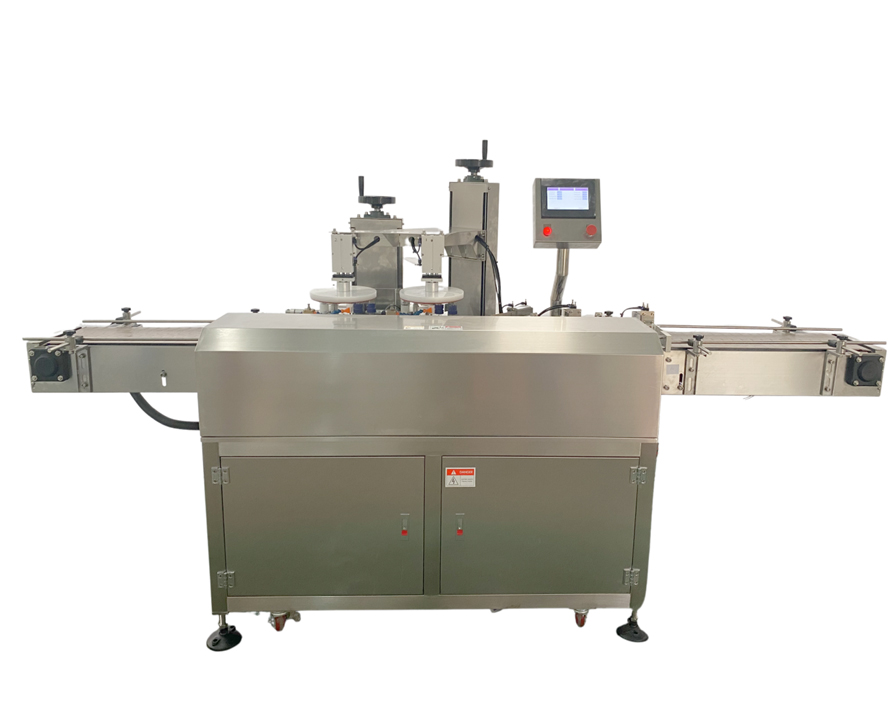
For buyers comparing available equipment by container type, the container taping sealing machine range includes semi-automatic, automatic, double-head, and double-row configurations for compatible rigid packaging formats.
After confirming the container and tape requirements, the next decision is whether semi-automatic or automatic operation is more suitable. This choice depends on output demand, container stability, changeover frequency, available operators, and the need for connection with other packaging equipment.
| Configuration | Suitable Production Pattern | Operator Involvement | Practical Consideration |
|---|---|---|---|
| Semi-automatic tape around sealing | Smaller batches, flexible production, or frequent container changes | Higher operator involvement | Useful where product formats vary and manual positioning is acceptable |
| Automatic tape sealing | Continuous production with stable container formats | Reduced operator involvement | Requires stable conveyor transfer and consistent container spacing |
| Double-head tape sealing | Higher output demand for compatible containers | Automatic container handling | Confirm tape supply, container stability, and downstream capacity |
| Double-row tape around sealing | Higher-volume lines using suitable feeding arrangements | Automatic multi-row handling | Requires coordinated conveyor layout and stable row spacing |
A double-head configuration can be useful when the packaging line needs more tape sealing capacity, but higher output must be supported by stable container handling and adequate tape supply. For projects using tins, cookie boxes, or plastic biscuit containers, a double head tape sealing machine can be evaluated based on the actual container dimensions, tape position, and required output.
Workflow: Confirm container material → Measure container shape and dimensions → Identify tape application position → Confirm tape specification → Check conveyor handling and stability → Select semi-automatic or automatic configuration → Test with production samples → Confirm final machine requirements.
This workflow helps buyers prepare the information needed for a practical equipment evaluation. It also prevents a common mistake: selecting a machine based only on the package category, without confirming the actual container geometry and tape application requirement.
A snack food packaging operation needs to apply tape around the lid area of several rigid cookie containers. The product range includes round tins, square metal boxes, and plastic biscuit jars with different diameters and corner shapes.
Packaging Requirement: The packaging team needs a tape application process that can maintain a consistent tape position around different container formats while allowing the operation to evaluate output needs and changeover requirements.
Evaluation Method: The team prepares container samples, confirms the tape width and intended overlap, measures the lid and body dimensions, and checks whether each package remains stable during conveyor transfer. The machine configuration is then matched to the actual container range instead of a general product category.
Expected Outcome: The evaluation clarifies which container formats can use the same tape sealing configuration, which formats require adjustment, and whether semi-automatic, automatic, double-head, or double-row handling is appropriate. This is a typical packaging evaluation scenario, not a published customer case.
Stable tape application depends on more than the original machine setup. Tape wrinkles, tape lifting, uneven overlap, pressure roller wear, and container misalignment can affect the finished package during daily production. Once the appropriate equipment has been selected, the next step is to maintain the tape path, contact components, and container handling conditions.
For troubleshooting and maintenance guidance, see tape sealing problems and maintenance.
It depends on the selected machine configuration, the size range, the tape application position, and the container geometry. Round and square formats can require different guide, pressure, or adjustment conditions. Container samples should be reviewed before final machine selection.
Yes, compatible plastic jars can be evaluated for tape around sealing. The container wall rigidity, surface condition, lid design, tape position, and tape adhesive should be confirmed before selecting the equipment.
Some special-shaped containers can be suitable, including oval, heart-shaped, and certain decorative packaging formats. Suitability depends on the container contour, tape path, pressure contact, and stable handling through the machine.
Please provide container photos or samples, container shape, diameter or width, height, material, tape width, tape application position, required output, and whether the machine must connect with existing packaging equipment.
Semi-automatic equipment can be suitable for lower output, flexible production, or regular format changes. Automatic equipment is more suitable for stable, continuous production where container transfer and tape application can be integrated into the packaging line.
Tape wrinkles can result from unsuitable tape tension, uneven pressure contact, sharp container corners, unstable container movement, or an unsuitable tape specification. The tape path, roller condition, container alignment, and tape type should be reviewed together.
Guangzhou Full Harvest Industries Co., Ltd. supplies packaging machinery for can and container production lines, including filling, sealing, capping, labeling, and tape sealing equipment. For container tape sealing projects, the company can review package shape, material, tape position, target output, and packaging-line connection requirements to support practical configuration planning.
Packaging Machinery Safety
https://www.osha.gov/laws-regs/standardinterpretations/1999-12-08
Machine Guarding Overview
https://www.osha.gov/machine-guarding
General Requirements for All Machines
https://www.osha.gov/laws-regs/regulations/standardnumber/1910/1910.212
No.3 Gongye South Road,Mingzhu Industrial Park,Conghua District ,Guangzhou City 510900,China
+86 20 3751 0321
FOLLOW US


Tel/ Fax: +86 20 3751 0321
E-mail: sales@gzfharvest.com
Add: No.3 Gongye South Road,Mingzhu Industrial Park,Conghua District ,Guangzhou City 510900,China