


Jun. 30, 2026
Selecting a sardine oval irregular can seaming machine is not only a technical decision. It is also a procurement choice that affects total cost of ownership, line performance, labor demand, and product consistency. For seafood processors, especially those handling oval sardine cans, the wrong machine can create bottlenecks that follow the product all the way through the plant.
A good selection process should begin with the production target. Some factories need moderate output for niche exports, while others need a high-speed system that can support large retail contracts. The right automatic oval sardine can seamer is the one that fits the business model, not just the one with the highest advertised speed.
Match the machine to output goals.
Evaluate can formats before comparing prices.
Consider how the line will run over time.
Think about maintenance and changeover costs.
When the purchase is tied to a seafood can sealing production line, the machine must also work smoothly with upstream filling and downstream handling equipment.
Capacity planning should come before brand comparison. If the line requires 30 cans per minute, buying a 70 cans-per-minute system may not be efficient. On the other hand, under-sizing the machine can create future limitations that are expensive to correct later.
Typical seafood line planning often falls into three categories:
Medium-volume lines: 25–35 cans/min.
Standard commercial lines: 45–55 cans/min.
High-volume export lines: 65–75 cans/min.
The sardine oval irregular can seaming machine should be chosen with some growth room, but not so much that it creates unnecessary capital expense. For oval sardine products, consistency is often just as important as raw speed, because premium cans are judged heavily on appearance and seam quality.
Capacity should fit current demand.
Some growth margin is useful.
Over-specifying can waste capital.
Speed must remain stable under load.
This is one of the main reasons procurement teams compare total cost rather than just the purchase price.
The next procurement issue is can geometry. The sardine oval irregular can seaming machine is built for non-round containers, but not every machine supports the same shape range. Some plants only need oval sardine cans, while others also run square or rectangular seafood or pet food containers.
Important compatibility points include:
Oval can support.
Round can support if the line is mixed.
Square and rectangular can capability.
Mold size range.
Product height range.
If your product mix changes frequently, a machine with fast mold change and wider shape support is a better investment. If the line is dedicated only to oval sardine cans, a more specialized setup may offer better sealing precision.
Check the exact can geometry.
Confirm the usable height range.
Verify the mold change process.
Avoid buying unnecessary shape capability.
For a sardine oval irregular can seaming machine, the most important part is whether the mold is built for your can’s actual curvature, not just for “oval” as a general category.
Poor sealing affects more than product quality. It creates commercial risk through complaints, returns, spoilage, and brand damage. In seafood packaging, where oil or broth may be present, seam integrity is especially important.
A procurement team should look at:
Defect rate.
Leakage control.
Seal uniformity.
Product stability over long runs.
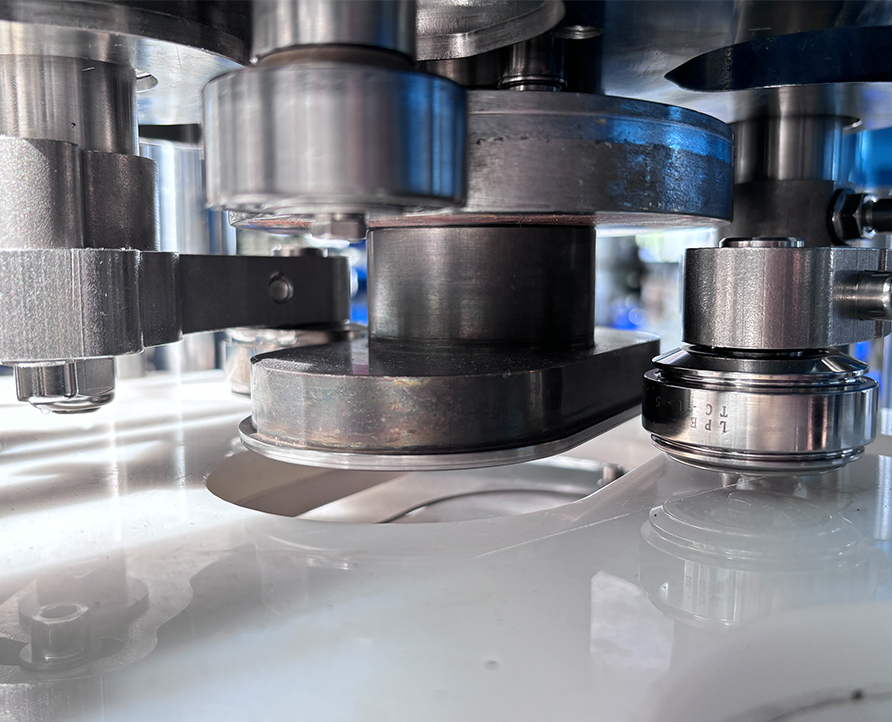
The roll-sealing design in a sardine oval irregular can seaming machine helps create a tight seam while keeping the can stationary. That structure is useful for seafood because it reduces movement-induced spill and improves seam regularity.
Lower defect rate means less waste.
Better sealing improves shelf life.
Uniform seams support brand trust.
Stable performance reduces complaints.
When comparing machines, it is worth asking for real production references rather than only catalog specifications.
A machine might look perfect on paper but fail in practice if it does not match the rest of the plant. Integration issues often show up as downtime, layout conflicts, or operator confusion.
A seafood can sealing production line typically needs coordination among:
Filling.
Lid placement.
Seaming.
Conveying.
Discharge or packing.
The sardine oval irregular can seaming machine should be checked for line compatibility, PLC communication, and physical dimensions. If it can tie into standard conveyors and existing control systems, installation becomes much easier.
Confirm conveyor height and direction.
Check PLC compatibility.
Review line space before purchase.
Plan installation with the full line in mind.
An automatic oval sardine can seamer can save time later if it is designed to fit the plant layout instead of forcing a redesign.
The initial price is only one part of the purchase decision. Procurement teams should calculate total cost of ownership, which includes labor, energy, spare parts, maintenance, and waste reduction. A lower-cost machine may cost more in the long run if it creates more defects or requires frequent adjustment.
Key cost areas:
Purchase price.
Maintenance and spare parts.
Labor reduction.
Energy use.
Waste from sealing errors.
For many seafood processors, the automatic system reduces labor by a meaningful margin and improves stability enough to justify the investment. The sardine oval irregular can seaming machine is usually best viewed as a productivity asset rather than a standalone machine.
Think beyond the invoice.
Include labor in ROI calculations.
Add defect reduction to the savings model.
Compare uptime, not just machine speed.
This is especially important for export-focused plants, where consistency and traceability matter as much as throughput.
| Option A Semi-Automatic Oval Seaming Medium plants / limited budget | ★Recommended Sardine Oval Irregular Can Seaming Machine Automatic / Full PLC / Seafood lines | |
|---|---|---|
| Output & Capacity | ||
| Target output range Sustained speed under load | ~20–30 cans/min Degrades over longer shifts | 30–70 cans/min (standard 50) Stable under extended production |
| Capacity planning fit Right-sizing for your line | Suitable for niche or low-volume export | Matches medium, standard & high-volume lines—choose model by demand tier |
| Long-shift stability Output consistency over time | Declines—operator fatigue | Consistent—PLC-controlled per cycle |
| Sealing Quality & Commercial Risk | ||
| Seal defect rate Impact on waste & returns | High—increases with shift length | Low—down to 0.25% (case data) |
| Seam uniformity on oval cans 360°consistency | Uneven—especially on oval curves | 360°uniform—stationary-can roll sealing |
| Liquid spillage control Oil / broth in seafood cans | Rotation causes spillage & waste | Can is stationary—spillage nearly eliminated |
| Brand & shelf-life risk Complaints, returns, spoilage | Higher—inconsistent seams affect premium perception | Lower—consistent seam quality supports brand trust and shelf life |
| Total Cost of Ownership | ||
| Initial investment Purchase price | Lower upfront cost | Higher upfront—offset by TCO savings |
| Labor requirement Headcount & skill dependency | Medium-high—manual lid placement | Low—~35% reduction (case data) |
| Waste from sealing errors Defects, rework, spoilage | Higher—inconsistent seams generate product loss | Lower—defect reduction directly improves yield |
| Maintenance cost Parts, servicing, downtime | Medium—more frequent adjustment | Medium—predictable with hardened steel molds |
| ROI speed Payback horizon | Moderate | Fast in high-volume seafood lines |
| Can Format & Mold Compatibility | ||
| Oval can support Elliptical mold precision | Limited—generic oval handling | Custom molds matched to exact can curvature |
| Multi-format flexibility Oval, round, square, rectangular | Medium—limited shape range | High—correct mold sets cover multiple formats |
| Changeover speed Switching between can sizes | Moderate—requires manual re-setup | Fast with quick-change mold sets—minimal downtime |
| Line Integration & Automation | ||
| PLC & control system Pressure, timing, repeatability | Partial—basic or no PLC | Full PLC—pressure, timing & clamping automated per cycle |
| Integration with existing line Filling, conveying, discharge | Limited—requires manual bridging | Excellent—connects to filling, conveyor & packing |
| Installation complexity Layout fit & commissioning | Moderate | Higher upfront—but designed to fit standard plant layouts |
| Best suited for | Medium plants with lower budgets, smaller oval can batches, or lines not yet ready for full automation | Seafood processors running oval sardine cans at scale—especially export-focused plants where seal quality, labor efficiency, and line stability all matter |
A seafood processor in Southeast Asia planned to expand canned sardine and tuna output for retail and export contracts. The company had to decide between keeping a semi-automatic line or moving to a fully automatic system.
Before the purchase decision:
Output was limited to about 20 cans/min.
Seal variation increased with longer shifts.
Labor cost was rising.
The plant wanted better integration with the filling line.
After comparing options, the company selected a sardine oval irregular can seaming machine with custom molds, PLC control, and stationary-can sealing.
Results after installation:
Output reached 55 cans/min.
Seal defect rate dropped to 0.25%.
Labor cost fell by 35%.
Downtime was reduced.
The procurement director said the machine delivered better value than expected because it improved both output and quality, rather than only one or the other.
“We needed a machine that made sense both technically and financially. The sardine oval irregular can seaming machine gave us lower defects, better line stability, and a better long-term cost picture.”
— Procurement Director, Seafood Processor in Southeast Asia
This machine is suitable for buyers who run:
Sardine cans in oval formats.
Tuna or saury in irregular packaging.
Seafood lines with high-liquid content.
Pet food cans using seafood ingredients.
Specialty food products in non-round containers.
For procurement teams, the key question is whether the machine can support the product mix now and in the future. If the answer is yes, the sardine oval irregular can seaming machine becomes a practical long-term investment.
Start with output target, can shape, and how the machine will fit into your existing line.
Not always. The right speed is the one that matches your demand without creating unnecessary cost or instability.
Compare seal quality, integration, defect rate, maintenance, and long-term cost, not only purchase price.
Yes, if it is equipped with the correct mold sets and adjustment range.
Seal consistency and spillage control are usually the most important factors.
It lowers labor demand, improves repeatability, and usually reduces waste from sealing defects.
Ask about installation, training, spare parts, and long-term technical support.
GZFharvest, or Guangzhou Full Harvest Industries Co., Ltd., is a practical choice for seafood processors that need a machine matched to their packaging goals and production layout. The company focuses on sealing equipment for canned fish, seafood, and other irregular container formats, which makes it relevant for plants that need a sardine oval irregular can seaming machine rather than a generic seamer.
For procurement teams, the strongest point is not only the equipment itself but also the combination of mold adaptation, line compatibility, and support. That combination helps reduce the hidden costs that often appear after the purchase.
Food Safety Guidelines for Canned Fish and Shellfish – U.S. Food and Drug Administration
https://www.fda.gov/food/commodity-specific-guidance-food-safety/canned-fish-and-shellfish
Food Processing Facility Guidelines – U.S. Department of Agriculture
https://www.usda.gov/sites/default/files/documents/food-processing-facility-guidelines.pdf
Food Processing Technology and Can Seaming – UC Davis Department of Food Science
https://foodscience.ucdavis.edu/research/food-processing-technology
Fish Processing and Quality – FAO Fisheries and Aquaculture
https://www.fao.org/fishery/en/sector/processing-quality
Canned Seafood Market Size & Share | Industry Report, 2033 – Grand View Research
https://www.grandviewresearch.com/industry-analysis/canned-seafood-market
No.3 Gongye South Road,Mingzhu Industrial Park,Conghua District ,Guangzhou City 510900,China
+86 20 3751 0321
FOLLOW US


Tel/ Fax: +86 20 3751 0321
E-mail: sales@gzfharvest.com
Add: No.3 Gongye South Road,Mingzhu Industrial Park,Conghua District ,Guangzhou City 510900,China