

Jun. 12, 2026
The sardine oval irregular can seaming machine is a specialized automatic sealing system built for non-round containers, especially oval sardine cans used in seafood packaging. Unlike standard round can seamers, this equipment must manage the geometry of elliptical cans while still creating a tight, hermetic seal that protects product quality during storage and transport.
The engineering difficulty comes from the shape itself. Oval cans have changing radii around the body, so the sealing force cannot be applied in the same way as it would be on a round can. If the mold, track, and roll path are not matched to the can body, the seam may become uneven, weak, or distorted. That is why irregular can sealing technology must be designed from the can shape outward, not adapted from general-purpose machines.
Custom molds match the elliptical can profile.
Roll-sealing keeps the can stationary during closing.
High-hardness mold steel improves stability and durability.
PLC control keeps pressure and timing consistent.
For canned sardines and similar seafood products, the sardine oval irregular can seaming machine becomes a core production asset because it affects sealing quality, product freshness, and line efficiency at the same time.
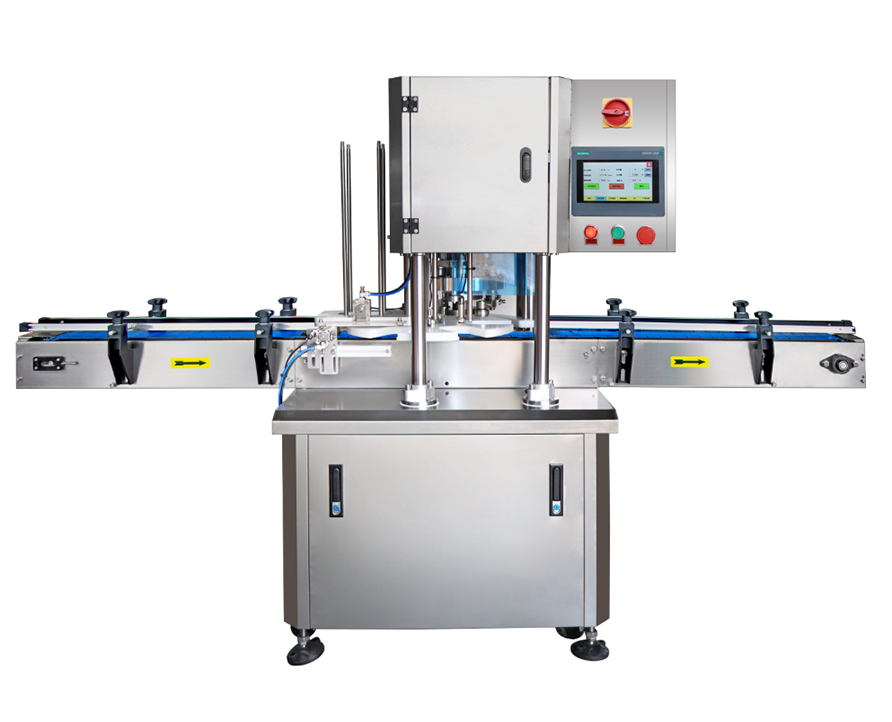
The machine uses a roll-sealing method in which the can remains stationary while the sealing rolls work around the rim. This is different from many older systems that rotate the container during closing. In seafood packaging, that difference matters because movement during sealing can disturb liquid-filled cans.
A stationary-can design offers several mechanical benefits:
The can is clamped in a custom mold that fits its exact shape.
Sealing rolls move with controlled pressure along the seam.
The lid is positioned first, then sealed in place.
Liquid spillage is reduced because the can does not rotate.
This design is particularly suitable for oil-packed sardines, brined seafood, and other high-liquid products. If the can turns during sealing, the internal contents can shift and spill, causing waste and cleaning problems. The stationary system keeps the filling stable and helps the seam form evenly around the full perimeter.
The roll-sealing process also supports a 360° uniform seam. That uniformity is one of the reasons the sardine oval irregular can seaming machine is preferred for premium seafood lines where leakage tolerance is very low.
Stationary can design reduces spillage.
Roll-sealing delivers uniform seam formation.
Controlled pressure improves hermeticity.
Stable clamping helps prevent deformation.
This is also why the automatic oval sardine can seamer is more than just a closing device. It is a precision sealing system that directly influences the quality and shelf life of the finished product.
One of the most critical elements in a sardine oval irregular can seaming machine is the mold and track system. Oval cans are not geometrically uniform, so the machine must guide the body with exact alignment during conveying, positioning, and sealing. Any mismatch between the mold and the container can cause vibration, misalignment, or a weak seam.
The mold design must account for:
Can curvature.
Lid profile.
Body height.
The product line’s dimensional tolerance.
The track system works as a guiding path that keeps each can stable during the closing cycle. It also helps reduce mechanical shock and maintains repeatability at higher production speeds. This is especially important in seafood plants where thousands of cans may be sealed during a single shift.
High-hardness mold steel is commonly used because it resists wear, preserves shape over time, and keeps the seam quality stable even under continuous operation. A soft or poorly machined mold will wear faster, leading to gradual performance loss and more frequent maintenance.
Mold geometry must match the elliptical can body.
Track alignment prevents vibration during closing.
Hardened steel improves durability.
Stable guidance supports higher line speeds.
For producers who package multiple can formats, quick mold change is also valuable. It allows one sardine oval irregular can seaming machine to support different product sizes without requiring a separate machine for each format.
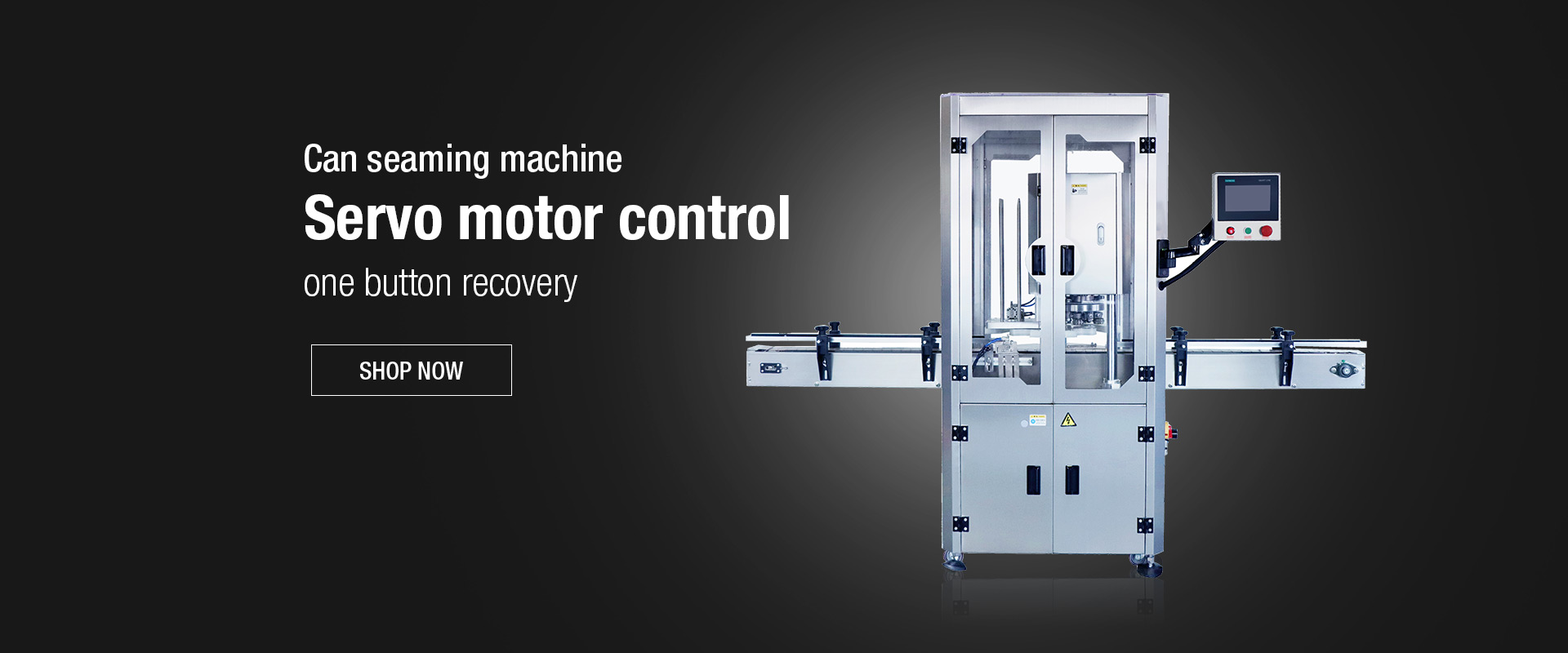
Modern machines use PLC logic and touchscreen operation to manage sealing force, speed, and timing. That control layer matters because seafood packaging must stay consistent across long production runs and multiple shifts. Manual adjustment cannot easily deliver the same stability as automated control.
The PLC system typically handles:
Sealing roll pressure.
Lid placement timing.
Can clamping sequence.
Unloading coordination.
The touchscreen interface allows operators to set production parameters, monitor status, and check alarms quickly. This reduces dependency on individual operator skill and helps factories standardize quality. In a high-output seafood line, even a small inconsistency in pressure or timing can affect the seam.
PLC control improves repeatability.
Touchscreen operation simplifies parameter setup.
Automated timing reduces operator variation.
Monitoring tools help maintain production stability.
For an automatic oval sardine can seamer, control logic is not just a convenience. It is one of the main reasons the system can maintain steady output while keeping defect rates low.
The performance of a sardine oval irregular can seaming machine is usually judged by throughput, seal quality, and line stability. Different models can be configured for different production needs, from medium-volume seafood plants to higher-capacity export operations.
Typical performance levels include:
30 cans/min for smaller or mid-volume lines.
50 cans/min for standard seafood production.
Up to 70 cans/min for larger automated systems.
Quality targets include:
Very low defect rate.
Minimal leakage.
Strong seam consistency.
Stable output over long runs.
For canned sardines, production speed cannot be considered alone. A machine that runs fast but produces poor seams will create waste, spoilage risk, and customer complaints. The ideal system balances speed with consistent hermetic sealing.
Throughput must match line demand.
Seal quality must stay stable under load.
Leakage control is essential for seafood.
Output consistency supports long-term profitability.
That balance is why the sardine oval irregular can seaming machine is often chosen as a core machine rather than a secondary one.
A detailed comparison of sealing technologies for oval sardine can production lines, based on engineering design and real-world case data.
| Semi-Automatic Oval Line Pre-upgrade (case study) | Standard Round Can Seamer Reference baseline | Sardine Oval Irregular Can Seaming Machine Automatic / Full PLC Control | |
|---|---|---|---|
| Can Format & Mold Design | |||
| Can shape compatibility | Oval (limited support) | Round cans only | Oval, irregular & multiple formats |
| Mold matching accuracy | Low | Standard (round only) | High—custom elliptical molds |
| Mold material | Standard steel | Standard steel | High-hardness mold steel, wear-resistant |
| Format changeover | Difficult | Simple (round only) | Quick-change mold sets for multiple sizes |
| Sealing Principle | |||
| Sealing method | Partly manual oval handling | Rotating-can roll seaming | Stationary-can roll sealing |
| Can rotation during sealing | Yes | Yes | No—can remains stationary |
| Seam uniformity | Uneven on oval sections | Consistent (round only) | 360°uniform seam |
| Hermetic seal quality | Weak | Moderate | High—very low leakage tolerance |
| Liquid Content Handling | |||
| Liquid spillage control | Low—rotation causes spillage | Moderate | High—spillage nearly eliminated |
| Oil-packed / brined seafood | Poor fit | Limited | Designed for high-liquid seafood products |
| Automation & Process Control | |||
| PLC automation level | None / manual | Basic | Full PLC control |
| Pressure & timing control | Operator-dependent | Fixed settings | Automated, consistent per cycle |
| Lid placement | Manual | Automatic | Auto-positioned before sealing |
| Parameter interface | Manual adjustment | Basic panel | Touchscreen—setup, monitor & alarms |
| Output & Quality—Case Study Data (Southern Europe Seafood Plant) | |||
| Production speed | ~18 cans/min | — | 30–70 cans/min (standard 50) |
| Seal defect rate | ~4.0% | — | Down to 0.15% |
| Labor cost impact | High (manual-intensive) | Moderate | Reduced by ~38% (case study) |
| Long-shift output stability | Poor | Moderate | Strong—predictable across shifts |
| Line Integration & Applications | |||
| Line integration | Limited | Limited | Connects to filling, conveyor & unloading |
| Ideal applications | Small oval can batches | Round food can lines | Seafood, pet food & irregular can production |
Data based on actual case study from a Southern Europe seafood processing plant (2024–2025) and GZFharvest engineering test reports. Actual performance may vary depending on specific product configurations.
A mid-sized seafood factory in Southern Europe was producing premium oval sardines for export. Their old semi-automatic line struggled with oil spillage and inconsistent seams, especially during long production runs. The plant needed better stability without changing the can design used by its customers.
Before the upgrade:
Output hovered around 18 cans/min.
Seal defect rate stayed near 4.0%.
Oil spillage created cleaning delays.
Manual lid placement increased labor cost.
The factory installed a sardine oval irregular can seaming machine configured with custom elliptical molds and a stationary-can roll-sealing structure. The machine was tied into the existing filling and conveying equipment so the plant could improve output without rebuilding the entire line.
After installation:
Production increased to 50 cans/min.
Seal defects dropped to 0.15%.
Spillage was almost eliminated.
Labor cost fell by 38%.
The engineering team reported that the line became more predictable, and the can seam quality stayed consistent even during extended shifts. The machine became the core closing system for the plant’s oval sardine product line.
“Our sardine oval irregular can seaming machine made the line much more stable. We now have far fewer sealing issues, and the results are consistent from start to finish.”
— Engineering Manager, Seafood Factory in Southern Europe
The sardine oval irregular can seaming machine is widely used in product lines where container shape and seal quality both matter. Its main applications include:
Sardines packed in oval cans.
Tuna and saury in non-round containers.
Oil-packed and seasoned seafood.
Ready-to-eat shellfish products.
Seafood-based pet food cans.
Specialty canned foods in irregular shapes.
These applications make the machine valuable in seafood plants that want one sealing platform for several product categories. It is especially practical where oval can formats are part of the brand identity or export specification.
It can support oval, round, square, and rectangular cans, depending on the mold set and line configuration.
It helps reduce spillage and keeps liquid-filled products stable during the closing process.
Yes, with the correct mold and track set, it can handle different oval can dimensions.
It keeps pressure, timing, and movement consistent across every sealing cycle.
Yes. The roll-sealing structure is designed to reduce leakage and disturbance in liquid-filled cans.
That depends on production volume and operating conditions, but hardened steel molds are built for long service life.
Yes, it is commonly integrated with filling, conveyor, and unloading systems.
GZFharvest, or Guangzhou Full Harvest Industries Co., Ltd., focuses on food packaging and sealing equipment with strong experience in seafood lines and irregular container formats. The company’s engineering approach is centered on matching the machine to the can shape, which is especially important for oval sardine packaging where sealing precision affects both shelf life and product appearance.
For buyers who need a sardine oval irregular can seaming machine, GZFharvest offers a practical combination of custom mold design, stable roll-sealing, and PLC-based operation. That mix is useful for seafood factories that want consistent seam quality without giving up production speed.
Food Equipment Standards – NSF International
https://www.nsf.org/standards/food-equipment
Food Contact Materials – Plastics and Other Materials – European Commission
https://ec.europa.eu/health/food-safety/plastics-and-other-materials
Food Process Engineering and Can Seaming – University of Wisconsin Department of Food Science
https://foodscience.wisc.edu/research/food-process-engineering
Fish Post-Harvest Technologies and Processing – FAO Fisheries and Aquaculture
https://www.fao.org/fishery/en/post-harvest/technologies
Sustainable Seafood Processing and Value Chains – WWF
https://www.worldwildlife.org/topics/sustainable-seafood-processing
No.3 Gongye South Road,Mingzhu Industrial Park,Conghua District ,Guangzhou City 510900,China
+86 20 3751 0321
FOLLOW US


Tel/ Fax: +86 20 3751 0321
E-mail: sales@gzfharvest.com
Add: No.3 Gongye South Road,Mingzhu Industrial Park,Conghua District ,Guangzhou City 510900,China