


Nov. 14, 2026
Choosing the right weighing system is one of the most important decisions when designing an automatic granule filling and packaging line.
For products such as nuts, coffee beans, rice, seeds, candy, cereals, and dried fruits, manufacturers commonly use two types of weighing equipment: multihead combination weighers and linear weighers.
Although both machines are designed to measure a target product weight before filling, they use different weighing principles, feeding structures, and control methods.
A multihead weigher uses multiple independent weighing hoppers and computer-controlled combination calculations to achieve a target weight. A linear weigher generally uses one or more weighing channels to feed and measure products according to a preset weight.
So, which system is better for your granule packaging project?
The answer depends on product characteristics, target filling weight, required production speed, weighing accuracy, and investment budget.
In this guide, GZFHARVEST explains the differences between multihead weighers and linear weighers, their working principles, weighing and counting methods, and suitable applications for different granule products.
1. What Is a Multihead Weigher?
A multihead combination weigher is an automatic weighing machine that uses multiple independent weighing units to calculate the best combination of product weights for each package.
It is widely used in high-speed packaging applications involving free-flowing granules, nuts, snacks, seeds, and other solid products.
How Does a Multihead Weigher Work?
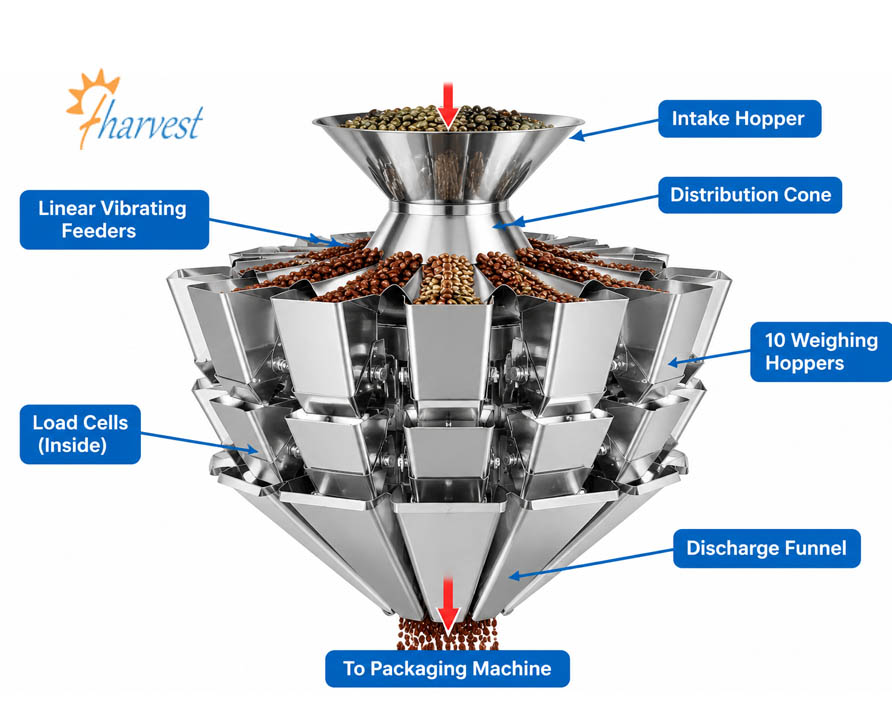
A typical multihead weigher consists of:
Product feeding hopper
Central distribution system
Linear vibrating feeders
Multiple weighing hoppers
Load cells
Computer control system
Discharge chute
The weighing process generally follows these steps:
Step 1: Product Feeding
Products are transferred from the main storage hopper into the central distribution system.
Step 2: Product Distribution
The central distribution cone and linear vibrating feeders distribute the material evenly into individual weighing hoppers.
Step 3: Individual Weighing
Each weighing hopper measures the weight of the product it contains through a load cell.
Step 4: Combination Calculation
The control system calculates different combinations of available hopper weights and selects a combination closest to the preset target weight, within the configured acceptance limits.
Step 5: Product Discharge
The selected weighing hoppers open simultaneously, releasing the combined product into the packaging container or downstream filling system.
The next weighing cycle begins automatically.
What Is Combination Weighing?
Combination weighing is the main advantage of a multihead weigher.
For example, suppose the target filling weight is 500 grams. The machine may have 10 or 14 independent weighing hoppers, each containing a different product weight.
The control system evaluates possible combinations and selects the combination that produces a total weight closest to 500 grams.
A simplified example:
Weighing Hopper | Measured Weight |
Hopper 1 | 98g |
Hopper 2 | 102g |
Hopper 3 | 105g |
Hopper 4 | 97g |
Hopper 5 | 99g |
Hopper 6 | 103g |
Hopper 7 | 101g |
Hopper 8 | 96g |
Hopper 9 | 104g |
Hopper 10 | 100g |
The system can select suitable combinations to reach the target weight.
In actual production, the controller evaluates many possible combinations simultaneously, rather than simply adding hoppers in sequence.
This approach helps improve weighing efficiency and reduce product giveaway when the machine is correctly configured.
2. What Is a Linear Weigher?
A linear weigher is an automatic weighing system that measures products through one or more linear feeding channels and weighing units.
It is commonly used for small and medium production lines, where manufacturers require controlled filling weights and a relatively simple weighing structure.
How Does a Linear Weigher Work?
A typical linear weighing system includes:
Product storage hopper
Vibrating feeding channels
Weighing hoppers
Load cells
Control system
Discharge mechanism
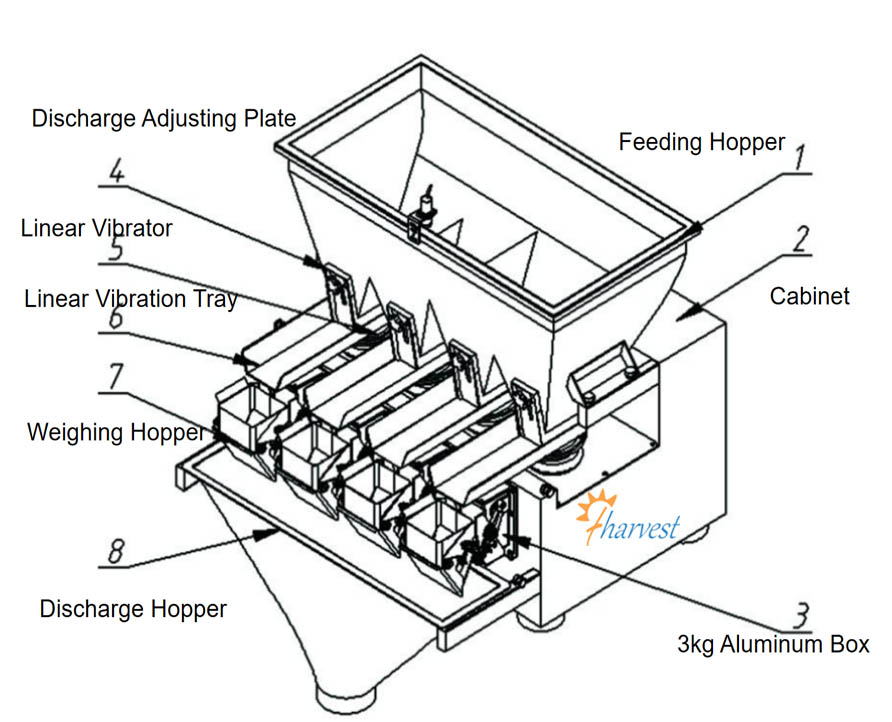
The working process is generally as follows:
Step 1: Product Feeding
Granule products enter the feeding hopper and are distributed into the linear vibrating channels.
Step 2: Controlled Feeding
The vibrating feeders transport the products into the weighing hoppers. Feeding speed and vibration intensity can be adjusted according to the material characteristics.
Step 3: Weight Measurement
The load cells measure the accumulated product weight in each weighing unit.
Step 4: Target Weight Control
The control system monitors the measured weight and controls product feeding to approach the preset target weight.
Depending on the machine design, coarse and fine feeding stages can be used to improve weighing accuracy.
Step 5: Product Discharge
When the target weight is reached within the configured tolerance, the weighing hopper releases the product into the bottle, jar, can, or packaging bag.
Unlike a multihead combination weigher, a conventional linear weigher does not rely on searching for the best combination of multiple independent hopper weights.
3. Multihead Weigher vs Linear Weigher: Key Differences
Both systems can be used for automatic granule weighing and filling, but their working principles and production characteristics are different.
Comparison | Multihead Weigher | Linear Weigher |
Weighing principle | Combination weighing | Linear controlled weighing |
Weighing structure | Multiple independent hoppers | One or more linear weighing units |
Weight calculation | Computer-based combination calculation | Target weight control |
Feeding method | Central distribution and multiple vibratory feeders | Linear vibratory feeding channels |
Production speed | Generally suitable for higher-speed applications | Linear vibratory feeding channels |
Weighing accuracy | High, depending on product and configuratio | Good, depending on product and configuration |
Product applications | Nuts, snacks, seeds, coffee beans and other granules | Rice, seeds, small granules, nuts and other suitable materials |
System complexity | Relatively more complex | Relatively simpler |
Investment | Generally higher | Generally lower |
Important: Actual weighing accuracy and production capacity depend on the product, target weight, hopper configuration, machine design, feeding conditions, and operating environment. A multihead weigher is not automatically more accurate in every application.
4. Which Granule Products Are Suitable for Multihead Weighers?
Multihead combination weighers are particularly suitable for products with varying individual piece weights, irregular shapes, and relatively free-flowing characteristics.
By selecting suitable feeding and hopper configurations, the machine can handle many different food and non-food granule products.
4.1 Nuts and Roasted Peanuts
Typical products:
Peanuts
Almonds
Cashews
Pistachios
Walnuts
Macadamia nuts
Nuts have different shapes, sizes, and individual weights. Combination weighing helps select suitable combinations of product portions to reach the target package weight.
For fragile or expensive nuts, feeding vibration, dropping height, and hopper design should also be considered to reduce product damage.
Recommended solution: Multihead weigher + automatic can or bottle filling system + can seaming or capping machine + labeling machine.
4.2 Coffee Beans
Typical products:
Roasted coffee beans
Whole coffee beans
Mixed coffee beans
Coffee bean blends
Coffee beans vary in size, shape, and bulk density depending on the roasting level and bean type.
A multihead weigher can combine measured portions to achieve the required filling weight before transferring the coffee beans into metal cans, plastic jars, or other containers.
Recommended solution: Multihead weigher + double-head receiving system + can filling machine + automatic can seamer.
4.3 Seeds and Sesame Seeds
Typical products:
Sesame seeds
Sunflower seeds
Pumpkin seeds
Chia seeds
Flaxseeds
Mixed edible seeds
Seeds are generally smaller and lighter than nuts. Feeding stability and vibration adjustment are important factors affecting weighing performance.
For very small or fine-flowing seeds, the feeding channel, hopper opening, and material flow should be carefully designed to prevent unstable feeding and product leakage.
Recommended solution: Multihead weigher or linear weigher + bottle or jar filling system + sealing and labeling equipment.
4.4 Candy and Gummy Products
Typical products:
Hard candies
Gummies
Jelly candies
Chocolate pieces
Mixed confectionery
Candy products may have different shapes, dimensions, and individual weights.
Multihead combination weighing is useful for achieving target package weights when individual pieces vary in weight.
For sticky gummies or products with surface coatings, hopper surface treatment, feeding structure, and cleaning requirements should be considered.
Recommended solution: Multihead weigher + bottle or can filling system + screw capping or can seaming machine.
4.5 Rice and Small Grain Products
Typical products:
White rice
Brown rice
Millet
Quinoa
Cereal grains
Other small agricultural grains
Rice and similar grains generally have relatively uniform particle sizes and good flow characteristics.
Depending on the required filling weight and production speed, a linear weigher can provide a practical solution for small and medium production lines. Multihead weighers are also suitable when higher throughput or combination weighing is required.
Recommended solution: Linear weigher or multihead weigher + bottle, jar, or bag filling system.
4.6 Dried Fruits and Mixed Snacks
Typical products:
Raisins
Dried cranberries
Dried dates
Dried mango pieces
Mixed dried fruits
Fruit and nut snack mixes
Dried fruits may have irregular shapes, variable sizes, and sticky surfaces.
For mixed products, a multihead weigher can combine different portions to reach the target total weight. However, product separation and distribution should be evaluated when different ingredients have different sizes or flow characteristics.
Recommended solution: Multihead weigher + automatic filling system + sealing or capping equipment.
5. Multihead Weigher vs Linear Weigher for Different Production Requirements
The best weighing system should be selected according to the actual production requirements rather than the machine name alone.
Here are some general selection guidelines:
Production Requirement | Recommended Weighing System |
High-speed nut packaging | Multihead weigher |
Coffee bean can filling | Multihead weigher |
Mixed snack packaging | Multihead weigher |
Small-scale rice filling | Linear weigher |
Small and medium seed filling | Linear or multihead weigher |
High-speed candy packaging | Multihead weigher |
Simple fixed-weight granule filling | Linear weigher |
These are general recommendations, not absolute rules. Product testing is recommended before final equipment selection.
6. Weighing Accuracy: What Factors Should Manufacturers Consider?
Weighing accuracy is one of the most important performance indicators of an automatic granule filling machine.
However, the final filling weight is affected by more than the weighing system itself.
The following factors should be evaluated:
1. Product Particle Size
Products with significantly different particle sizes may have different feeding and discharge characteristics.
2. Bulk Density
Bulk density affects how much material occupies a certain hopper volume. Different product batches may also have different bulk densities.
3. Product Flowability
Free-flowing products can move easily through feeding channels, while sticky or irregular products may cause unstable feeding.
4. Vibration Settings
Incorrect vibration intensity may cause insufficient feeding, excessive feeding, or unstable material distribution.
5. Load Cell Performance
Load cell sensitivity, calibration, installation, and environmental conditions affect the reliability of weight measurement.
6. Target Filling Weight
Very small target weights require different feeding and weighing configurations from large filling weights.
7. Machine Installation and Operation
An unstable installation surface, external vibration, and improper maintenance may affect weighing performance.
For these reasons, manufacturers should test actual product samples before confirming the final machine configuration and guaranteed weighing tolerance.
7.How to Choose between a Multihead weigher and a Linear Weigher ?
Before purchasing an automatic granule filling machine, manufacturers should evaluate the following requirements:
Product Information
Product name
Particle size and shape
Individual piece weight
Bulk density
Flowability
Fragility and stickiness
Filling Requirements
Target filling weight
Required weighing accuracy
Production speed
Weight-based filling or piece counting
Container Information
Metal can, plastic jar, glass bottle, or bag
Container diameter
Container height
Filling opening dimension
Production Line Requirements
Automatic feeding
Filling method
Can seaming or capping
Labeling
Checkweighing
Finished product collection
Providing these details allows packaging machinery manufacturers to recommend a suitable weighing and filling system.
8. Complete Granule Filling and Packaging Line from GZFHARVEST
GZFHARVEST (Guangzhou Full Harvest Industries Co., Ltd.) is a packaging machinery manufacturer based in Guangzhou, China, specializing in granule filling machines, powder filling machines, can seaming machines, capping machines, labeling machines, and complete automatic packaging production lines.
For granule packaging applications, GZFHARVEST can integrate different equipment according to product characteristics, filling weight, container dimensions, and production requirements.
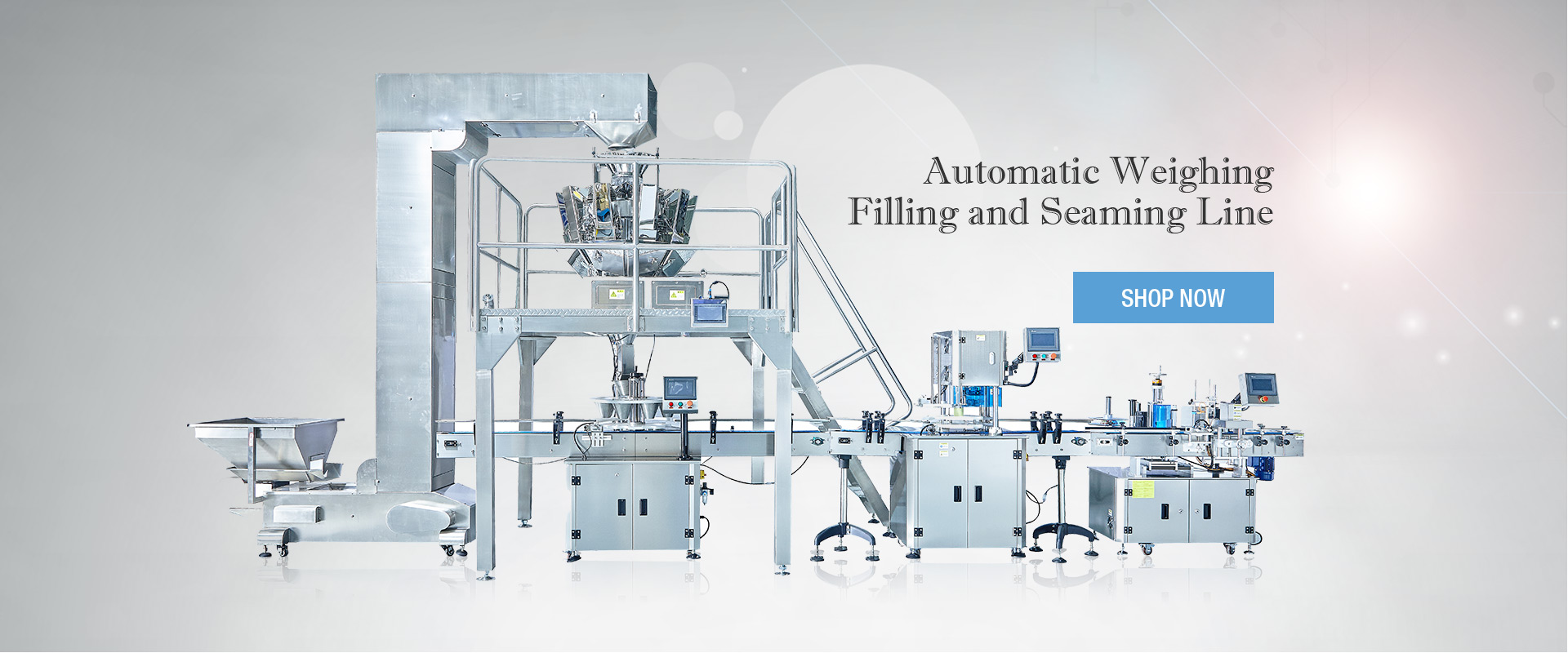
A typical automatic granule packaging line may include:
Automatic container unscrambler or feeding system
Product storage hopper and feeding system
Multihead weigher or linear weighing filler
Double-head receiving and filling system, where required
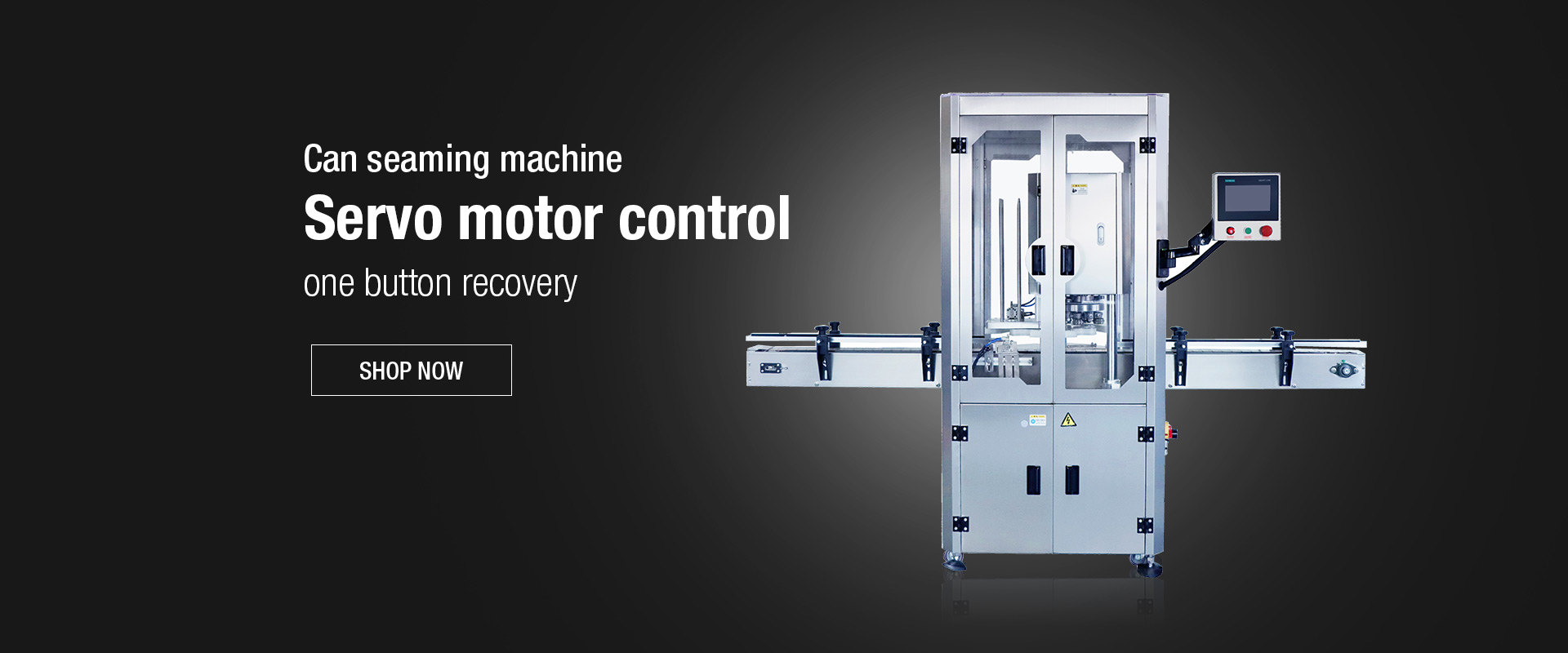
Automatic can seaming machine or screw capping machine
Automatic labeling machine
Finished product collection table
Example: Automatic Packaging Line for Sesame Seeds and Sesame Powder
A combined production line for sesame seeds and sesame powder may include:
Automatic round bottle unscrambler
Double-head powder filling machine
Multihead weigher for sesame seed filling
Film sealing machine
Double-side labeling machine
Three-head screw capping machine
Finished bottle collection table
This configuration provides separate weighing and filling solutions for powder and granule products while integrating the downstream packaging process.
GZFHARVEST provides customized packaging machinery solutions for food manufacturers and packaging companies worldwide.
If you are looking for a multihead weigher, linear weighing machine, or complete granule filling production line, our engineering team can help evaluate your product and recommend a suitable configuration.
Contact GZFHARVEST with your product sample, target filling weight, container dimensions, and required production capacity to discuss a suitable granule packaging solution.
9. FAQ
Q1: What is the main difference between a multihead weigher and a linear weigher?
A multihead weigher uses multiple independent weighing hoppers and computer-controlled combination calculations to reach a target weight. A linear weigher generally uses one or more linear feeding and weighing units to measure products according to a preset target weight.
Q2: Which is more accurate, a multihead weigher or a linear weigher?
Generally Multihead weigher is better. Actual performance depends on the product, target weight, weighing configuration, load cells, feeding conditions, and machine calibration.
Q3: Which weighing machine is better for nuts and coffee beans?
Multihead combination weighers are commonly used for nuts and coffee beans because these products often have variations in individual size and weight. Combination weighing can help achieve target package weights efficiently.
Q4: Can a linear weigher fill rice and sesame seeds?
Yes. Linear weighers can be used for rice, sesame seeds, and other suitable granule products. The feeding channels and weighing configuration should be selected according to particle size, flowability, and required filling weight.
Q5: Can one granule filling machine handle different products?
Yes, some machines can handle multiple products by adjusting feeding parameters and replacing or cleaning product-contact components when necessary. However, product size, shape, flowability, and cleaning requirements must be evaluated before confirming compatibility.
Q6: Can a multihead weigher be integrated with an automatic can seaming machine?
Yes. A multihead weigher can be integrated with an automatic can feeding and filling system, followed by an automatic can seaming machine. The complete line configuration depends on the container dimensions, filling weight, and required production speed.
Q7: What information is needed to select a granule filling machine?
The manufacturer generally needs the product sample, particle size, bulk density, target filling weight, required weighing accuracy, container dimensions, and expected production capacity.
No.3 Gongye South Road,Mingzhu Industrial Park,Conghua District ,Guangzhou City 510900,China
+86 20 3751 0321
FOLLOW US


Tel/ Fax: +86 20 3751 0321
E-mail: sales@gzfharvest.com
Add: No.3 Gongye South Road,Mingzhu Industrial Park,Conghua District ,Guangzhou City 510900,China