



Nov. 02, 2026
A packaging line requirements checklist helps buyers explain what the proposed system must do, which operations belong in the supply scope and what conditions the equipment must accommodate. Without this information, two proposals can appear to describe the same line while including different machines, interfaces and services.
Before approaching a packing machine line factory, define the incoming product, the finished package and the production task between them. This gives suppliers a consistent basis for configuration assessment and helps buyers compare proposals without relying on machine names or headline prices alone.
This guide explains how to prepare that brief for can, bottle and selected pouch packaging projects. It focuses on requirements and supply boundaries rather than recommending one machine type for every application.
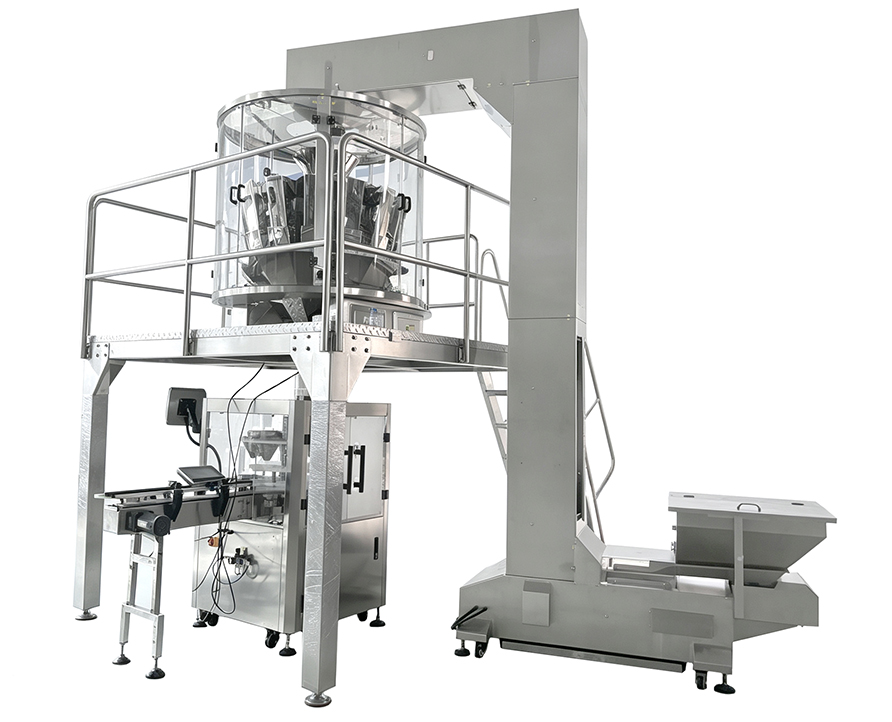
State where the proposed system begins and ends. Does it receive empty containers and bulk product, or containers that are already filled? Must it deliver closed containers, labeled packs or products ready for a separate secondary packaging process?
These boundaries determine whether the request concerns a complete packaging arrangement, a filling station, a closing line or an addition to existing equipment.
Incoming condition: identify how product, containers and closures reach the proposed equipment.
Required operations: list the processing and packaging steps within the project.
Outgoing condition: describe the package that must leave the supplied system.
External processes: identify upstream and downstream tasks outside the supplier's scope.
For example, a closing and labeling line receiving filled cans is not equivalent to a line that also meters and fills the product. Both may be described informally as a can packaging line, but their equipment requirements differ.
Terms such as “plastic jar,” “paper can” or “premade pouch” are starting points, not complete specifications. Provide dimensions, material, opening details and the closure or seal arrangement.
Where drawings are not yet available, provide clearly identified samples and photographs. Mark provisional information so that it is not mistaken for an approved production specification.
The relevant product information depends on the application. A powder project needs different assessment data from a viscous sauce or fragile snack product.
Powders: describe flow behavior, bulk density if known, dust generation and moisture sensitivity.
Granules and solids: provide size range, shape, fragility and any tendency to bridge or stick.
Liquids and sauces: identify viscosity, filling temperature, density if relevant, and particle content.
All products: state the target fill quantity, relevant quality requirements and any special handling restrictions.
Do not replace missing technical information with an unsupported assumption. If viscosity or bulk-density data are unavailable, say so and discuss how the supplier can assess representative material.
Create a separate row for each important production combination. This prevents the main product from defining a configuration that cannot accommodate a less frequent but essential format.
| Requirement | Information to Record | Status |
|---|---|---|
| Product | Material identity and relevant handling characteristics | Confirmed or awaiting assessment |
| Package | Material, dimensions, opening and closure | Drawing, sample or provisional information |
| Fill requirement | Target quantity, units and acceptance limits | Approved or to be agreed |
| Production target | Required accepted packs within a defined time window | Current requirement or future option |
| Required stations | Feeding, cleaning, filling, closing, labeling, coding or collection | Included, optional or excluded |
| Open questions | Unconfirmed conditions or integration responsibilities | Named owner and required decision |
Identify what the line must handle at delivery and what may be needed later. Future capability can affect layout or configuration, but it should not be represented as included unless the proposal states the required provision.
If multiple formats are essential, provide the complete range early. The multi-format packaging line changeover checklist explains how container, closure and label changes can affect several stations rather than the filling recipe alone.
List each required operation separately. Then assign whether the supplier provides the equipment, the buyer retains an existing machine or another party supplies it.
A useful scope list includes accessories and handling arrangements, not only the main filling and closing machines. Missing feeders, collection equipment or transfer components can leave an otherwise detailed proposal incomplete.
| Process Item | Scope Status to Confirm | Related Question |
|---|---|---|
| Container feeding | Supplier-provided, existing or manual | What incoming arrangement and operator involvement are assumed? |
| Cleaning or treatment | Included, optional or excluded | What process and verification requirement apply? |
| Metering and filling | Equipment and product supply boundary | Who provides product transfer to the filler? |
| Closing | Seaming, capping or pouch sealing | Are closure feeding and format components included? |
| Labeling and coding | Required functions and equipment | Are positions, content and consumables defined? |
| Collection or discharge | End-of-line arrangement | Where does supply responsibility end? |
| Connections | Conveyors, transfers and interfaces | Who designs, supplies and verifies each connection? |
Do not assume that nitrogen flushing, vacuum closing, metal detection, checkweighing or a particular cleaning process is standard across all configurations. Identify each required function and ask the supplier to confirm its inclusion and operating conditions.
Exclusions should also be written down. Product preparation, thermal processing, secondary packaging or other facility operations may sit outside the supplied system. Their absence from a machine list should not be the only indication that they are excluded.
When a new machine connects to existing equipment, define the connection as a project item. This includes mechanical transfer, operating coordination and any control or safety interfaces requiring engineering review.
Record conveyor height, travel direction, package orientation and the available interface information. Assign responsibility for supplying the connecting components and checking the completed arrangement.
The conveyor transfer-point checks provide a focused reference for the container information and observations useful when investigating an unstable connection.
State the required output for each main product and package combination. Identify whether it means an instantaneous running rate or accepted packs over a defined production period.
Also explain how changeovers, cleaning and other planned activities affect the available time. A supplier should not have to infer whether the stated shift quantity assumes continuous operation.
This article does not calculate line balance. The purpose is to ensure that the proposal states the conditions behind its output claim and identifies any restrictions from equipment outside the supply scope.
A floor-space figure alone does not describe the installation. Provide a layout showing the proposed equipment area, adjacent machines, columns, doors and access routes.
Available footprint and relevant height restrictions.
Container travel direction and existing machine positions.
Operator, cleaning and maintenance access needs.
Available electrical supply and other relevant utilities.
Delivery access and installation restrictions.
Utility demand should come from the selected configuration. Do not assume that all machines share the same electrical or compressed-air requirements.
Describe the intended cleaning approach and any product-contact material requirements. Distinguish routine cleaning access from a specifically engineered cleaning system.
State the destination and requested documentation. Manuals, drawings, material records, inspection evidence and applicable compliance documents should be confirmed for the selected machines and supply scope. A general brochure statement is not a substitute for project-specific confirmation.
An initial brief does not need to be a long engineering document. It should make the task clear, organize the available data and identify the decisions that still need supplier input.
Project summary: the product, package and business requirement.
Format matrix: current combinations and separately marked future options.
Process map: required operations from the agreed start point to the end point.
Scope table: supplied, existing, optional and excluded equipment.
Site information: layout, utilities and installation constraints.
Open-item list: questions requiring trials, drawings or assessment.
Use file names and revision dates that make the latest information easy to identify. If a container drawing changes, record which proposals or configuration decisions need review.
Ask the supplier to identify assumptions rather than silently filling gaps. An assumed container size, manual feeding method or product condition can materially change the proposed solution.
For buyers reviewing available configurations, the packing machine line factory category from Guangzhou Full Harvest Industries Co., Ltd. groups powder, granular-product, selected liquid and sauce, and container-packaging systems. Use the category to identify relevant equipment families, then confirm the exact station list for the project.
A lower quoted total may reflect a different supply boundary rather than a more economical version of the same system. First confirm that the proposals address the same product range, stations, interfaces and service scope.
| Comparison Item | What to Check | Action if Unclear |
|---|---|---|
| Product and format coverage | Confirmed, conditional or excluded combinations | Request a format-by-format response |
| Station list | Included machines, feeders and accessories | Request an itemized scope |
| Output statement | Product and operating conditions behind the estimate | Clarify the production boundary |
| Interfaces | Supply and verification responsibility | Assign responsibility in writing |
| Services and documentation | Installation, training and records | Separate included and optional services |
| Commercial scope | Packing, delivery and other terms | Compare on a consistent basis |
Keep a short clarification register showing the requirement, supplier response, remaining question and responsible party. This is more reliable than treating a series of informal messages as the final specification.
If a scope change is approved, update the brief and proposal reference. The final purchasing decision should refer to an identifiable configuration rather than several conflicting versions.
This is an illustrative procurement scenario, not a documented customer installation. A food manufacturer requests a line for weighing a granular product into cans, closing the containers, applying labels and collecting the finished packs.
The initial request does not specify how empty cans arrive, who provides product transfer to the weighing system or whether coding equipment is required. It also omits the connection to an existing downstream machine.
The buyer separates the operations and marks each item as supplier-provided, buyer-provided or optional. Container drawings, main fill quantities and required accepted output are added. The transfer point to the retained machine receives a named engineering responsibility.
The resulting brief allows suppliers to respond to the same defined task and makes exclusions easier to identify. It does not establish a measured production improvement; its purpose is to clarify what will be supplied and what remains to be resolved.
Define the product and finished package
        ↓
List the required operations
        ↓
Mark supplied, existing, optional and excluded items
        ↓
Add format, output and site information
        ↓
Issue the technical brief
        ↓
Compare assumptions and scope differences
        ↓
Resolve open items and confirm the proposal revision
Provide the product characteristics, package details, fill requirements, target output, required operations and available site information. Mark provisional data and identify existing equipment that must remain in the process.
No. A proposal may cover filling equipment, closing and labeling, or a broader process. Confirm the start point, end point and included stations rather than relying on the phrase “complete line.”
Identify their models, relevant dimensions, operating conditions and interface information. State who is responsible for connecting and verifying the new and retained equipment.
Label the information as provisional and identify what must be confirmed. Ask which changes could affect the configuration, trials, commercial terms or delivery schedule.
State whether a product or package trial is needed and what decision it should support. Agree availability, sample quantity, conditions and charges separately.
Use the same requirements and scope table for each response. Compare format coverage, equipment, output conditions, interfaces and services before comparing the commercial total.
Guangzhou Full Harvest Industries Co., Ltd. designs, manufactures and supplies packaging equipment and integrated line solutions, combining product filling, can seaming or capping, labeling, conveying and container collection according to the application. Its scope extends beyond individual can seamers to coordinated equipment configurations for compatible powders, granules, liquids and sauces.
For new installations and existing-line upgrades, Guangzhou Full Harvest Industries Co., Ltd. can review the product, package format, required output and available layout to define a suitable equipment combination. Each proposal should identify the included stations, connections to retained equipment and responsibilities for integration, so buyers can evaluate the complete supply scope rather than individual machines alone.
For an initial discussion through the existing inquiry form, prepare the product and package matrix, target output, required process steps and available layout. Identify equipment to retain and separate essential requirements from future options.
Drawings, photographs and a short open-item list help clarify the request. Trial arrangements, installation scope, documentation, packing and delivery terms can then be addressed against the proposed configuration.
No.3 Gongye South Road,Mingzhu Industrial Park,Conghua District ,Guangzhou City 510900,China
+86 20 3751 0321
FOLLOW US


Tel/ Fax: +86 20 3751 0321
E-mail: sales@gzfharvest.com
Add: No.3 Gongye South Road,Mingzhu Industrial Park,Conghua District ,Guangzhou City 510900,China