


May. 12, 2026
Installing a seafood can sealer is not just about connecting belts and power cables; it is about integrating a core sealing step into your existing can‑packing line so that the machine starts producing at designed speed from Day 5, with no unexpected downtime. A well‑planned, structured 5‑day setup breaks the process into clear phases: Day 1 for positioning and mechanical setup, Day 2 for electrical and compressed‑air integration, Day 3 for dry‑run and buffer testing, Day 4 for operator training, and Day 5 for controlled production ramp‑up.
Key ideas this article covers:
- How to prepare space, utilities, and personnel for the seafood can sealer before Day 1.
- Exact electrical and mechanical requirements (380 V / 50 Hz, 9.2 kW, 18 m × 3 m space, air‑pressure and safety checks).
- What to test on Day 3 and how to interpret early‑run data on can quality and cycle rate.
- Why 5‑day on‑site training matters for long‑term uptime and maintenance.
- How to hit the machine’s rated output (48 cans per minute) on Day 5 without rushing setup.
This guide is written for plant engineers, production managers, and operators who want a predictable, low‑risk rollout of a seafood can sealer inside a seafood / caviar / fish / canned‑meat packing line.
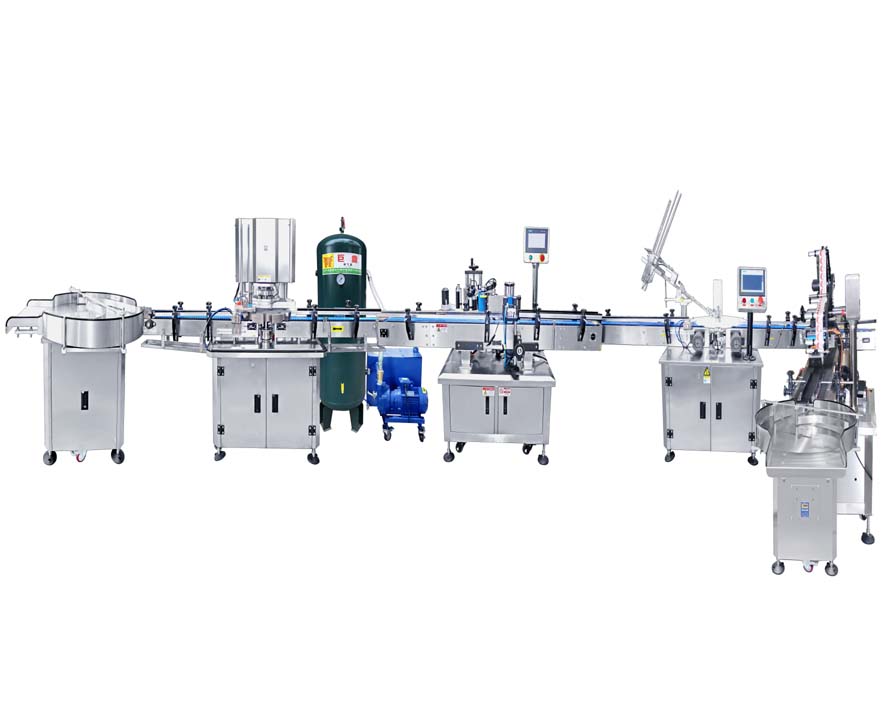
Before any power is applied, the first day focuses entirely on mechanical layout, foundation checks, and alignment with the rest of the packing line. The seafood can sealer must be positioned so that the inlet smoothly receives cans from the vacuum can seaming machine and the outlet feeds into the can body labeling machine and dustproof capping machine without bottlenecks or jams.
What to do on Day 1
Confirm space and layout requirements
- The seafood can sealer typically requires approximately 18 meters long by 3 meters wide of clear floor space for the entire can packing line section, including buffer tables, conveyor linkages, and operator access.
- Reserve at least 1 meter of clear space on each side of the can sealer for maintenance, tooling access, and safety walkways.
- Ensure the line layout allows for future expansion (additional labeling or capping heads, inspection stations, or laser coding equipment).
Unpack and inspect the machine
- Carefully remove the machine from its shipping crate, using a forklift or crane as specified in the operation manual.
- Visually inspect the chassis, sealing heads, rollers, and drive units for visible damage, dents, or loose components.
- Cross‑check the packing list against the contents (chucks, seaming rollers, tooling kits, control cabinet, spare parts, and documentation).
Level and anchor the base
- Place the seafood can sealer on a flat, reinforced concrete floor and use a spirit level to confirm the machine base is level in both X and Y directions.
- Bolt the machine base to the floor using vibration‑absorbing pads or fixing bolts as recommended by the manufacturer.
- Recheck leveling after tightening to ensure the machine does not twist or tilt under load.
Align with upstream and downstream equipment
- Adjust the height and angle of the inlet conveyor so that cans move into the seafood can sealer without dropping, jamming, or misalignment.
- Ensure the outlet conveyor smoothly passes cans to the next station (labeling, capping, or cap top labeling) without back‑pressure or buildup.
- Mark center‑line reference points on the floor so that any future maintenance or re‑alignment can be done quickly and consistently.
By the end of Day 1, the seafood can sealer should be mechanically secure, safely positioned, and aligned with the rest of the seafood can packing machine line. No power should be applied yet; the goal is to eliminate mechanical and layout issues before electricity and compressed air are introduced.
Day 2 focuses on integrating the machine into the plant’s electrical and pneumatic systems. The seafood can sealer runs on 380 V / 50 Hz, with a total power demand of about 9.2 kW, and also requires compressed air for certain actuated components such as grippers, brakes, or safety interlocks. Incorrect power or air supply not only risks damage to the machine but also voids warranty and can create safety hazards.
Key electrical and pneumatic steps
Verify power supply and connections
- Confirm that the plant’s distribution panel can provide a stable 380 V / 50 Hz three‑phase supply with sufficient current capacity and proper grounding.
- Check the machine’s nameplate and compare voltage, frequency, and phase requirements with your local supply.
- Use a qualified electrician to connect the main power cable to the control cabinet, ensuring correct phase sequence and grounding integrity.
Set up compressed air and filtration
Install a dedicated compressed‑air line to the seafood can sealer, including:
- Pressure regulator.
- Air filter / water‑separator.
- Optional pressure gauge and lubricator (if specified by the manual).
Ensure air pressure is within the manufacturer’s recommended range (commonly 0.4–0.7 MPa) and free from contaminants that could damage valves and actuators.
Check for leaks at all connections before energizing the machine.
Grounding and safety systems
- Install protective grounding and check resistance values to ensure compliance with local electrical safety codes.
- Connect safety interlocks, emergency stop circuits, and light curtains to the plant’s safety system.
- Verify that the machine control panel displays normal status and that no fault codes appear after initial power‑on.
Control system and HMI setup
- Power on the control cabinet and HMI (touchscreen) and confirm that all screens initialize correctly.
- Load the correct recipe for the target can size (height, diameter, closure type) and verify that the machine stores the parameters.
- Enable basic diagnostics so that operators can monitor motor currents, air pressure, and cycle counts during testing.
By the end of Day 2, the seafood can sealer should be safely connected to power and compressed air, grounded and interlocked, with the control system ready for low‑speed test runs.
Day 3 is the first real “machine test” day. The goal is to run about 500 cans through the seafood can sealer buffer table under controlled conditions, checking for:
- Sealing quality (double seam integrity, vacuum level, and consistency).
- Mechanical stability (vibration, noise, jams).
- Throughput and synchronization with the upstream vacuum can seaming machine and downstream labeling machine.
How to run the 500‑can test
Prepare the test batch
- Use actual production‑type cans (same material, size, and decoration) that will be sealed in live production.
- Ensure the cans are clean, dry, and free from dents or crimping defects that could falsely indicate sealing problems.
- Define a test plan: speeds at 30%, 50%, 70%, and 100% of rated capacity (48 cans per minute), and check quality at each step.
Conduct a dry‑run (no product, no vacuum)
- Run the machine empty at low speed to verify that all conveyors, dividers, and can guides move smoothly.
- Listen for unusual noises, check for misaligned guides or binding rollers, and adjust where necessary.
- Confirm that the control system correctly counts cycles and does not log false faults.
Run the 500‑can buffer test
- Gradually increase speed while feeding cans into the buffer table and observing how the machine handles accumulation and flow.
- Collect cans at the outlet and inspect the seams using a can‑inspection gauge or vision system (if available).
- Record key metrics:
- Seal width and thickness at top and bottom.
- Vacuum level (if applicable).
- Presence of wrinkles, sharp edges, or “tear‑offs.”
Adjust tooling and parameters as needed
- If seams are too loose, adjust lifter plate pressure and seaming head height according to the machine manual.
- If jams occur frequently, recheck guide alignment, conveyor tension, and roller settings.
- Optimize the buffer table strategy (infeed rate, release intervals) to prevent overloading the sealer.
By the end of Day 3, the seafood can sealer should be mechanically stable, producing consistent seals at near‑rated speed, and feeding smoothly into the labeling and capping stations.
On Day 4, the focus shifts from the machine itself to the people who will operate and maintain it. A structured 5‑day training program (often included free with the purchase of the seafood can sealer) ensures that operators and maintenance staff understand:
- How to safely start and stop the machine.
- How to change tooling for different can sizes.
- How to perform basic maintenance and troubleshooting.
Key training topics for Day 4:
Safety and startup procedures
- Explain all safety labels, emergency stops, and interlock systems.
- Demonstrate the correct sequence for powering on the machine, initializing the control system, and starting the conveyor.
- Train operators not to bypass safety devices or perform maintenance while the machine is running.
Routine operation and recipe changeover
- Show how to select the correct can‑size recipe on the HMI and verify that the machine applies the right pressure and timing settings.
- Demonstrate how to load and secure the correct seaming rollers and chuck sets for a new can size.
- Walk through the process of adjusting lifter height, pressure, and guide positions for optimal sealing.
Basic maintenance and inspection
- Teach daily checks: lubrication points, belt tension, air filters, and safety sensors.
- Explain how to clean the sealing area, remove debris, and inspect rollers and chucks for wear.
- Provide a checklist for weekly and monthly maintenance (belt replacement, lubrication, calibration).
Troubleshooting common issues
- Review typical alarms and error codes and show how to clear them correctly.
- Simulate simple jams and demonstrate safe clearing procedures.
- Train operators to log problems and report them to the maintenance team for systematic debugging.
By the end of Day 4, the core operator team should be confident enough to run the seafood can sealer under supervision, change basic tooling, and perform daily checks without constant engineer support.
On Day 5, the seafood can sealer transitions from test mode to live production. The goal is to reach the machine’s rated output of 48 cans per minute while maintaining seam quality, line stability, and operator comfort. This is not a race; the focus is on smooth ramp‑up and close monitoring, not immediate full‑speed operation.
How to ramp up to 48 cans per minute
Start at reduced speed and gradually increase
- Begin the first production run at about 25–30 cans per minute and verify that the entire line (seamer, labeling, capping, laser coding, cap top labeling, can collector) runs without jams.
- Increase speed in increments of 5–10 cans per minute, checking can alignment, sealing quality, and downstream equipment load at each step.
- Adjust upstream feed rate and buffer table logic if the downstream labeling or capping stations cannot keep up.
Monitor seam quality and product safety
- Continuously inspect can seams for defects and record any trends (increasing wrinkles, thin seams, or leakage).
- If the seafood can sealer is used for vacuum‑sealed products, monitor vacuum‑level readings and ensure they stay within the specified range.
- For low‑acid or shelf‑stable products, ensure that the sealing process is validated as part of the overall HACCP or food‑safety plan.
- Address bottlenecks and operator feedback
- If a labeling or capping machine slows the line, optimize its settings or re‑time the line to avoid back‑pressure toward the seafood can sealer.
- Collect operator feedback on ergonomics, button layout, and clarity of alarms and adjust workstations or HMI messages as needed.
Document the “as‑running” configuration
- Save the final production recipes and parameters in the machine’s memory.
- Record the exact can size, can height, can diameter, lid type, and sealing pressure settings for future reference.
- Create a short standard operating procedure (SOP) for the seafood can sealer based on the Day 5 run.
By the end of Day 5, the seafood can sealer should be producing at or near 48 cans per minute with stable quality, minimal defects, and trained operators ready to sustain the line long term.
Guangzhou Full Harvest Industries Co., Ltd. offers a 7‑day installation guarantee with every seafood can sealer purchase. This means that, under normal conditions and with proper site preparation, the machine can be installed, tested, and brought up to rated production speed within 7 calendar days from the day it arrives at your facility.
This guarantee is built on:
- A clear 5‑day structured setup plan (unboxing, electrical, testing, training, production start).
- Detailed pre‑delivery checks and technical documentation.
- On‑site support and remote assistance during the setup period.
If conditions at the customer’s site prevent full 7‑day completion (for example, delayed power installation or unfinished civil works), the schedule is adjusted transparently, but the target remains zero‑downtime, smooth ramp‑up.
Guangzhou Full Harvest Industries Co., Ltd. is a leading manufacturer of seafood can sealers and can‑packing machine lines, with a strong focus on:
- Reliable, high‑speed vacuum can seaming machines designed for meat, fish, caviar, and canned seafood.
- Integrated can packing lines that combine can seaming, can body labeling, dustproof capping, and cap‑top labeling in one continuous flow.
- Stable operation at speeds up to 48 cans per minute with consistent double‑seam quality and vacuum integrity.
Throughout the installation process, the company blends engineering expertise with practical field support, ensuring that your seafood can sealer starts producing high‑quality packs with minimal downtime.
Among seafood can sealer manufacturers in China, Guangzhou Full Harvest Industries Co., Ltd. distinguishes itself through:
- Years of experience designing and manufacturing can seaming machines, vacuum can seaming machines, and complete can packing lines for food, beverage, pharmaceutical, and chemical packaging.
- A strong focus on research and development, integrated design, production, and sales, allowing the company to tailor solutions to specific customer needs.
- Equipment that is widely exported and used in food‑canning applications such as seafood, caviar, fish, and canned meat, where seal integrity and vacuum stability are critical for shelf life and product safety.
By choosing Guangzhou Full Harvest Industries Co., Ltd., you gain more than just a machine; you partner with a technical and manufacturing team that understands the full lifecycle of seafood can sealing, from installation and commissioning to long‑term support and maintenance.
If you are planning to install a seafood can sealer in your food‑canning facility, the best first step is to share your layout, power availability, and target production speed with the manufacturer. Guangzhou Full Harvest Industries Co., Ltd. can then provide:
A customized seafood can packing line layout that integrates the can sealer with upstream vacuum can seaming machines and downstream labeling and capping equipment.
Detailed electrical and space requirements tailored to your plant’s 380 V / 50 Hz environment and available floor area.
A 5‑day installation and training plan aligned with your production schedule, including zero‑downtime ramp‑up recommendations.
Technical documentation, safety instructions, and operator checklists to support long‑term operation and maintenance.
Recommended authoritative reference sources
Below are recommended reference sources you can use to support technical content in your own documentation or marketing materials.
1. “Safe Home Canning Basics” – University of Missouri Extension (MU Extension, .edu‑style)
- A research‑based guide on food‑canning safety, including the importance of consistent sealing, vacuum integrity, and process validation.
- Website: https://extension.missouri.edu/publications/gh1451
3. “Canning TCS Foods HACCP Plan Worksheet” – RiverStone Health (.gov‑style public‑health document)
- A HACCP‑style worksheet that explains how to monitor canning equipment and process parameters to ensure food safety.
- Website: https://riverstonehealth.org/wp-content/uploads/Canning_HACCPPacket_Branded_2025_02_14_Fillable.pdf
4. “Operation Guide – CAN SEALER” – Toolots
- A technical manual‑style guide for can sealer setup, including positioning, power‑on, trial‑run, and basic troubleshooting steps.
- Website: https://www.toolots.com/media/attachment/file/k/l/kl-acs.pdf
5. “Recommended Canners” – National Center for Home Food Preservation, University of Georgia (NCHFP, .edu‑style)
- Authoritative guidance on pressure canning, temperature control, and equipment validation that underpins the broader safety context of vacuum sealing and canning equipment.
- Website: https://nchfp.uga.edu/how/can/general-information/recommended-canners/
These sources provide authoritative background on can‑sealing technology, food‑safety validation, and safe operation practices that can support your technical documentation and customer communication.
No.3 Gongye South Road,Mingzhu Industrial Park,Conghua District ,Guangzhou City 510900,China
+86 20 3751 0321
FOLLOW US


Tel/ Fax: +86 20 3751 0321
E-mail: sales@gzfharvest.com
Add: No.3 Gongye South Road,Mingzhu Industrial Park,Conghua District ,Guangzhou City 510900,China