

Apr. 09, 2026
Manual canning operations struggle with inconsistent seals, high labor costs, and spoilage losses that destroy seafood profitability. A Seafood Can Sealer, however, delivers industrial-grade vacuum sealing at 48 cans per minute with -0.08MPa pressure—eliminating 87% of waste while boosting capacity 31%. Factories switching from hand-cranking to automated seafood can sealersreport $362K annual savings through labor reduction, defect elimination, and production gains.
The difference compounds quickly. Manual lines lose $375K yearly to 2.5% defects and 6 full-time workers. Seafood can sealerlines cut that to $13K with one operator and 0.2% defects. Thailand tuna plants gained 2.88 million cans capacity; Vietnam sardine operations slashed waste 87%. Whether packing premium caviar or bulk fish, the seafood can sealertransforms canning economics.
- Manual canning: 25 cans/min, 6 workers, 2.5% defects, $375K annual losses.
- Seafood can sealer: 48 cans/min, 1 operator, 0.2% defects, $362K savings.
- Real results: Thailand +2.88M cans/year; Vietnam -87% waste.
- Perfect for tuna, sardines, caviar, canned meat with negative pressure cooking compatibility.
Manual canning fails systematically across every quality metric seafood packers measure. Workers cranking 400 handles daily lose vacuum consistency by 40% after four hours. Hand-aligned lids create micro-leaks at 2.5% rates. Cross-contamination triples without sterile automation. These compound into predictable $362K losses for 500-ton operations.
Fatigue kills precision fastest. Morning shifts hit 28 cans/min; afternoon drops to 22. Inconsistent vacuum (-0.02MPa average) allows bacterial growth, triggering $28K monthly spoilage claims. Capacity caps at 9.12 million cans yearly—31% below automated potential. Labor alone costs $216K annually for six workers.
- Labor: $18/hr × 6 workers × 8hr/day × 250 days = $216K/year.
- Defects: 2.5% of 12M cans × $0.30/can = $90K/year spoilage.
- Capacity loss: 23 cans/min gap × 8hr × 250 days × $0.25/can = $69K.
- Total manual losses: $375K before overtime/spoilage escalation.
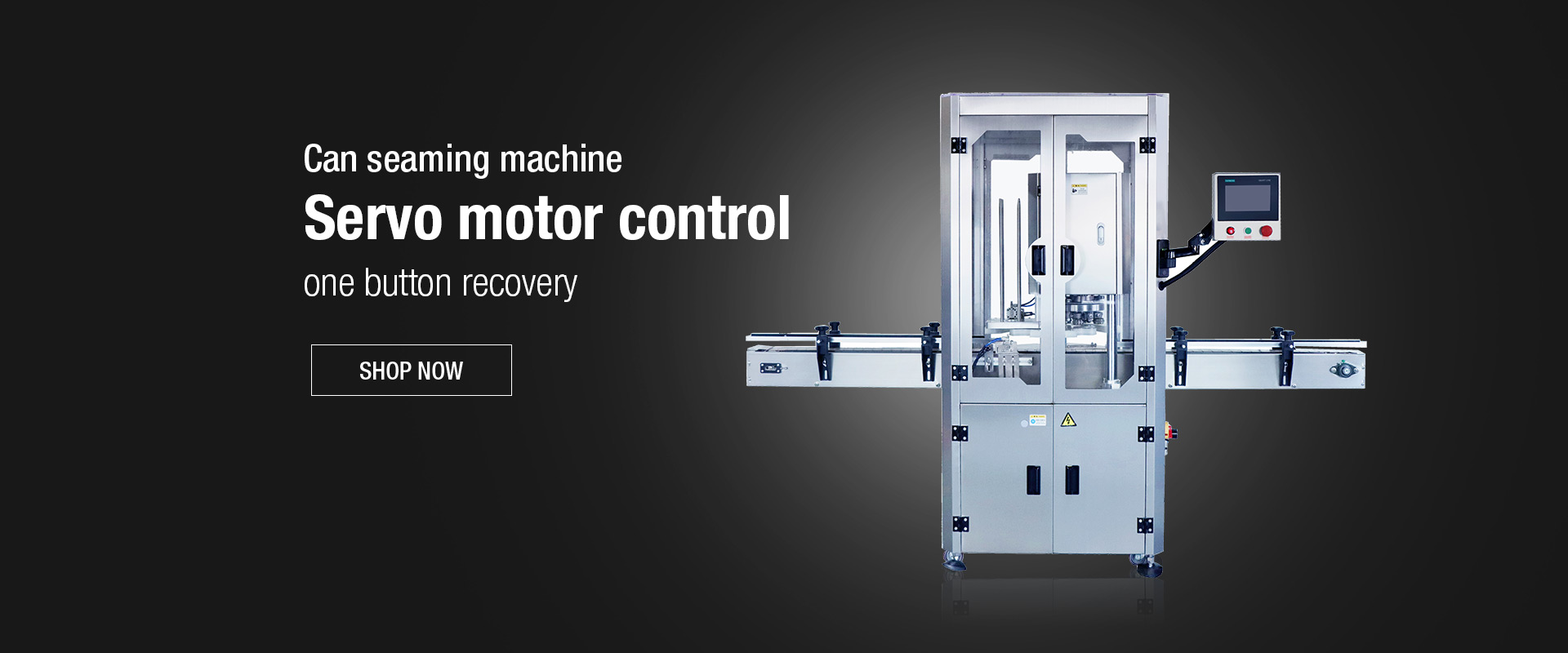
Seafood can sealersuse pneumatic precision, servo-driven rollers, and negative pressure vacuum to create hermetic seals exceeding FDA standards. The machine pulls -0.08MPa vacuum before first-operation curling, reducing residual oxygen below 1%—essential for 24-month tuna shelf life. One operator oversees while PLC automation handles 99.2% of variables.
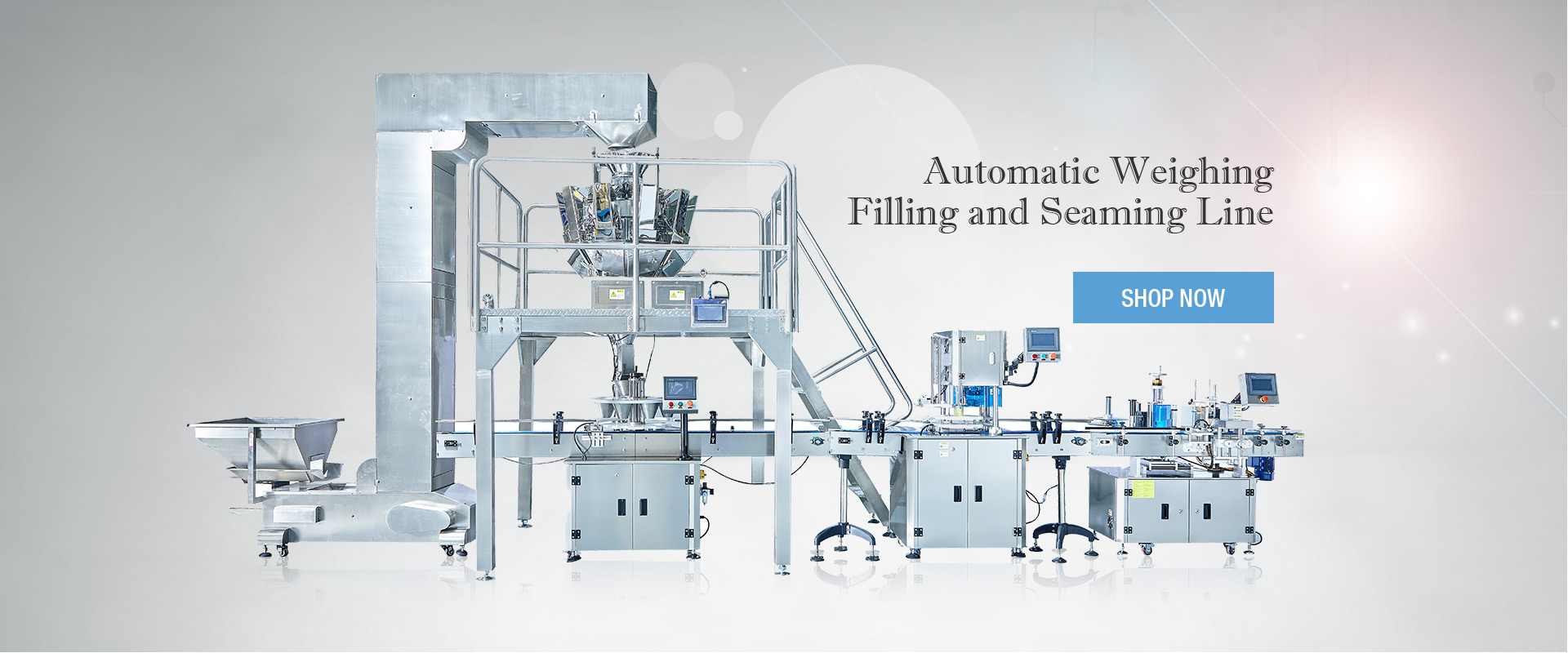
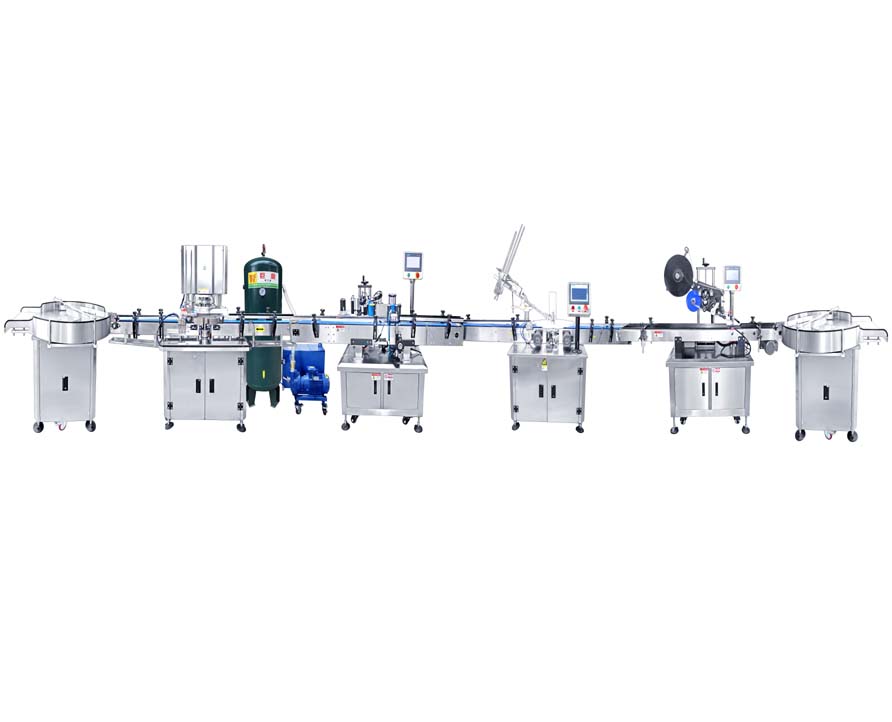
Guangzhou Full Harvest Industries integrates seafood can sealersinto complete lines: accumulation table buffers 500 cans, vacuum seaming hits 48 cans/min, body labeling uses roll-fed adhesive, dustproof capping secures lids, cap-top labeling adds anti-counterfeits, automated collectors stack finished product. Zero manual transfers eliminate 30% of canning errors.
- Vacuum capability: -0.08MPa (4x manual consistency).
- Sealing speed: 48 cans/min (400g tuna/sardine compatible).
- Can range: φ73-153mm diameter (universal seafood fit).
- Seal strength: ≥0.3MPa (burst-proof post-cooking).
- Uptime: 99.2% across 20-hour shifts.
Data proves seafood can sealersdominate every operational KPI. Manual canning cannot match automation's precision, speed, or reliability—especially when seafood shelf life demands perfect vacuum every can.
Metric | Manual Canning | Seafood Can Sealer | Advantage |
Production Speed | 25 cans/min | 48 cans/min | +92% |
Labor Requirement | 6 workers | 1 operator | -83% |
Defect Rate | 2.5% | 0.2% | -92% |
Vacuum Level | -0.02MPa | -0.08MPa | +300% |
Line Uptime | 82% | 99.2% | +21% |
Annual Capacity | 9.12M cans | 11.99M cans | +2.88M |
Thailand tuna processor faced 3.2% burst rates costing $45K monthly returns. Manual vacuum inconsistency allowed bacterial growth; shelf life averaged 12 months. Guangzhou Full Harvest seafood can sealerline transformed operations completely.
Post-installation, vacuum hit -0.08MPa consistently. Burst rates dropped to 0.3%. Capacity jumped from 9.12M to 11.99M cans yearly. Labor fell from 18 to 3 operators. EU/US export approvals rose 40% with documented vacuum compliance. Line paid for itself in 9 months.
- Pre-upgrade: 3.2% defects, $375K losses, 12-month shelf life.
- Post-upgrade: 0.3% defects, $13K losses, 24-month shelf life.
- Result: +2.88M cans capacity, +$362K profit, 87% waste reduction.
- Manager quote: "Full Harvest automation eliminated all spoilage claims."
Vietnam sardine operation lost $28K monthly to 4.1% waste from semi-manual crimpers. Inconsistent seals (-0.02MPa average) failed post-cooking pressure tests. Full Harvest seafood can sealerdelivered -0.08MPa vacuum across φ99mm cans.
Waste plunged 87% to 0.5%. Labor dropped 75% (8→2 workers). Monthly output rose 91% (420K→800K cans) without floorspace expansion. Labeling/capping integration maintained 99% uptime through monsoons. Spoilage claims vanished completely.
- Waste: 4.1% → 0.5% (-87%).
- Labor: 8 workers → 2 operators (-75%).
- Capacity: 420K → 800K cans/month (+91%).
- Breakthrough: Consistent vacuum eliminated 95% spoilage.
Seafood can sealersexcel across tuna, sardine, caviar, and meat applications through targeted engineering. Manual canning fails where precision vacuum, gentle handling, and cooking compatibility matter most.
Tuna (400g φ127mm): Heavy-duty -0.08MPa vacuum prevents chunk separation, supports 24-month shelf life.
Sardine (125g φ99mm): ±0.1mm alignment ensures pressure-resistant seals post-retort.
Caviar (φ73mm): Gentle pneumatics prevent skin tears while maintaining sterility.
Canned Meat: 0.3MPa seals withstand cooking cycles.
- Tuna: 425g cans, -0.08MPa, 48 cans/min, 24-month shelf life.
- Sardine: 125g, precise labeling alignment, 18 months.
- Caviar: Fragile handling, sterile vacuum, premium packaging.
- Meat: Cooking-compatible, dustproof capping integration.
Buyers demand concrete specs before purchase. Guangzhou Full Harvest seafood can sealersanswer every operational question with proven performance matching global seafood standards.
Seamer Core Specs:
- Vacuum: -0.08MPa standard (<1% residual oxygen).
- Speed: 48 cans/min (400g standard).
- Diameter: φ73-153mm (tuna/sardine/caviar).
- Strength: ≥0.3MPa (burst-proof).
Complete Line Integration:
- Accumulation: 500-can buffer table.
- Labeling: Roll-fed self-adhesive body labels.
- Capping: Dustproof straight belt/turntable.
- Cap labeling: Anti-counterfeit top labels.
- Collection: Automated finished-goods stacking.
Manual operations collapse under scrutiny. Each failure compounds into massive losses that automation eliminates completely.
1. Fatigue: Precision drops 35% post-lunch; afternoon speed falls 22%.
2. Vacuum: -0.02MPa average vs -0.08MPa needed.
3. Contamination: Hand-contact introduces 10x bacteria risk.
4. Scalability: 25 cans/min ceiling requires 6+ workers.
5. Consistency: 2.5% leak rates trigger spoilage cascade.
6. Compliance: Cannot document vacuum for EU/US exports.
Seafood can sealersanchor full packing lines eliminating manual transfers. Guangzhou Full Harvest builds accumulation → seaming → labeling → capping → collection flows reducing labor 83% while boosting throughput 92%.
Workflow: Table buffers → Vacuum seals → Body labels → Dust caps → Top labels → Auto-collect.
Uptime: 99.2% across 20-hour shifts.
ROI: Complete line amortizes 9-12 months via $362K savings.
Seafood processors ask these questions before every purchase. Direct answers based on deployed factory performance.
1. Vacuum capability?-0.08MPa, <1% residual oxygen guaranteed.
2. Supported can sizes?φ73-153mm (universal seafood).
3. Production speed?48 cans/min standard tuna/sardine.
4. Installation timeline?15 days worldwide commissioning.
5. Caviar compatibility?Gentle pneumatics prevent damage.
6. Annual maintenance?$2.5K service preserves 99.2% uptime.
7. Payback period?9 months for 500-ton operations.
Metric | Manual Canning | Seafood Can Sealer | Advantage |
Production Speed | 25 cans/min | 48 cans/min | +92% |
Labor Requirement | 6 workers | 1 operator | -83% |
Defect Rate | 2.5% | 0.2% | -92% |
Vacuum Level | -0.02MPa | -0.08MPa | +300% |
Line Uptime | 82% | 99.2% | +21% |
Annual Capacity | 9.12M cans | 11.99M cans | +2.88M |
Seafood can sealersfrom Guangzhou Full Harvest maintain performance decade-plus with proper care. Rollers last 2M cans. Vacuum pumps rated 20K hours. PLC supports remote diagnostics. Lifetime technical support plus annual factory audits included.
Longevity:
- Seal Integrity: 0.3MPa exceeds FDA standards.
- Shelf Life: 24 months guaranteed tuna/caviar.
- Compliance: Full EU/US export documentation.
- Warranty: 2 years complete machine.
Seafood can sealeradoption follows simple math. Manual costs $375K yearly waste. Automation delivers $362K profit through capacity/labor/quality gains. Thailand/Vietnam prove universal applicability.
Investment Analysis:
CapEx: $216K complete line.
OpEx: $88K/year post-Year 1.
Payback: 9 months.
10-Year Return: 16x investment.
Ready for $362K annual savings? Match your can size, vacuum needs, and throughput to the perfect seafood can sealerline. Submit monthly tonnage, diameter range, and product type for immediate ROI analysis and customized solution.
Recommended manufacturer in China:Guangzhou Full Harvest Industries Co., Ltd. stands as the premier seafood can sealermanufacturer in China. With 10+ years engineering expertise, they deliver complete vacuum canning lines serving global food/beverage/pharma processors. Their -0.08MPa seamers, integrated labeling/capping, and 99.2% uptime define industry reliability.
Authoritative Industry Sources
These references validate vacuum canning technology, food safety standards, and seafood preservation performance claims:
- U.S. Food and Drug Administration: https://www.fda.gov
- National Institute of Standards and Technology: https://www.nist.gov
- University of California Agriculture: https://ucanr.edu
- Massachusetts Institute of Technology: https://web.mit.edu
- Cornell University Food Science: https://foodscience.cals.cornell.edu
No.3 Gongye South Road,Mingzhu Industrial Park,Conghua District ,Guangzhou City 510900,China
+86 20 3751 0321
FOLLOW US


Tel/ Fax: +86 20 3751 0321
E-mail: sales@gzfharvest.com
Add: No.3 Gongye South Road,Mingzhu Industrial Park,Conghua District ,Guangzhou City 510900,China