


May. 12, 2026
Modern packaging lines depend on precision, consistency, and speed, and the final sealing step directly affects product safety, shelf life, and brand reliability. A Capping Machine ensures every bottle, jar, or can is sealed correctly by integrating cap sorting, bottle positioning, gripping, torque control, and quality inspection. Modern systems use servo motors, PLC control, vacuum sealing, multi‑wheel torque structures, and intelligent sensors to deliver stable, repeatable, high‑speed performance across food, beverage, pharmaceutical, cosmetic, chemical, and condiment industries. This article provides an engineering‑level guide to help buyers understand machine structure, classification, and key selection criteria when upgrading or expanding automated packaging lines.
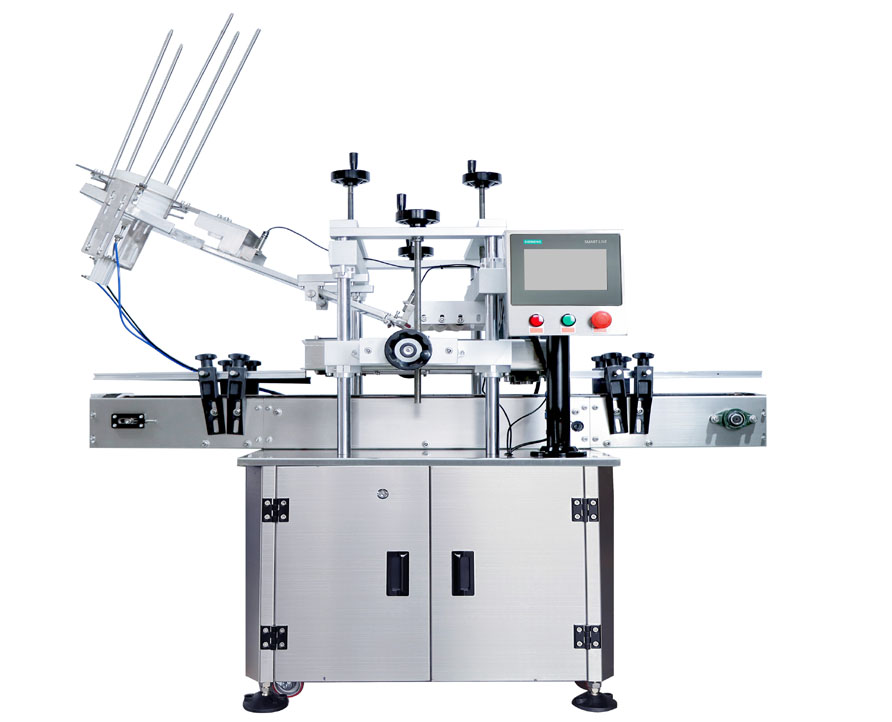
Capping Machines come in a wide range of structures and configurations, each designed to handle specific bottle shapes, cap types, production speeds, and industry requirements. Understanding these machine categories is essential for selecting the right equipment for a production line. Although all Capping Machines share the same goal—secure and consistent sealing—their mechanisms, torque systems, and cap-handling methods vary significantly. This section provides an engineering-level breakdown of the most common types used in modern factories.
Linear capping machines are widely used due to their flexibility and ease of integration. They transport bottles in a straight line, making them suitable for production lines that require frequent changeovers or handle multiple bottle sizes. Rotary capping machines, on the other hand, use a star-wheel mechanism to position bottles and achieve extremely high speeds, making them ideal for large beverage or condiment factories. Specialized machines such as vacuum cappers, servo gripping cappers, and multi-wheel torque cappers provide additional capabilities for industries with strict sealing requirements.
Key types of Capping Machines include:
- Linear screw capping machines for threaded caps on bottles, jars, and containers
- Rotary capping machines for high-speed beverage and condiment production
- Four-wheel and eight-wheel torque cappers for stable, uniform torque application
- Servo gripping and servo screw capping machines for precision and compatibility
- Vacuum capping machines for glass jars requiring extended shelf life
- Press-on capping machines for dustproof lids, plastic caps, and snap-on closures
- Crawler-type capping machines for multi-shape bottle compatibility
- Turntable-type capping machines for intermittent feeding and stable positioning
Each machine type offers unique advantages depending on the production environment. For example, vacuum capping machines are essential for food products such as sauces, pickles, and preserved vegetables, where oxygen removal is critical. Servo capping machines are preferred in industries requiring precise torque control, such as pharmaceuticals and cosmetics. Multi-wheel cappers are ideal for high-speed lines where consistent torque and minimal bottle rotation are required.
Selecting the right Capping Machine requires a clear understanding of the technical specifications that determine performance, stability, and long-term reliability. While machine type and industry application are important, the engineering parameters ultimately define whether a machine can meet production demands. These specifications influence sealing quality, torque consistency, speed, compatibility, and maintenance requirements. Buyers who understand these indicators can make informed decisions and avoid common pitfalls such as insufficient torque, unstable bottle handling, or poor cap alignment.
Capping Machines vary widely in structure, but several core performance indicators apply across all models. These include torque range, capping speed, bottle compatibility, cap compatibility, gripping force, vacuum level (for vacuum cappers), servo precision, and PLC control capabilities. Evaluating these parameters ensures that the machine integrates smoothly into an existing production line and delivers consistent results over long production cycles.
Key technical specifications include:
- Torque range and torque accuracy for screw caps
- Capping speed measured in bottles per minute or bottles per hour
- Bottle height and diameter compatibility
- Cap diameter and cap type compatibility
- Gripping force and bottle stabilization method
- Servo motor precision for torque and rotation control
- PLC control system with adjustable parameters
- Vacuum level for vacuum capping machines
- Material quality such as stainless steel grade and food-grade components
- Power consumption and air pressure requirements
Understanding these specifications helps buyers compare different machine models and determine which features are essential for their production needs.
Torque control is one of the most critical performance indicators for screw capping machines. Incorrect torque can lead to leakage, cap damage, or customer complaints. Modern Capping Machines use mechanical clutches or servo motors to control torque. Servo systems offer superior precision and repeatability, making them ideal for industries with strict quality requirements.
Torque control considerations:
- Servo torque systems provide high precision and repeatability
- Mechanical clutch systems are cost-effective but less accurate
- Torque must match cap type, bottle material, and product viscosity
- Over-tightening can damage caps or deform bottles
- Under-tightening can cause leakage or contamination
- Torque values should be adjustable through the PLC interface
For industries such as pharmaceuticals and cosmetics, servo torque control is essential to maintain product integrity and regulatory compliance.
Capping speed determines how many bottles a machine can process per minute or per hour. Speed requirements vary depending on industry, production scale, and bottle type. Rotary capping machines offer the highest speeds, while linear machines provide flexibility and moderate throughput.
Speed considerations:
- Rotary machines achieve extremely high speeds for beverage and condiment lines
- Linear machines offer moderate speeds with easier changeovers
- Multi-wheel torque cappers increase speed while maintaining stability
- Vacuum cappers operate slightly slower due to vacuum chamber cycles
- Speed must match upstream filling and downstream labeling equipment
Selecting a machine with the right speed ensures balanced production flow and prevents bottlenecks.
Compatibility is a major factor when choosing a Capping Machine. Factories often handle multiple bottle shapes, cap types, and container materials. Machines must be adjustable to accommodate these variations without requiring extensive changeovers.
Compatibility considerations:
- Bottle height and diameter adjustment range
- Cap diameter and cap type compatibility
- Ability to handle round, square, and irregular bottles
- Gripping systems that prevent bottle rotation or deformation
- Quick changeover mechanisms for multi-SKU production
- Compatibility with specialty caps such as dustproof lids, ROPP caps, and vacuum caps
Crawler-type and servo gripping machines offer the highest compatibility for irregular containers.
For food products requiring extended shelf life, vacuum capping machines are essential. These machines remove air from the jar before sealing, preventing oxidation and spoilage. Vacuum level is a key performance indicator for these machines.
Vacuum considerations:
- Vacuum chamber must achieve consistent vacuum levels
- Sealing must be airtight to prevent contamination
- Vacuum level should be adjustable for different products
- Glass jars must be positioned accurately to ensure proper sealing
- High-quality sealing reduces product spoilage and improves shelf life
Vacuum capping machines are widely used in sauces, pickles, jams, and preserved foods.
Modern Capping Machines rely on PLC control systems to manage torque, speed, gripping force, and cap feeding. A well-designed control system improves stability, reduces operator error, and enhances overall efficiency.
PLC considerations:
- Touch screen interface for easy parameter adjustment
- Real-time monitoring of torque, speed, and bottle presence
- Error detection and automatic rejection of faulty bottles
- Recipe storage for quick changeovers
- Integration with filling, labeling, and inspection systems
- Servo motor control for precise torque and gripping
Automation features significantly reduce labor costs and improve production consistency.
Below is a practical comparison table to help buyers evaluate different machine types based on speed, compatibility, precision, and industry suitability.
| Machine Type | Speed | Torque Precision | Bottle Compatibility | Best For |
|---|---|---|---|---|
| Linear Screw Capping Machine | Medium | Medium to High | High | Food, daily chemicals, cosmetics |
| Rotary Capping Machine | Very High | High | Medium | Beverage, condiments |
| Servo Gripping and Screw Capping Machine | High | Very High | Very High | Pharmaceuticals, cosmetics |
| Vacuum Capping Machine | Medium | High | Medium | Glass jars, preserved foods |
| Four-Wheel or Eight-Wheel Torque Capper | High | High | Medium | Chemicals, industrial liquids |
| Crawler-Type Capping Machine | Medium | Medium | Very High | Multi-shape bottles |
A mid‑sized food manufacturer faced inconsistent torque, slow changeovers, and labor‑dependent semi‑automatic capping. After upgrading to a fully automatic linear capping machine with servo torque control, the line achieved stable sealing, reduced labor cost, and increased throughput.
“Our production line used to struggle with inconsistent torque and bottle slippage, especially with irregularly shaped containers. After installing the servo gripping Capping Machine, the difference was immediate. The gripping arms stabilize every bottle perfectly, and the servo torque control gives us precise, repeatable sealing. Changeovers are fast, and the machine integrates smoothly with our filling and labeling systems. It has significantly improved our product quality and reduced operator workload.”
Buyers often have similar questions when evaluating Capping Machines. The following FAQs address the most common concerns and provide clear, practical answers to help guide purchasing decisions.
Most modern Capping Machines can handle a wide range of bottles including round, square, flat, and irregular shapes. Cap compatibility depends on the machine type but typically includes screw caps, press-on caps, dustproof lids, ROPP caps, and vacuum caps. Machines such as the crawler-type capping machineand servo gripping capping machineoffer the highest compatibility.
Linear machines are ideal for factories requiring flexibility, frequent changeovers, and multi-SKU production. Rotary machines are best for high-speed beverage or condiment lines where throughput is the top priority. The choice depends on production volume, bottle type, and available space.
Servo torque systems provide precise, repeatable torque for every cap. This prevents over-tightening, under-tightening, and leakage. They are essential for industries requiring high sealing accuracy such as pharmaceuticals and cosmetics.
If your products include sauces, pickles, jams, or preserved foods, vacuum capping is highly recommended. Vacuum sealing removes air from the jar, extending shelf life and improving product safety. Machines like the vacuum capping machineare specifically designed for this purpose.
Most modern Capping Machines are designed for quick changeovers. Linear machines offer the fastest adjustments, often requiring only simple parameter changes through the PLC interface. Servo gripping systems further simplify changeovers by automatically adjusting gripping force.
Routine maintenance includes cleaning contact parts, checking torque systems, lubricating mechanical components, and inspecting sensors. Machines with servo motors require less mechanical maintenance due to reduced wear.
Yes. Most machines are designed to integrate with filling, labeling, and inspection systems. PLC control allows synchronization with upstream and downstream equipment.
Choosing the right Capping Machine is essential for ensuring sealing quality, product safety, production efficiency, and long‑term operational stability. Whether a factory produces beverages, sauces, pharmaceuticals, cosmetics, or industrial chemicals, buyers must evaluate torque control, bottle and cap compatibility, automation level, and production speed to select equipment that supports continuous, reliable performance. A well‑engineered Capping Machine not only improves sealing consistency but also reduces operational risks and long‑term maintenance costs.
For companies seeking a dependable solution, Guangzhou Full Harvest Industries is one of the leading manufacturers in China, offering linear screw cappers, rotary cappers, servo gripping cappers, vacuum cappers, dustproof lid cappers, multi‑wheel torque cappers, and crawler‑type cappers. Their machines are engineered for precision, stability, and compatibility across food, beverage, pharmaceutical, cosmetic, and chemical industries. With strong engineering expertise, high‑quality materials, reliable performance, and excellent after‑sales support, Full Harvest is a trusted partner for factories upgrading or expanding their packaging automation.
FDA – “Guidance for Industry: Food Labeling Guide – Packaging and Sealing Requirements”
https://www.fda.gov/media/81606/download
USDA – “Food Safety and Inspection Service: Shelf-Stable Food Safety”
MIT Mechanical Engineering – “Torque and Rotational Dynamics: Fundamentals and Applications”
https://ocw.mit.edu/courses/8-01sc-classical-mechanics-fall-2016/pages/week-3-torque/
NIST – “Torque Calibration and Measurement Standards”
https://www.nist.gov/pml/engineering-physics-division/torque-calibration
Cornell University Food Science – “Vacuum Packaging and Food Safety Principles”
https://foodscience.cals.cornell.edu/extension/food-safety/vacuum-packaging/
No.3 Gongye South Road,Mingzhu Industrial Park,Conghua District ,Guangzhou City 510900,China
+86 20 3751 0321
FOLLOW US


Tel/ Fax: +86 20 3751 0321
E-mail: sales@gzfharvest.com
Add: No.3 Gongye South Road,Mingzhu Industrial Park,Conghua District ,Guangzhou City 510900,China