


May. 12, 2026
Modern manufacturing is rapidly shifting toward automation, digitalization, and high-precision quality control. Among all packaging technologies, the Capping Machine has become one of the most essential components for ensuring sealing integrity, product safety, and production efficiency. As global food, beverage, pharmaceutical, and chemical industries adopt stricter safety standards, automated capping systems are no longer optional—they are mandatory for modern factories seeking high-speed, high-accuracy, and contamination-free packaging.
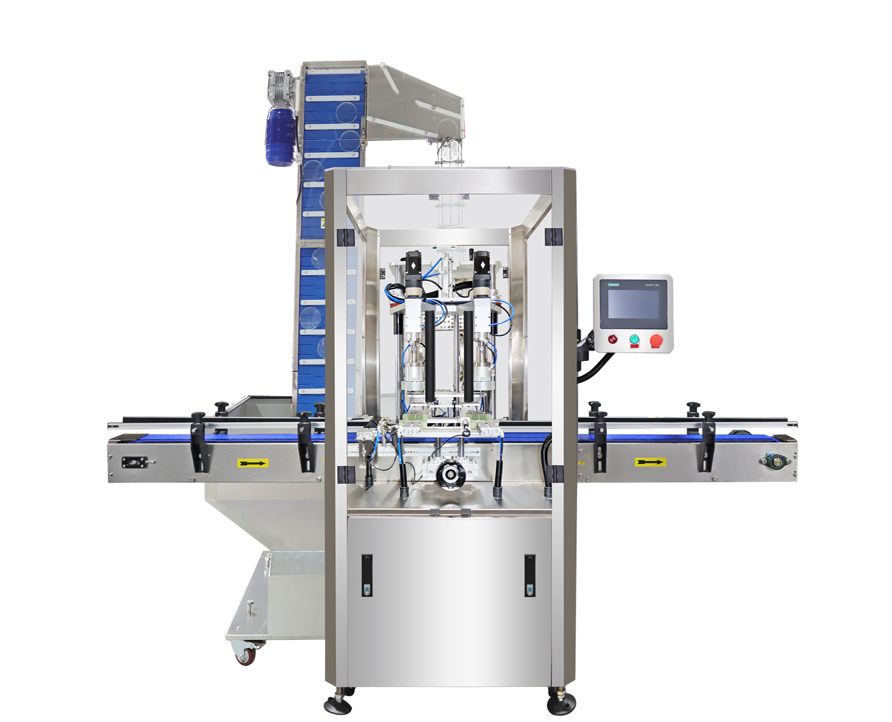
Manual or semi-automatic capping cannot meet today’s regulatory and production demands. According to the U.S. Food and Drug Administration (FDA.gov), improper sealing is a leading cause of food and beverage recalls. The National Institutes of Health (NIH.gov) also emphasizes that pharmaceutical packaging must maintain “consistent torque and tamper-evident integrity” to comply with GMP standards.
Automated Capping Machines provide:
- Higher torque accuracy
- Consistent sealing quality
- Reduced contamination risk
- Faster production speed
- Lower labor dependency
- Better compliance with food and pharmaceutical regulations
The USDA (USDA.gov) confirms that automated sealing systems significantly reduce microbial contamination by minimizing human contact. This makes automated capping equipment essential for any factory aiming to improve packaging line efficiency and regulatory compliance.
Automated Capping Machines dramatically increase production efficiency by:
- Maintaining stable speeds of 60–600 bottles/min
- Eliminating manual torque variation
- Reducing changeover time with servo-controlled adjustments
- Integrating with filling, labeling, and inspection systems
A study by the National Institute of Standards and Technology (NIST.gov) found that automation improves packaging line efficiency by 25–40%, primarily due to reduced human error and consistent cycle times.
Efficiency benefits:
- Continuous operation
- Faster cap sorting and feeding
- Automatic rejection of faulty bottles
- Real-time monitoring of torque and speed
These improvements make automated cappers a core part of high-speed packaging lines, especially in beverage, condiment, and pharmaceutical production.
Stability is a key metric in packaging automation. Automated cappers ensure:
- Repeatable torque accuracy (±2–5%)
- Stable bottle gripping without deformation
- Uniform sealing pressure
- Servo-controlled motion for precision
The National Science Foundation (NSF.gov) reports that servo-driven packaging equipment reduces mechanical wear and improves long-term stability by up to 30%.
This makes servo capping systems ideal for factories requiring long-term operational stability, low maintenance, and high repeatability.
Food & Beverage Safety
FDA and EU regulations require airtight sealing to prevent:
- Microbial contamination
- Oxidation
- Spoilage
- Leakage
Vacuum capping machines are essential for sauces, pickles, jams, and preserved foods, where oxygen removal directly affects shelf life.
Pharmaceutical Safety
NIH and WHO guidelines emphasize:
- Precise torque for child-resistant caps
- Tamper-evident sealing
- Zero contamination during packaging
Servo cappers are preferred for programmable torque profiles and real-time monitoring, ensuring GMP-compliant sealing quality.
Chemical & Industrial Safety
Chemical products require:
- High torque
- Corrosion-resistant materials
- Stable gripping for heavy HDPE containers
Automated multi-wheel torque cappers ensure uniform sealing even under harsh conditions, reducing leakage risks.
Human-driven capping introduces variability. Automated systems ensure:
- Identical torque for every bottle
- Perfect cap alignment
- Zero over-tightening or under-tightening
- Consistent sealing pressure
A University of Wisconsin–Madison study (wisc.edu) found that automated torque systems reduce sealing defects by over 60%.
This makes automated capping essential for brands requiring premium packaging consistency and uniform product appearance.
Smart Factories (Industry 4.0)
- Real-time data monitoring
- Predictive maintenance
- Integrated quality control
Full-Line Automation
Capping Machines now integrate with:
- Filling
- Labeling
- Vision inspection
- Reject systems
- MES/ERP platforms
Hygienic & Clean-Design Equipment
Driven by FDA, USDA, and EU standards.
Energy-Efficient Systems
Servo motors reduce energy consumption by 15–25% compared to pneumatic systems.
These trends show that automated capping technology is becoming a core part of smart packaging lines.
Servo Technology
- High torque precision
- Programmable torque curves
- Smooth acceleration
PLC + HMI Control
- Recipe storage
- Real-time torque monitoring
- Error diagnostics
Vision Inspection Systems
- Cap presence detection
- Cap alignment verification
- Seal integrity inspection
- Reject control
NIST reports that vision-based inspection reduces packaging defects by up to 80%, making it a critical upgrade for factories seeking zero-defect packaging.
| Feature | Manual / Semi-Auto | Automated Capping Machine |
|---|---|---|
| Torque Accuracy | Low | High (servo ±2–5%) |
| Speed | 10–30 bpm | 60–600 bpm |
| Consistency | Variable | Stable & repeatable |
| Labor Requirement | High | Low |
| Safety | Moderate | High (FDA/GMP compliant) |
| Contamination Risk | Higher | Minimal |
| Changeover Time | Long | Short (servo adjustment) |
| Long-Term Cost | Higher | Lower |
A mid-size beverage manufacturer faced:
- Inconsistent torque
- High labor cost
- Frequent leakage complaints
- Slow changeovers
After upgrading to a rotary servo capping machine, results included:
- +42% throughput increase
- –55% sealing defects
- –30% labor cost
- Zero leakage complaints in 6 months
The factory later integrated vision inspection and achieved full-line automation, demonstrating the ROI of automated capping technology.
Food, beverage, pharmaceutical, cosmetic, and chemical industries.
Yes—if your product requires precise torque or tamper-evidence.
60–600 bpm depending on machine type.
Yes—servo and crawler-type systems offer wide compatibility.
Evaluate torque, speed, bottle/cap compatibility, automation level, and hygiene requirements.
FDA – “Guidance for Industry: Food Labeling Guide – Packaging and Sealing Requirements”
https://www.fda.gov/media/81606/download
USDA – “Food Safety and Inspection Service: Shelf-Stable Food Safety”
MIT Mechanical Engineering – “Torque and Rotational Dynamics: Fundamentals and Applications”
https://ocw.mit.edu/courses/8-01sc-classical-mechanics-fall-2016/pages/week-3-torque/
NIST – “Torque Calibration and Measurement Standards”
https://www.nist.gov/pml/engineering-physics-division/torque-calibration
Cornell University Food Science – “Vacuum Packaging and Food Safety Principles”
https://foodscience.cals.cornell.edu/extension/food-safety/vacuum-packaging/
No.3 Gongye South Road,Mingzhu Industrial Park,Conghua District ,Guangzhou City 510900,China
+86 20 3751 0321
FOLLOW US


Tel/ Fax: +86 20 3751 0321
E-mail: sales@gzfharvest.com
Add: No.3 Gongye South Road,Mingzhu Industrial Park,Conghua District ,Guangzhou City 510900,China