


Oct. 09, 2026
A sauce filling machine testing checklist should connect the buyer's production requirements with measurable trial results. A machine demonstration may show that equipment runs, but purchasing approval requires more specific evidence: whether the selected configuration can dose the actual product, handle the intended containers and meet agreed requirements under defined operating conditions.
Before approving a pastes sauce filling machine, buyers should prepare representative product samples, container details, fill quantities and acceptance criteria. These inputs help the supplier design a useful trial and reduce the risk of selecting equipment on the strength of an attractive demonstration that does not reflect production.
This guide explains how to prepare a sauce or paste filling trial, record the results and separate an early compatibility assessment from a formal equipment acceptance test.
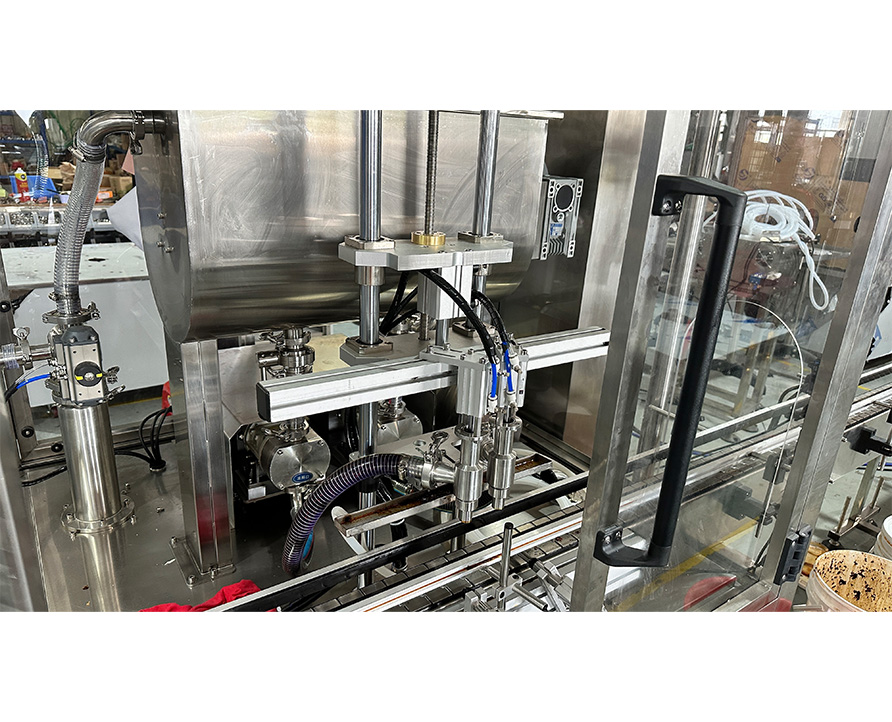
An early product trial helps assess whether a filling approach is suitable for a formulation and container. It may use demonstration equipment or an available configuration rather than the exact machine that will be supplied.
A factory acceptance test, commonly called FAT, evaluates the ordered equipment against an agreed protocol before shipment. Installation-site acceptance addresses the equipment in its final operating environment. The scope and responsibilities for each stage should be defined in the purchase agreement.
Compatibility trial: assess product transfer, dosing behavior and container suitability.
Factory acceptance: verify the agreed equipment configuration and performance before shipment.
Site acceptance: check installation, utilities, interfaces and agreed operating requirements at the buyer's facility.
A successful trial on one formulation does not automatically validate every product. Likewise, results from demonstration equipment should not be presented as a guarantee for a different machine configuration.
Before sending samples, state what the buyer needs to decide. The question might be whether a double-head arrangement can meet the required output, whether a paste separates cleanly at shutoff, or whether two container formats can run with manageable changeovers.
Prioritize these questions in the test plan. A clearly defined decision is more useful than a general request to “check the filling machine.”
Product names alone are insufficient. Two sauces can differ substantially in flow behavior, particle content, air entrainment and temperature sensitivity. A supplier needs enough information to assess the product path and the conditions under which the sample should be tested.
Product type and a representative formulation description.
Viscosity information, including measurement temperature and method if available.
Intended filling temperature and any permitted operating range.
Particle size, concentration and ingredient characteristics, if applicable.
Density information where a weight requirement will be assessed against volumetric dosing.
Relevant holding, mixing and transfer conditions before filling.
If viscosity data are unavailable, explain the product behavior and provide representative samples for assessment. Avoid treating an informal description such as “thick sauce” as a numerical specification.
The required sample quantity depends on the equipment product path, preparation needs, number of test combinations, intended run duration and cleaning between products. It should be agreed with the supplier before shipment rather than estimated from the number of containers alone.
Label samples with product identity, batch details and relevant handling instructions. Discuss shelf life, storage, transport conditions and any restrictions on opening or heating the product. An altered sample can lead to an unrepresentative trial.
| Information | What to Provide | Why It Matters |
|---|---|---|
| Product characteristics | Formulation description, viscosity and particles | Supports pump, valve and product-path assessment |
| Operating temperature | Target temperature and permitted range | Defines representative trial conditions |
| Fill requirement | Target volume or weight and acceptance limits | Establishes the dosing objective |
| Containers | Samples, drawings, opening size and dimensions | Allows handling and nozzle-access checks |
| Production target | Required accepted containers per minute | Connects trial observations with the output requirement |
| Sample logistics | Agreed quantity, storage and handling instructions | Helps preserve sample condition and complete the planned trial |
A useful test matrix includes the main production combination and the combinations most likely to challenge the equipment. These may involve the largest fill, a narrow container opening, a more demanding formulation or a different operating temperature.
The smallest and largest fill quantities may expose different issues. A small dose can make cutoff behavior more significant, while a larger dose can extend cycle time. Neither should be assumed to represent the entire operating range without assessment.
| Trial Combination | Product and Condition | Container and Fill | Main Checks |
|---|---|---|---|
| Main production format | Representative formulation at the intended temperature | Most frequently used container and fill quantity | Repeatability, cutoff and usable output |
| Smaller fill format | Relevant production formulation | Smaller approved fill quantity | Dosing variation and end-of-fill behavior |
| Larger fill format | Relevant production formulation | Larger approved fill quantity | Cycle time, product supply and handling |
| More demanding formulation | Product selected for its identified processing challenge | Relevant container and fill quantity | Flow stability, dispensing quality and compatibility |
| Stop-and-restart condition | Agreed product and operating conditions | Selected production format | Restart fills and recovery to stable operation |
These rows are a planning framework, not a mandatory test set for every installation. Select combinations according to the actual product range and purchasing risks.
Document the pump arrangement, filling-head count, nozzle or valve configuration, active recipe and relevant settings. Identify any temporary equipment or additional devices used during the trial.
If the test includes heating, agitation or a special cutoff function, confirm whether it is included in the quoted machine. A successful result achieved with an unquoted feature leaves an important procurement question unresolved.
When acceptance is based on weight, measure the product rather than assuming every empty container weighs the same. A basic individual measurement uses net weight equal to gross filled weight minus empty-container tare.
The trial protocol should define the tare method, scale suitability, units and measurement timing. For more formal net-content compliance testing, the applicable market's procedures and sampling requirements must be considered separately.
Identify the container and corresponding tare measurement.
Use a scale suitable for the agreed acceptance limits.
Record gross and net weights consistently.
Keep product on the outside of the container separate from an acceptable fill.
Define how delayed drips and rejected containers are recorded.
For a double-head machine, record each head separately. A combined average can conceal a consistent difference between heads or intermittent variation affecting only one outlet.
Review the mean fill and the spread of measurements against the agreed criteria. An acceptable average does not establish that every individual fill is acceptable. Conversely, a small diagnostic sample should not be presented as proof of long-term process capability.
Agree the sample count, test duration and evaluation method before formal acceptance. There is no single universal tolerance or sample size suitable for every sauce, fill quantity and destination market.
Acceptable weight is only one part of a filling trial. Record continued flow after shutoff, strings during container release, splashing, rim contamination and product on the container exterior.
Define what constitutes a dispensing defect and how frequently it occurs. If defects appear, use the checks in the sauce filling troubleshooting guide to organize the investigation rather than changing several settings at once.
A few carefully positioned containers do not demonstrate continuous handling performance. Observe the agreed running condition, including infeed, positioning at the nozzle and release from the filling station.
Record interruptions, misalignment and rejected containers. Report the output of acceptable containers alongside the operating speed, so that a faster setting with more defects is not mistaken for better performance.
If the purchase covers multiple containers, test the agreed changeover process. Record the adjustments, tools, parts and verification steps required before restarting production.
Changing a fill recipe is not necessarily the same as changing a container format. Guide positions, nozzle access and handling components may also require attention.
Confirm how product-contact components are accessed, disassembled where necessary, cleaned and reassembled. Identify which procedures are documented and which require further clarification.
Do not describe a machine as clean-in-place capable unless that function is included and defined. Likewise, a visual cleaning demonstration does not establish validated sanitation, allergen removal or microbiological control.
Cleaning trials and maintenance access must follow the machine's safety procedures. Buyers should separately define any cleaning validation required by their production system.
Record the conditions under which a result was obtained. A trial statement should identify the product, temperature, container, fill quantity, configuration and test duration rather than claiming that the machine is simply “accurate” or “high speed.”
Formal acceptance criteria should be agreed in writing. They should also identify how deviations are handled, which corrective actions require retesting and who approves outstanding items.
| Acceptance Item | Requirement to Agree | Evidence to Record |
|---|---|---|
| Fill quantity | Target, limits and evaluation method | Individual measurements and head identifiers |
| Dispensing quality | Permitted defect types and frequency | Observations, counts and relevant video |
| Output | Required accepted-container rate under defined conditions | Run time, accepted count, rejects and interruptions |
| Container handling | Agreed formats and handling requirements | Positioning and transfer observations |
| Changeover | Formats, procedure and scope of assessment | Adjustment records and restart checks |
| Cleaning provisions | Included cleaning method and documentation | Access review and documented procedures |
| Outstanding items | Resolution and approval responsibilities | Action list, revised evidence and sign-off |
A factory trial may not include the buyer's complete supply system or downstream equipment. Record any differences between the test setup and the intended installation.
Conveyor interfaces, utilities and interaction with a seamer or capper may need confirmation at the installation site. State these exclusions clearly rather than implying that every line-integration requirement has already been demonstrated.
Define product and production requirements
        ↓
Agree sample quantity and handling conditions
        ↓
Confirm the trial configuration and test matrix
        ↓
Run tests and record measurements
        ↓
Compare results with agreed criteria
        ↓
Resolve deviations and outstanding questions
        ↓
Document the approved configuration and next acceptance stage
This is an illustrative procurement scenario, not a documented customer installation. A sauce producer plans to fill two smooth formulations into different can sizes. The buyer needs evidence of dosing repeatability, clean dispensing and practical format adjustment.
The trial plan includes each formulation at its intended filling temperature, the relevant can samples and the agreed fill quantities. Measurements are recorded separately for each head, while dispensing defects and handling interruptions are logged during the run.
The configuration record identifies the filling valves, active settings and any equipment used to maintain the product condition. The buyer and supplier also document what the trial does not establish, including final-site interfaces or a cleaning validation outside the test scope.
Approval would depend on the measured results meeting the written requirements and on resolution of outstanding technical questions. This example describes a test plan; it does not claim that a particular machine passed or achieved a measured production improvement.
Trial results should inform the final specification. If acceptable dispensing depends on a particular valve arrangement, operating temperature or product supply condition, that requirement belongs in the agreed configuration rather than only in a test video.
For the double-head servo rotor pump filling configuration, the buyer should confirm the applicable fill range, tested performance, container compatibility and included components. Features not established in the product information need separate confirmation.
Provide representative product samples and the intended containers, together with fill quantities and handling instructions. Agree the sample amount with the supplier based on the test matrix and equipment preparation needs.
No. It can demonstrate some machine functions but does not establish how the actual formulation will flow, separate at shutoff or respond to the selected dosing arrangement.
Use an agreed measurement method and acceptance limits. For weight-based evaluation, define tare and net-weight procedures and keep results from different filling heads identifiable.
Not automatically. State which combinations were tested and which conclusions can reasonably be extended. Additional formulations or formats may require further assessment.
Confirm product compatibility, fill range, agreed performance conditions, head configuration, container handling, cleaning provisions and the scope of acceptance testing. Resolve unconfirmed features before order approval.
No. FAT verifies the agreed equipment requirements within its defined scope. Product safety, sanitation validation and local packaging compliance require their own applicable procedures and evidence.
Testing availability, charges, sample shipping and scheduling depend on the supplier's arrangements and project scope. Confirm these terms before sending materials; do not assume a standard free trial or sample-fee credit.
Guangzhou Full Harvest Industries Co., Ltd. supplies filling and container-closing equipment, including rotor pump filling machines, can seamers, capping machines and labeling machines. For sauce and paste procurement, the company can review the proposed product and container requirements against the equipment configuration. Trial availability, documentation and acceptance scope should be confirmed for the individual project.
For a filling assessment, prepare the following details through the existing inquiry form:
Product characteristics, intended temperature and particle information if applicable.
Target fill quantities, required output and proposed acceptance limits.
Container samples or drawings with opening size and overall dimensions.
Products and formats to include in the trial matrix.
Sample-handling requirements and the expected installation arrangement.
These details help define the equipment assessment and test scope. Sample quantity, schedule, charges and the documents available should be agreed before shipment.
Previous: None
Next: Why Sauce Filling Drips, Strings or Produces Uneven Fill Weights
No.3 Gongye South Road,Mingzhu Industrial Park,Conghua District ,Guangzhou City 510900,China
+86 20 3751 0321
FOLLOW US


Tel/ Fax: +86 20 3751 0321
E-mail: sales@gzfharvest.com
Add: No.3 Gongye South Road,Mingzhu Industrial Park,Conghua District ,Guangzhou City 510900,China