







Screw cap torque testing gives packaging teams a practical way to evaluate whether a threaded closure has been applied consistently and remains suitable for its intended use. The purpose is not to pursue the highest possible tightening value. A useful torque program helps define a repeatable operating range for a specific bottle, cap, liner, product, and production condition.
For production managers, quality teams, and packaging engineers, torque data can reveal changes that are not always visible during normal line operation. A closure may appear properly applied while the actual tightening force varies between bottles, shifts, or cap lots. Recording application torque and removal torque separately helps the team identify whether the variation comes from capping settings, cap handling, bottle finish, material friction, storage time, or another part of the packaging system.
Why Torque Verification Matters After Capping
A screw cap performs more than one function. It must engage correctly with the bottle finish, maintain the intended closure condition during handling and storage, and remain practical for the end user to open. The capping head setting is only one input in that result. Cap material, liner design, bottle neck geometry, thread condition, product residue, and environmental exposure can all affect the torque measured after capping.
For this reason, a packaging line should not treat one initial torque reading as a complete quality decision. A useful verification approach checks the closure at defined points in the run and compares the readings against an approved product-specific range. The range should be established through the company’s own package development, sealing, usability, transport, storage, and regulatory assessment processes where applicable.
In pharmaceutical and other regulated applications, a closure system may require additional packaging-performance and stability evaluation. Food, condiment, chemical, and cosmetic packaging projects may use different acceptance methods, but the same engineering principle still applies: the cap, bottle, product, and operating condition should be evaluated as one packaging system rather than as isolated components.
Application Torque and Removal Torque Are Different Measurements
Application torque is the force used to tighten a cap during the capping operation. It is typically controlled by the capping equipment or verified through a defined application test. Removal torque is the force required to open the cap after it has been applied and allowed to settle under defined conditions.
The two values should not be assumed to be identical. After capping, the closure system may experience stress relaxation, liner compression, friction changes, thread settling, temperature change, or product contact. These factors can change the removal value even when the initial application setting remains unchanged.
| Measurement | What It Describes | Why It Is Useful | What Can Influence It |
|---|---|---|---|
| Application torque | The torque applied when the cap is tightened | Helps verify the capping process and equipment setting | Servo setting, cap grip, bottle stability, head contact, cap placement |
| Immediate removal torque | The torque needed to open a cap shortly after application | Shows the initial response of the cap and bottle combination | Thread engagement, liner compression, cap material, handling method |
| Delayed removal torque | The torque measured after a defined storage period | Helps identify torque retention or relaxation behavior | Time, temperature, humidity, product contact, closure design |
| Torque variation | The spread of readings across samples | Helps identify process consistency issues | Cap lot variation, bottle variation, capping alignment, measurement method |
A stable packaging process does not necessarily produce one identical number on every bottle. Instead, it should produce readings that remain within the approved range and show a controlled variation pattern. A sudden spread in results may be more useful as an investigation signal than a single high or low measurement.
What Can Change Screw Cap Torque Results
Torque behavior is influenced by the interaction between materials and mechanical conditions. A capper setting that produces acceptable results on one bottle family may not transfer directly to another bottle, even when the cap diameter appears similar. Packaging teams should therefore confirm the actual bottle and closure combination before copying settings across products.
Cap material, cap thread geometry, liner type, and liner condition.
Bottle finish dimensions, thread condition, neck material, and bottle rigidity.
Product residue or moisture on the bottle finish before capping.
Cap orientation and placement before the capping head begins tightening.
Bottle clamping stability and conveyor alignment during the capping cycle.
Applied torque setting, head condition, and gripping contact condition.
Storage duration, temperature, humidity, and product interaction with the closure system.
Cap supply should also be reviewed when torque results begin to change unexpectedly. A cap that reaches the capping head at an inconsistent angle may not engage the thread in the same way as a correctly positioned cap. Likewise, a bottle that is not held steadily during tightening can create inconsistent thread engagement even if the torque setting has not changed.
Build a Practical Torque Test Plan
A useful torque test plan should be detailed enough to produce comparable data but simple enough for a production or quality team to follow consistently. The goal is to reduce uncertainty. Every recorded result should make clear what package was tested, when it was tested, which condition applied, and how the reading was obtained.
Define The Package Combination
Start by documenting the specific package combination. Record the bottle material, neck finish, bottle size, cap type, cap material, liner condition if applicable, product type, and capping configuration. If the same line runs multiple bottle or cap formats, each format should have its own identification record rather than relying on a generic torque setting.
Confirm The Measurement Method
Use a suitable torque measurement device and define how it will be checked, handled, and read. The test method should state whether the recorded value is application torque, immediate removal torque, delayed removal torque, or another defined measurement. Packaging torque meters should be maintained and checked in line with the facility’s measurement-control procedures.
Set Sampling Points Across The Run
Do not collect all samples from the beginning of production only. A practical plan can include samples after startup, after normal running conditions are reached, after cap replenishment, after a format adjustment, after a stoppage, and near the end of the run. This helps show whether the capping process remains stable over time.
Define Storage Conditions For Delayed Checks
If delayed removal torque is part of the verification plan, define the storage time and conditions before the measurement takes place. Without a consistent waiting period and storage condition, results from different batches may not be comparable. The chosen conditions should reflect the company’s product and packaging evaluation protocol.
Record Context, Not Only Numbers
A torque log should include more than the torque reading. Record the date, time, product code, bottle and cap identifiers, capping setting, sample location in the run, operator or tester identification where appropriate, and any unusual line event. Context allows the team to identify patterns instead of treating every result as an isolated event.
Torque Testing Workflow for Packaging Teams
Workflow: Confirm bottle and cap combination → Check measurement device → Verify line setup → Run defined samples → Measure and record torque → Review variation → Investigate outliers → Confirm any required setting or process adjustment.
This workflow is not a replacement for product-specific test methods, regulatory requirements, or formal package validation. It is a practical process-control framework that helps a factory create repeatable records and investigate unexpected closure variation before it becomes a larger packaging issue.
Torque results are easier to interpret when the line also has stable bottle flow, sufficient cap supply, and controlled accumulation before capping. See filling and capping line balancing for a detailed review of how filler output, conveyors, accumulation, and capping capacity work together.
Example of a Production Torque Record
The following table is an example of how a production team can organize information. The figures and acceptance decision fields must be determined by the actual package specification and should not be copied as universal torque targets.
| Sample Point | Package Format | Test Condition | Recorded Value | Line Observation | Review Action |
|---|---|---|---|---|---|
| Startup | Defined bottle and cap set | Immediate removal torque | Record actual result | Confirm bottle alignment and cap placement | Compare with approved specification |
| Normal production | Defined bottle and cap set | Immediate removal torque | Record actual result | Review cap supply and capping consistency | Check trend against prior samples |
| After cap replenishment | Defined bottle and cap set | Immediate removal torque | Record actual result | Confirm cap lot and feed condition | Investigate unusual variation |
| Delayed sample | Defined bottle and cap set | Removal torque after defined storage | Record actual result | Confirm storage condition and elapsed time | Review torque retention behavior |
Read the Data as a Process Pattern
A single torque reading can indicate whether one sample is inside or outside the approved range. A series of readings can show whether the capping process is stable. For example, if readings gradually decline after a long run, the team may inspect gripping contact parts, capping settings, cap feed behavior, or bottle stability. If variation increases immediately after a cap lot change, the cap dimensions or material condition may require review.
It is important not to diagnose every variation as a capping-head problem. Tightening behavior is the outcome of the whole closure system. The investigation should move from the recorded data to the actual line conditions: bottle dimensions, cap lot, cap feed, gripping condition, conveyor alignment, clamp stability, capping setting, and environmental exposure.
If torque variation increases during production, the review should include cap feed behavior, bottle alignment, gripping condition, sensor timing, and other operating factors. The common capping problems and maintenance tips guide explains how these issues can affect routine capping stability.
When A Servo Capping Configuration Helps
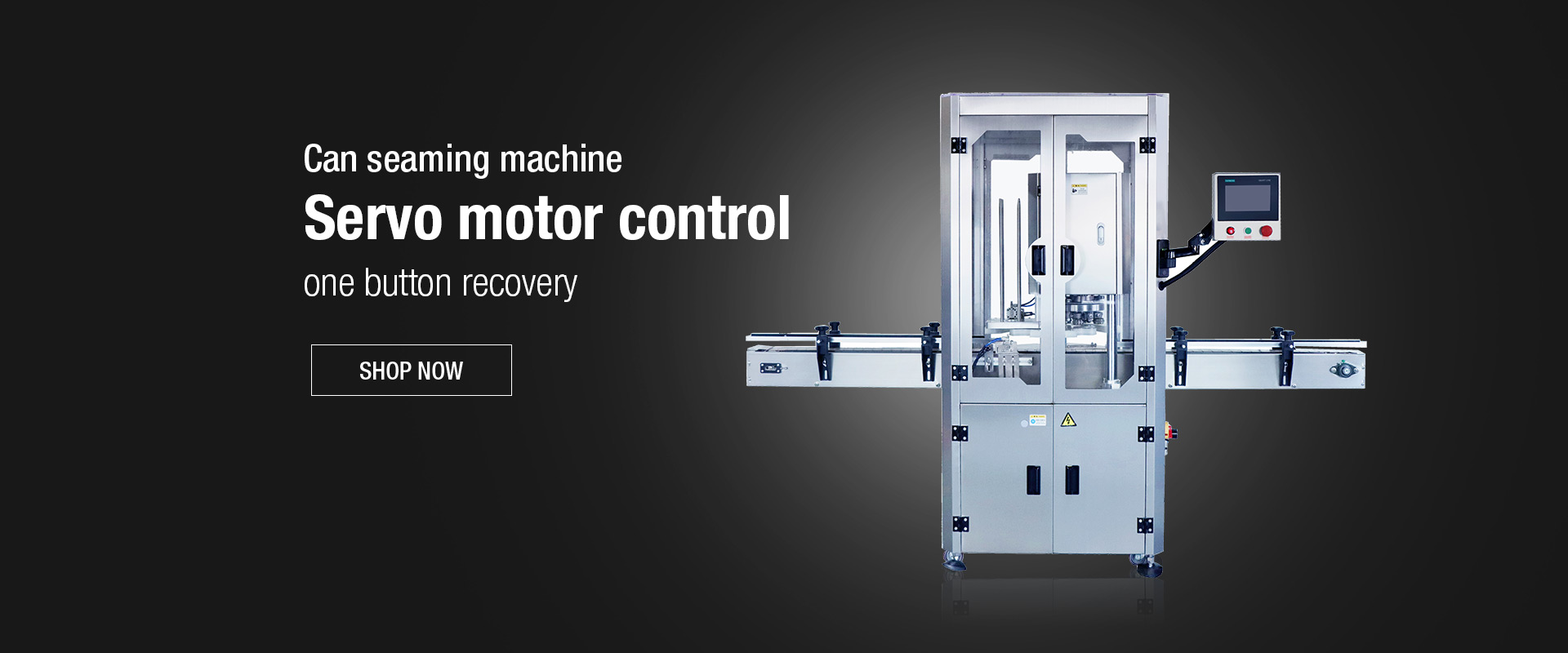
For packaging lines that require controlled and repeatable tightening, servo-based capping can provide a practical way to manage torque settings across compatible bottle and cap formats. The final result still depends on package compatibility and correct line setup, but controlled torque adjustment can make process verification more systematic.
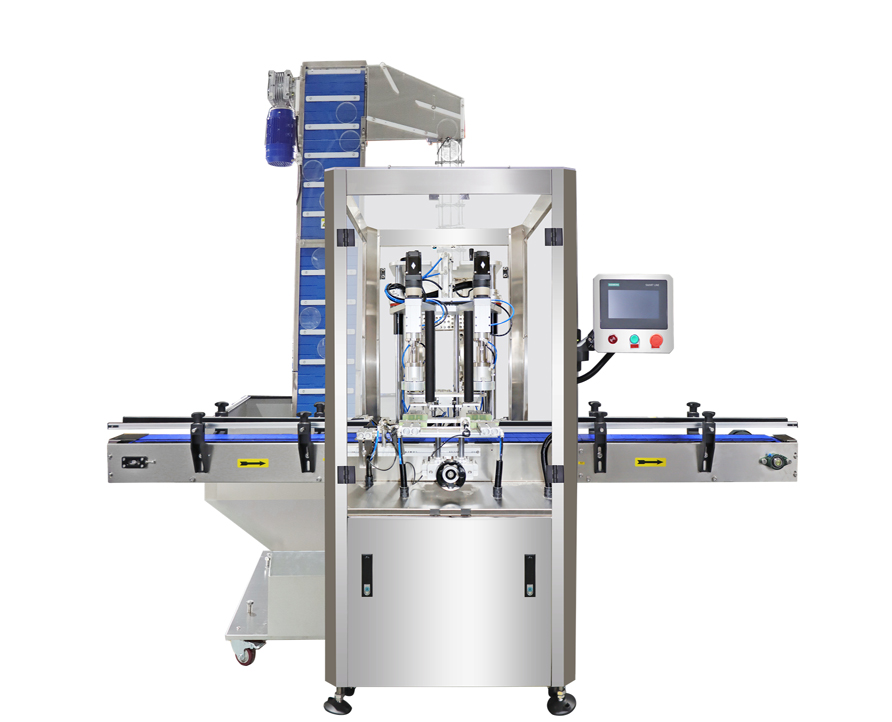
Where higher line output is required, a double-head servo screw capping machine can be evaluated together with the cap supply rate, bottle handling condition, and torque-verification plan. Equipment output alone should not be used as the only selection criterion; the line also needs a closure-quality process that can be monitored and documented.
Typical Quality-Control Scenario
A packaging team notices that caps on one bottle format are becoming easier to remove after several hours of production, although the displayed capping setting has not changed.
Situation: The team has only startup measurements and cannot determine whether the change began after a cap refill, a bottle format adjustment, or a longer period of continuous operation.
Review Method: The team defines sampling points across the run, records cap and bottle identifiers, checks the torque meter, separates immediate and delayed removal measurements, and notes operational events such as cap-feed adjustment or conveyor stoppage.
Outcome: The records provide a clearer basis for investigating whether the variation is related to cap supply, bottle handling, machine adjustment, material variation, or storage conditions. This scenario is an example of a quality-control method, not a published customer case.
Frequently Asked Questions
Is application torque the same as removal torque?
No. Application torque is the tightening force used during capping, while removal torque is the force required to open the closure after application. The two values can differ because the closure system may change after capping.
How often should screw cap torque be checked?
The sampling frequency should be defined by the product, closure system, risk level, line stability, and internal quality procedure. Checks are commonly considered at startup, during normal operation, after changes, and after unusual line events.
Can one torque setting be used for every bottle?
No. Different cap materials, liners, bottle finishes, bottle materials, and product conditions can change the resulting closure behavior. Settings should be evaluated for the actual package combination.
Why can removal torque change after storage?
Removal torque can change due to material relaxation, liner compression, friction changes, temperature, humidity, product contact, and other package-specific conditions.
Does a higher torque value always mean a better seal?
No. Excessive torque can create other risks, including cap deformation, difficult opening, thread damage, or unsuitable liner compression. The correct value is the approved range for the actual closure system.
What should be checked when torque variation increases?
Review the bottle and cap combination, cap lot, cap supply, bottle alignment, gripping condition, capping settings, torque meter condition, product residue, and the timing of any line adjustment or stoppage.
Why GZFHarvest Is Relevant to Screw Capping Line Planning
Guangzhou Full Harvest Industries Co., Ltd. supplies packaging machinery for bottle and can production lines, including screw capping, filling, sealing, and labeling equipment. For projects involving servo screw capping, the company can review bottle dimensions, cap format, target output, and line-connection requirements so that equipment configuration can be considered alongside practical closure-control needs.
Authoritative Sources
Standard Test Methods for Measurement of Torque Retention for Packages with Continuous Thread Closures Using Non-Automated Torque Testing Equipment
https://store.astm.org/d2063_d2063m-24.html
Standard Test Method for Application and Removal Torque of Threaded or Lug-Style Closures
https://www.astm.org/d3198-97.html
Standard Practice for Calibration and Use of Torque Meters Used in Packaging Applications
https://store.astm.org/d3474-90r18.html
Container Closure Systems for Packaging Human Drugs and Biologics
https://www.fda.gov/regulatory-information/search-fda-guidance-documents/container-closure-systems-packaging-human-drugs-and-biologics


