


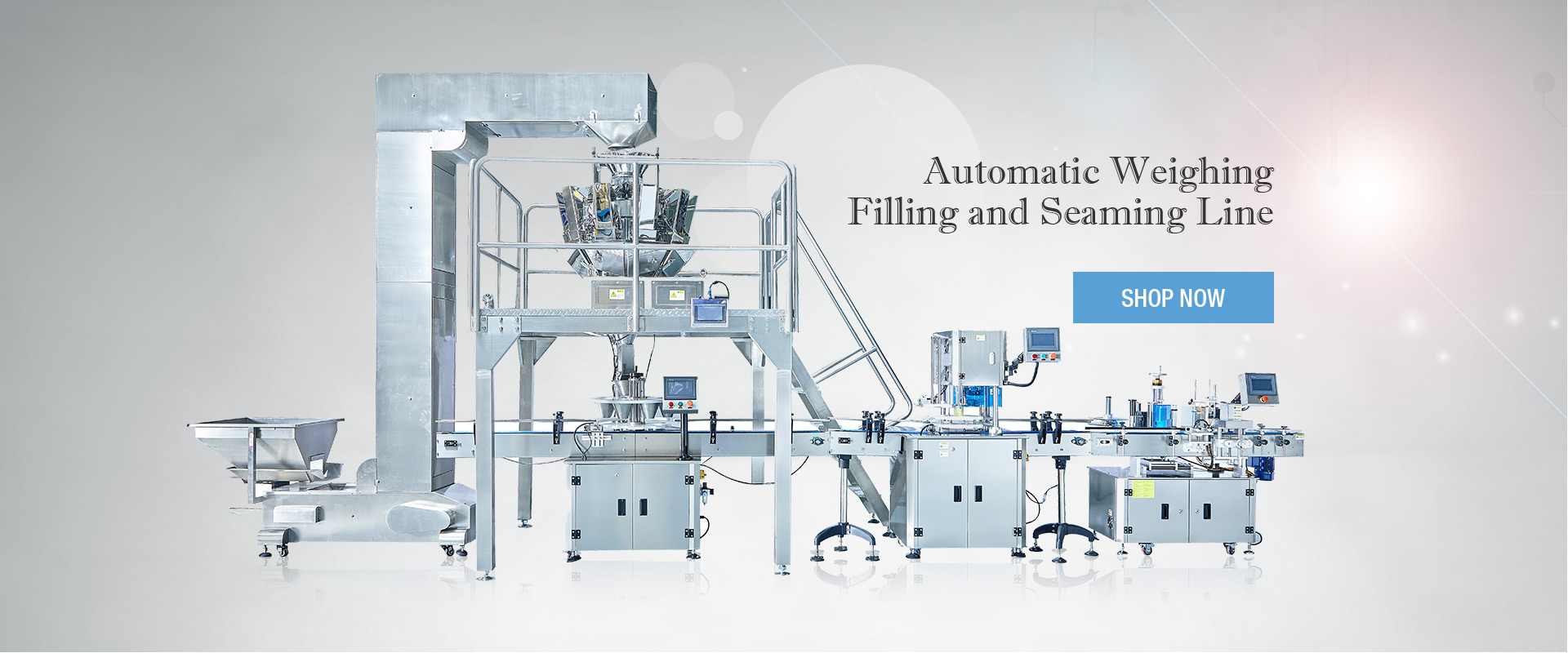

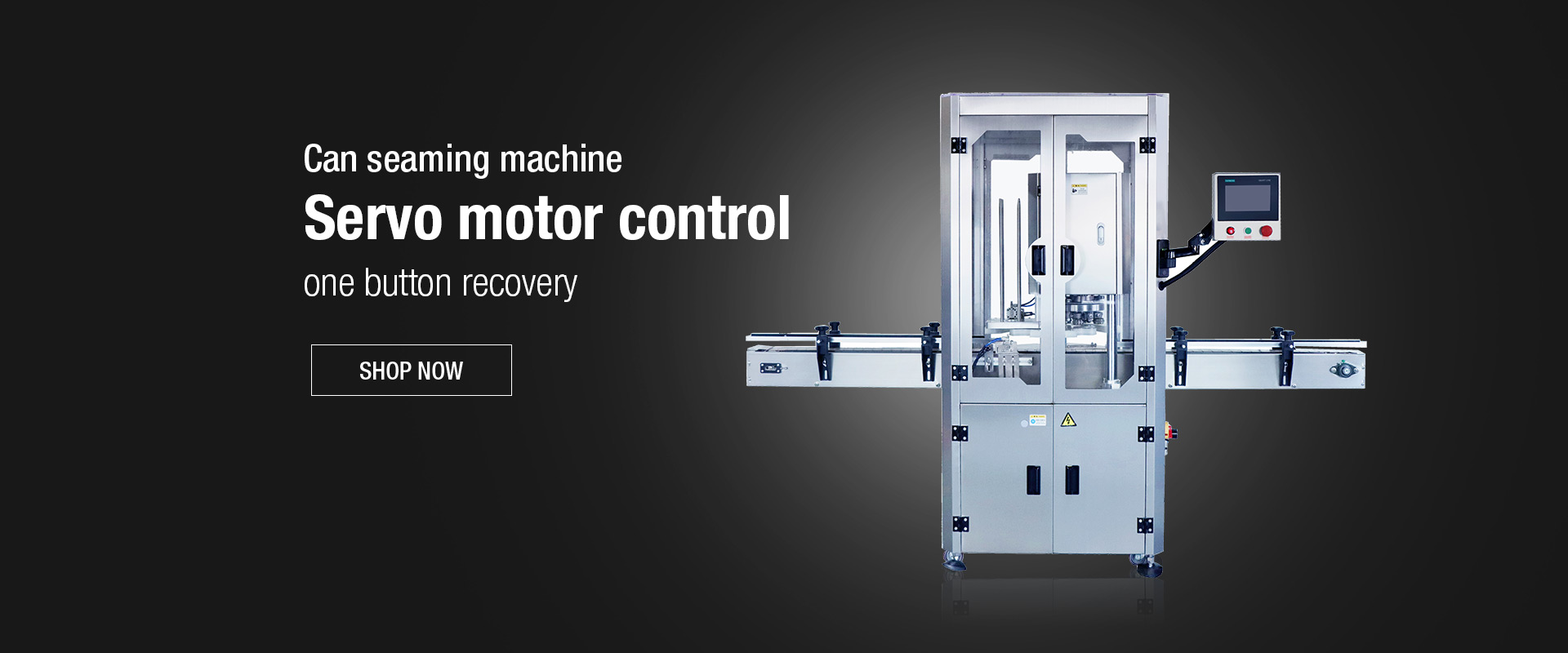



Choosing between a single-head and double-head capping configuration is not simply a question of buying more speed. The number of capping heads affects production capacity, bottle handling, cap supply demand, changeover work, machine footprint, maintenance planning, and the way a packaging line recovers after short interruptions.
A second capping head can increase usable output when the rest of the line is prepared to support it. If the filler, conveyor, cap feeder, bottle clamping system, or downstream equipment cannot maintain the required flow, adding another head may only move the bottleneck to a different location. This guide helps packaging teams compare the two configurations through line conditions rather than headline speed alone.
Why Capping Head Count Is Not Only A Speed Decision
A capping head applies a closure to a bottle, but its output depends on the conditions around it. Bottles must arrive at a stable pitch, caps must be available in the correct orientation, and the container must remain positioned during the tightening process. When these conditions are controlled, a second head can increase throughput. When they are not, a higher-capacity capping station may spend more time waiting, stopping, or correcting alignment issues.
Production planning should therefore begin with the required sustained output, not the maximum theoretical output. A line that must produce several bottle formats with frequent changeovers may benefit from a flexible single-head arrangement. A line running one or two stable bottle formats for longer periods may gain more from a double-head layout if upstream and downstream stations can support the increased demand.
The relevant question is not “Which machine is faster?” It is “Which configuration can maintain the required closure quality, output, and operating stability for this bottle and cap family?”
What A Single-Head Configuration Can Handle Well
A single-head capper can be suitable for lower to medium output requirements, pilot production, product lines with frequent format changes, or operations where the filler does not supply bottles continuously at a high rate. It can also be appropriate when the production team needs more time to inspect new caps, confirm torque results, or change bottle guides between smaller batches.
A single head does not automatically mean low quality or poor automation. A well-configured single-head system can provide stable automatic cap handling and controlled tightening when the bottle and cap combination is properly matched. The key limitation is that one capping point has a defined maximum effective capacity.
Suitable for lower or moderate sustained production demand.
Useful where frequent bottle or cap changes are part of normal operation.
Can simplify format adjustment and routine inspection.
May be appropriate when upstream filling output is limited.
Requires less cap supply capacity than a two-head arrangement.
For projects that require a compact servo configuration with controlled tightening, a single-head servo capping configuration can be considered after confirming the bottle range, cap type, output requirement, and expected format-change frequency.
What Changes With A Double-Head Capping Station
A double-head station creates two capping positions within the same operating sequence. This can raise capping capacity when bottles arrive consistently and the cap supply system can keep both heads supplied. It can also provide more practical speed margin when the capping stage needs to recover after a short interruption.
However, the configuration also increases the need for stable line conditions. The conveyor must maintain bottle spacing, the clamping system must support the container format, cap delivery must match increased demand, and downstream equipment must accept the additional finished bottles without causing back pressure.
Supports higher capping demand when the line can provide stable bottle flow.
Requires cap supply capacity that can serve two capping positions.
Needs reliable bottle spacing and container stability at the capping zone.
May require more detailed commissioning when multiple bottle formats are used.
Should be reviewed with downstream labeling, inspection, and packing capacity.
Compare Capacity, Changeover, And Operating Complexity
| Comparison Area | Single-Head Capper | Double-Head Capper |
|---|---|---|
| Typical production role | Lower to medium output or flexible multi-format operation | Medium to higher output with more stable production demand |
| Effective capacity | Limited by one capping position | Can increase when bottle flow and cap supply support two heads |
| Cap supply demand | Lower demand and simpler recovery requirement | Higher demand with stronger need for stable cap delivery |
| Format changeover | Often simpler for smaller batches | May require more checks across bottle handling and capping positions |
| Bottle stability requirement | Important for quality | Critical because unstable flow affects both capping positions |
| Upstream filler requirement | Can suit a lower-output filler | Needs adequate sustained bottle supply to use the added capacity |
| Downstream requirement | Lower discharge demand | Requires inspection, labeling, and packing capacity to match output |
The comparison should not be read as a rule that double-head machines are always preferable. A second head only creates value when it improves the effective flow of the full line. If the filler, cap feeder, or labeler remains the actual constraint, the investment may not improve total packaged output as expected.
Production Conditions That Support A Double-Head Layout
A double-head configuration is generally easier to justify when the packaging line has a stable product mix, a clear output target, and enough upstream and downstream capacity to use the additional capping capability. The following conditions should be reviewed before selecting a two-head design.
Stable Bottle And Cap Format
Longer production runs with a consistent bottle and cap combination often support a double-head layout more effectively than short runs with frequent changes. This does not mean a two-head system cannot be adjusted, but each change requires confirmation that bottle guides, clamping conditions, cap gripping, capping height, and torque settings are correct for both working positions.
Consistent Upstream Filling Capacity
The filler must supply bottles at a rate that allows the capping station to operate productively. If the bottle supply regularly stops or arrives with large gaps, the second capping head may remain underused. In that situation, improving filler uptime, bottle discharge control, or accumulation may create more value than increasing capping capacity.
Sufficient Cap Supply Rate
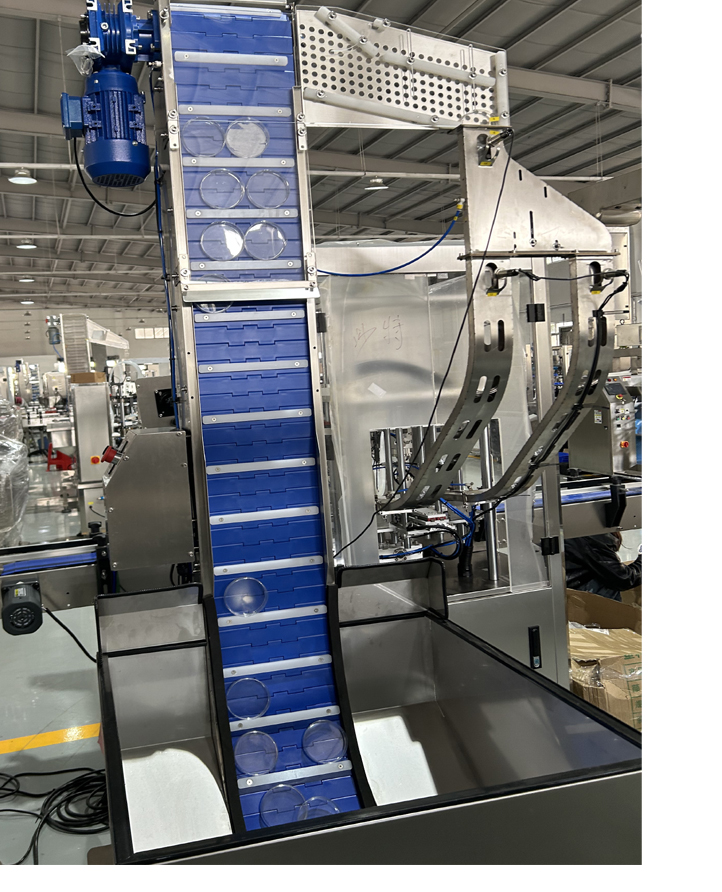
Two capping heads increase the rate at which caps are consumed. The cap feeder, cap track, gripper system, and replenishment process should be evaluated under normal operation and recovery conditions. A feeder that performs adequately for one head may not maintain a stable cap buffer when two heads operate continuously.
Available Space For Bottle Control
Double-head capping requires enough conveyor and working-zone space to control bottle position. The required space depends on bottle diameter, bottle height, guide rail arrangement, bottle pitch, clamp design, and the transition between filling and capping. Compact layouts can work well, but they should still provide safe access for adjustment, cleaning, and inspection.
Decision Flow For Capping Head Configuration
Workflow: Define required output → Confirm actual filler capacity → Check bottle flow and accumulation → Verify cap supply rate → Review bottle stability → Confirm downstream capacity → Compare changeover demand → Select one or two capping heads.
This workflow helps avoid a common planning error: selecting a capping configuration before the full production line has been reviewed. The equipment choice should follow the process data, not replace it.
When A Second Head Will Not Solve The Real Bottleneck
Adding a second head will not correct a constraint that occurs somewhere else in the line. If bottles are delayed at the filler, caps are not supplied consistently, containers become unstable on the conveyor, or finished bottles cannot leave the capping area, a higher-capacity capper may simply experience more idle time.
| Observed Line Issue | Why A Second Head May Not Solve It | First Area To Review |
|---|---|---|
| Capping station often waits for bottles | The limitation is upstream bottle supply | Filler output, discharge timing, upstream accumulation |
| Capping station pauses because caps are unavailable | Additional heads increase cap demand | Cap feeder, cap orientation, replenishment process |
| Bottles tilt or shift during transfer | More capping capacity does not improve bottle control | Conveyor speed, guide rails, clamping, bottle pitch |
| Finished bottles build up after capping | Downstream equipment remains the constraint | Inspection, labeling, packing, discharge conveyor |
| Torque variation rises at higher speed | Speed increase may reduce closure consistency | Cap placement, bottle stability, torque verification plan |
Before expanding capping capacity, teams should collect evidence about where the line spends time. Useful observations include the duration of bottle starvation, the frequency of cap-feed stops, the amount of downstream back pressure, and the point at which closure quality begins to vary. The data can show whether the existing capper is the real system constraint or only the most visible station.
Capacity Planning Questions Before Expansion
What output must the line sustain during a normal shift rather than during a short demonstration run?
What is the actual sustained output of the filler with the intended product and fill volume?
Can the cap supply system maintain stable delivery at the planned capping rate?
Are bottle guide rails, clamps, and conveyor transitions suitable for the full bottle range?
How often will operators change bottle format, cap type, or torque settings?
Can inspection, labeling, and packing equipment accept the increased discharge rate?
How will the team verify application and removal torque after increasing line speed?
Is machine guarding and safe access considered in the final line layout?
Moving components, rotating elements, conveyor pinch points, and capping zones require appropriate safeguarding and operating procedures. Line capacity planning should therefore include access for cleaning, adjustment, inspection, and safe operation instead of treating these requirements as an afterthought.
Illustrative Configuration Review
A packaging operation plans to increase production of one condiment bottle format. The filler has stable unused capacity, but the existing single-head capping station approaches its practical operating limit during long runs. The line has a cap supply system, bottle accumulation before capping, and downstream labeling equipment that can be reviewed for additional capacity.
Planning Question: The team wants to know whether a second capping head will increase total packaged output or whether the line will develop cap-supply interruptions, bottle instability, or downstream backup.
Review Method: The team records actual filler output, bottle arrival consistency, available accumulation, cap-feed recovery behavior, torque results, labeler uptime, and the time required for format adjustments. It compares the sustained line rate with the expected demand of a two-head capping station.
Planning Result: The assessment clarifies whether a double-head layout can be used effectively, which supporting sections require adjustment, and whether the current constraint is truly the capping station. This is an illustrative planning example, not a published customer case.
Connect Head Count With Torque And Line Flow
Increasing capping capacity should not weaken closure control. The capping process must still apply the correct condition for the specific bottle and cap combination. For a detailed explanation of measurement planning, see application and removal torque testing.
Head count should also be assessed alongside filler speed, conveyor accumulation, cap supply, and downstream capacity. The filling and capping line balancing guide explains how these production stages influence the usable output of the entire packaging line.
For projects where line data supports a higher-capacity capping arrangement, the FH-FCP002 double-head servo capper can be evaluated against bottle dimensions, cap format, output target, and line connection requirements.
Frequently Asked Questions
Is a double-head capper always twice as fast as a single-head capper?
Not necessarily. The effective output depends on bottle supply, cap availability, conveyor stability, capping conditions, downtime, and downstream capacity. Two heads can increase capacity, but the full line must support the higher demand.
Does a double-head system require more cap supply capacity?
Yes. A two-head arrangement consumes caps at a higher rate, so cap feeding, cap orientation, cap buffering, and replenishment procedures should be evaluated accordingly.
Is a double-head configuration suitable for frequent bottle changes?
It can be used for multiple formats when the machine is designed and adjusted for them, but frequent changeovers may require more setup checks than a simpler single-head process. The practical decision depends on batch size, product range, and required output.
When should a packaging line retain a single-head capper?
A single-head arrangement may remain appropriate when output demand is moderate, filler capacity is limited, product formats change frequently, or the supporting cap supply and downstream equipment are not ready for a higher capping rate.
What should be reviewed before adding a second capping head?
Review actual filler output, bottle flow, conveyor and accumulation design, cap supply capacity, bottle stability, torque-verification requirements, downstream capacity, format-change frequency, machine access, and safety provisions.
Can a second capping head correct loose caps or uneven torque?
No. Loose caps and torque variation should be investigated as closure-quality issues involving the cap, bottle, capping setting, gripping condition, bottle stability, and measurement method. Increasing head count does not replace proper process verification.
Why GZFHarvest Is Relevant to Capping Capacity Planning
Guangzhou Full Harvest Industries Co., Ltd. supplies packaging machinery for can and bottle production lines, including filling, sealing, screw capping, and labeling equipment. For projects involving single-head or double-head capping configurations, the company can review bottle format, cap structure, expected output, line connections, and practical adjustment requirements to support equipment planning for the intended production workflow.
Authoritative Sources
Dynamic Bottleneck Elimination in a Manufacturing Line
https://pmc.ncbi.nlm.nih.gov/articles/PMC4977234/
A Hierarchical Structure of Key Performance Indicators for Manufacturing Systems
https://tsapps.nist.gov/publication/get_pdf.cfm?pub_id=919754
General Requirements for All Machines
https://www.osha.gov/laws-regs/regulations/standardnumber/1910/1910.212
Capacity Planning for Production
https://online.aurora.edu/capacity-planning/


