


Oct. 10, 2026
A sauce filling machine capacity calculation should begin with the number of acceptable containers required during the available production time. Filling-head count and advertised speed are useful equipment information, but they do not establish the output a manufacturer will achieve with a particular sauce, fill quantity and container.
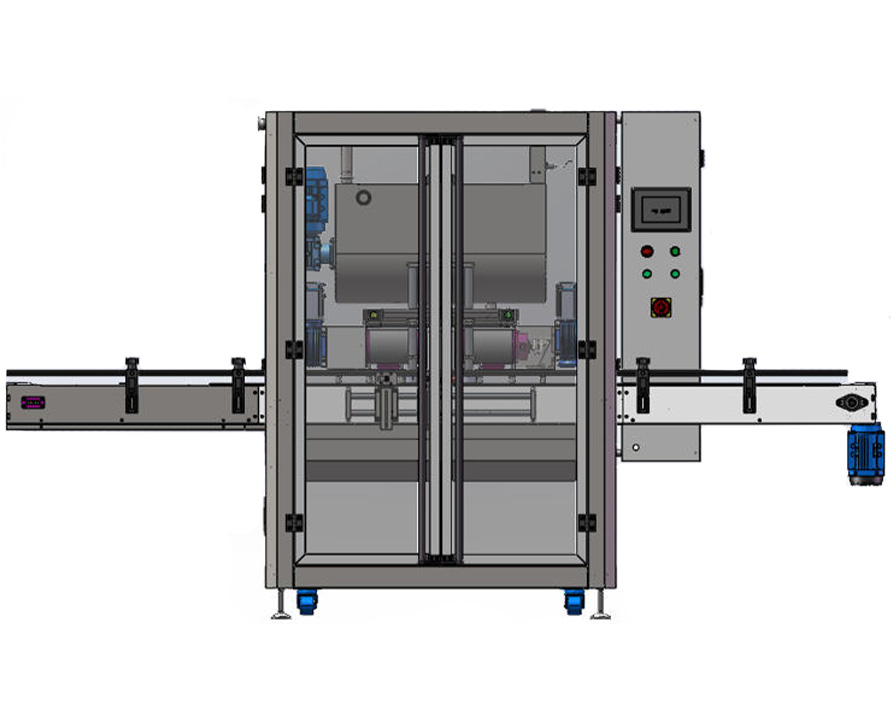
When evaluating a pastes sauce filling machine, buyers need to connect the production target with the actual filling cycle, product supply, container handling and downstream capacity. A double-head arrangement may meet the requirement, but that decision should be supported by defined assumptions and product-specific measurements.
This guide explains how to estimate filling-station output, distinguish running capacity from scheduled production output, and assess whether a double-head configuration is sufficient. All numerical values in the worked example are hypothetical and are not specifications for a Guangzhou Full Harvest Industries Co., Ltd. machine.
Start with the quantity that must leave the process in an acceptable condition. Containers requiring rework or rejected for incorrect weight, contamination or handling damage should not be counted as accepted output.
State whether the requirement applies per minute, per production window or per shift. A target of 2,000 accepted containers over a production window is different from a requirement to sustain a particular instantaneous rate at the filling station.
Define the required accepted-container quantity.
Identify the time window available for that product.
Record the product, container and target fill quantity.
Define which defects make a filled container unacceptable.
Identify whether the target applies to the filling station or the complete line.
Specify which periods belong to the production window. Breaks, cleaning, changeovers and preparation must be treated consistently. If a period has already been excluded from the time available for production, do not subtract it again as downtime.
For a mixed-product shift, allocate time to each product or model the sequence explicitly. A total shift length does not automatically provide the same production time for every formulation.
Clear time boundaries prevent an optimistic capacity estimate and make later comparisons with actual production more useful.
The time needed to dispense sauce is only part of a complete cycle. Container positioning, settling, valve operation and release may also determine how frequently the station completes acceptable fills.
Measure the interval between equivalent points in successive completed cycles. For a repeating two-container batch, this might be the interval between the completion of one pair and the completion of the next pair.
Container entry and positioning.
Dosing and any required stabilization.
End-of-fill valve or nozzle sequence.
Container release and readiness for the next cycle.
Record the method used to identify cycle boundaries. Comparing a dispensing-only time with a complete-cycle time can produce misleading conclusions.
Some machine actions occur simultaneously, while others must finish before the next action begins. Do not add overlapping durations as if they were all sequential. Equally, do not ignore an action that prevents the next fill from starting.
The most useful input is the measured complete-cycle interval under the agreed operating condition. A component-by-component timing breakdown helps explain that interval and identify where a restriction occurs.
Two installed heads do not necessarily mean two completed containers in every common cycle. Confirm whether the heads fill simultaneously, alternate between containers or form part of a different handling sequence.
For a synchronized arrangement, use the number of containers actually completed per cycle. For staggered or continuous arrangements, measuring completed containers over a defined run interval may be clearer than applying a batch-cycle formula.
For a repeating batch cycle, the basic calculation is:
Running capacity in containers per minute
= 60 × containers completed per cycle
  ÷ complete cycle time in seconds
This formula assumes that the measured cycle represents the intended operating condition and can repeat without additional interruptions. It describes running capacity, not guaranteed production over an entire shift.
If two containers are completed together every six seconds, the calculated running capacity is 20 containers per minute. This is an arithmetic illustration, not a machine specification.
For an initial production estimate, use the following framework:
Available runtime
= defined production window − separately recorded stops

Estimated accepted containers
= running capacity × available runtime
  × accepted fraction
The accepted fraction is the proportion of filled containers meeting the defined criteria. Use measured evidence where available. During early planning, label assumed losses clearly and compare different scenarios instead of presenting one estimate as certain.
This simple model assumes that the running rate remains representative throughout the available runtime. If speed varies materially, calculate output for separate periods or use a measured average running rate with a clearly defined boundary.
If a measured average rate already includes short interruptions, do not apply another adjustment for those same interruptions. Similarly, if output is counted as accepted containers, do not multiply it by a second quality factor.
OEE provides a more detailed framework that separates availability, performance and quality. When using it, keep the ideal running rate separate from the actual rate. An actual rate that already includes slower operation should not be reduced again for the same performance loss.
| Metric | Meaning | Common Mistake |
|---|---|---|
| Complete cycle time | Interval between equivalent completed cycles | Using dispensing time alone |
| Running capacity | Output rate while the defined process is operating | Treating it as a full-shift guarantee |
| Available runtime | Production window after the specified stops are deducted | Subtracting an excluded period twice |
| Accepted fraction | Accepted containers divided by total filled containers | Counting rejected or reworked containers as accepted output |
| Scheduled average accepted rate | Accepted output divided by the defined production window | Comparing it directly with an instantaneous running rate |
The product-container combination with the longest acceptable cycle can be more important than the easiest demonstration format. Larger doses, restricted container access or more demanding product behavior may change the usable rate.
Identify the main production combinations and measure them separately. Do not assume that a speed observed with one fill quantity applies to every recipe.
Record the complete cycle for each important fill quantity.
Check the formulation at its intended filling temperature.
Confirm whether product supply remains stable during the run.
Verify that both heads meet the agreed filling requirements.
Include normal startup and restart conditions in the assessment.
Additional heads may not resolve a limitation in the product supply, container feeding or downstream equipment. If the station waits for product or containers, increasing dispensing capacity alone may leave the restriction unchanged.
Review the measured reason for lost time before deciding on a different head count. The proposal should explain how the selected configuration addresses the limiting condition.
Guangzhou Full Harvest Industries Co., Ltd. describes single-head, double-head, four-head and six-head arrangements for different production requirements. These are configuration choices; they should not be interpreted as standard, tool-free conversions of the featured double-head unit.
The automatic double-head rotor pump filler should be assessed against the actual formulation, fill quantity and required output. Numerical capacity and any future expansion provisions need confirmation in the technical proposal.
A starved station waits because product or containers are unavailable. A blocked station waits because completed containers cannot move downstream. Both reduce production, but their causes lie in different parts of the system.
Record when the filler stops and why. A total downtime figure is useful for capacity estimation, while a reason-coded record helps determine the correct improvement.
The downstream closing station must accommodate the filling output for the relevant container. A filler that can run faster than the seamer or capper may create accumulation rather than higher finished-product output.
Short-term accumulation can absorb some interruptions, but it does not remove a sustained downstream capacity shortage. Whole-line capacity needs a separate check using compatible products, containers and time boundaries.
| Area | Possible Restriction | Evidence to Collect |
|---|---|---|
| Product supply | Supply interruptions or insufficient delivery to the filler | Stop times, supply conditions and observed flow interruptions |
| Container infeed | Insufficient feeding or unstable positioning | Waiting time and handling observations |
| Filling cycle | Dosing or end-of-fill sequence limits the cycle | Complete-cycle measurements and defect records |
| Outfeed | Congestion prevents release of filled containers | Blocked time and accumulation observations |
| Seaming or capping | Closing capacity is below the incoming rate | Accepted output and downtime for the relevant container |
This example is hypothetical. It illustrates the calculation method and does not describe a measured Guangzhou Full Harvest Industries Co., Ltd. installation.
| Input | Assumed Value | Boundary |
|---|---|---|
| Containers completed per cycle | 2 | Both containers are completed in one synchronized cycle |
| Complete cycle time | 6 seconds | Includes positioning, filling and release |
| Production window | 120 minutes | Before the separately recorded stops below |
| Recorded stops | 15 minutes | Not already included in the cycle-time input |
| Accepted fraction | 98% | Assumed proportion of acceptable filled containers |
| Required accepted output | 2,000 containers | Required within the 120-minute window |
Running capacity
= 60 × 2 ÷ 6
= 20 containers per minute

Available runtime
= 120 − 15
= 105 minutes

Estimated total filled containers
= 20 × 105
= 2,100 containers

Estimated accepted containers
= 2,100 × 0.98
= 2,058 containers

Scheduled average accepted rate
= 2,058 ÷ 120
= 17.15 containers per minute
Under these assumptions, estimated accepted output exceeds the requirement by 58 containers. That is a narrow margin, not evidence of a robust production guarantee. A slightly longer cycle, additional stoppage or lower accepted fraction could remove it.
If the complete cycle increases from six to seven seconds, with all other assumptions unchanged, estimated accepted output falls to approximately 1,764 containers. The two-container-per-cycle assumption remains the same, but the production requirement is no longer met.
This comparison shows why the complete cycle must be verified for the actual product. Head count alone cannot establish the result.
Confirm the cycle time, stop profile and accepted fraction during a representative run. Check the downstream closing capacity separately and document any difference between the trial setup and the intended installation.
The sauce filling trial and acceptance checklist explains how to define the test conditions and record the evidence needed for this decision.
A higher speed setting is not necessarily a higher usable output. If it increases dripping, stringing, incorrect fill weights or container contamination, the accepted-container rate may remain unchanged or fall.
Record total fills, accepted fills and defects separately. Do not use a visually fast demonstration as the only basis for capacity selection.
When quality losses increase, use the sauce filling troubleshooting guide to investigate the symptoms. The capacity calculation should then be updated with verified results rather than an assumed improvement.
Define accepted-output requirement and production window
        ↓
Identify product and container combinations
        ↓
Measure complete cycle and containers completed per cycle
        ↓
Estimate running capacity
        ↓
Account for stops and quality losses without double counting
        ↓
Check product supply and downstream restrictions
        ↓
Verify assumptions through representative trials
        ↓
Confirm the equipment configuration
Retain the input records with the calculation. This makes the estimate traceable and allows it to be revised when the product range, fill quantity or production schedule changes.
No. The result depends on how the heads operate, the complete cycle and any shared restrictions. Product supply, container handling and downstream capacity can prevent a proportional increase.
A larger quantity can increase dosing time, but the complete cycle also includes handling and end-of-fill actions. Measure the relevant product and fill combinations rather than assuming a direct proportional relationship.
Include stops that occur within the defined production window and are not already represented in another input. State how cleaning, changeovers and scheduled breaks are treated, and avoid deducting the same time twice.
Not automatically. If the rate already includes particular speed, stop or quality losses, applying factors for those same losses again understates output. Define the rate and each factor before combining them.
Request output for the actual formulation, fill quantity, temperature and container. Ask whether the figure is a running rate or accepted output over a defined period, and identify the configuration and test conditions.
Only if filling capacity is the relevant constraint and the rest of the process can support the increase. More heads do not resolve inadequate product supply or a slower downstream closing station.
Guangzhou Full Harvest Industries Co., Ltd. supplies filling equipment alongside can seamers, capping machines and labeling machines. For sauce and paste projects, the company can review filling-head selection together with container requirements and packaging-line interfaces. Product-specific capacity, included components and acceptance conditions should be recorded in the agreed technical proposal.
For a configuration assessment, provide the following production details through the existing inquiry form:
Required accepted-container quantity and the available production window.
Product characteristics, intended filling temperature and particle information if applicable.
Fill quantities and container dimensions for the main production combinations.
Existing cycle measurements, downtime records and accepted-output data, if available.
Upstream supply arrangement and downstream seaming or capping capacity.
Order quantity, installation destination and any required trial or acceptance documentation.
These inputs help distinguish a filling-capacity requirement from a supply, handling or downstream restriction, so that the quotation addresses the actual production target.
No.3 Gongye South Road,Mingzhu Industrial Park,Conghua District ,Guangzhou City 510900,China
+86 20 3751 0321
FOLLOW US


Tel/ Fax: +86 20 3751 0321
E-mail: sales@gzfharvest.com
Add: No.3 Gongye South Road,Mingzhu Industrial Park,Conghua District ,Guangzhou City 510900,China